There certainly is much more benefit from siding than just beauty. Most homeowners, theoretically speaking, recognize some of the aesthetic values that are associated with siding, but the substantial financial and structural benefits that come along with the high-quality siding type have been missed by many homeowners. Siding is one of the smartest investments in a home, considering how it lasts for almost 30 years, when it is often covered by a warranty, and also adds considerable value to a home during resale. At River City Roofing, we guide homeowners through making sound siding decisions on the exterior of their homes so that they will be protected in years to come but that will also look beautiful.
Avoid Partial Thinking Regarding Home Siding Options
Besides good looks, siding serves another basic function-the protection of your home from moisture, wind, and structural damage. Each kind of siding carries with it a unique set of benefits-from the almost completely maintenance-free vinyl siding to the much stronger endurance of fiber cement. Today’s materials are engineered to meet the worst weather conditions.
We usually tell our clients that the purpose of siding on the house is way beyond curb appeal. Quality siding water-proofs your house as well as depriving it of any chances of pest infestation, plus makes little energy bills through a well-developed insulator. It will also be true that a careful consideration in terms of siding would enable a user to increase resale value, usually up to a percentage of the investment that a homeowner makes in a property. Now, let’s examine what is and the very reason why it matters more than you think before indulging in some options.
What Is Siding and Why It Matters
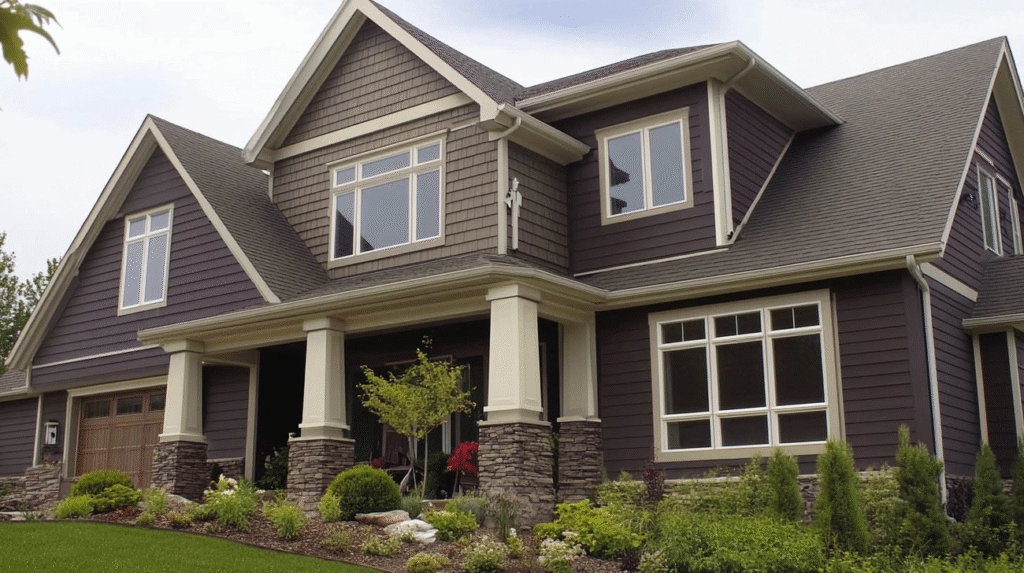
Image Source: 180 Contractors
As your protective skin on your home, siding makes the first contact with external elements. And there it goes, so it is more than just beauty for your home; it serves as a shield from the harshest onslaught of external elements.
Purpose of siding on a house
There is beauty, things that have-lines, categories of what are exterior walls, and that it does act as an efficient external barrier, protecting the framework of your house from environmental dangers. Quality siding forms a watertight seal that allows the intrusion of moisture and causes very serious structural implications if not addressed.Millions of homes have siding in decay. Water penetrates into the walls and results in the growth of molds and rotting of wood, leading to expensive repairs. Siding also prevents trespassing by pests. You can easily find examples of today’s siding materials
that seal your home perfectly from the outside and make a point to which termites, ants, and other rodents do not get access.
Installation of siding, properly done, also promotes energy efficiency because it lays down another layer of insulating materials that keep a comfortable indoor temperature throughout the year, therefore, reducing energy expenditure by as much as 20 percent
How siding contributes to home protection
Consider the idea of siding as your body’s armor while facing nature. A shield is brought forth to fight rainwater, snow, wind, and extremes of temperature in the house, which sometimes put to test its durability.
Moisture is the number one enemy of an improperly sided house. Water enter the house either by means of cracks or openings in the house, thus causing weakness in building the house frame and even worse, damage to structural integrity. The best thing is to choose somewhat long-lasting, high-quality materials such as fiber cement, vinyl, or engineered wood in order to provide long-term immunization disorders. Siding also helps save dollars lost by cars with windows open in traffic. The more sound-proof walls there are, the better its insulation from numbers or atmospheric noise or from weather elements. Siding is the waterproof shell of your house-equipped with your roof. Though not as immediately obvious as the roof and gutters in terms of its function as a water protector, siding is no less important than roof design in keeping the interior of a house dry and securing it from possible water damage.
Hidden Perks of Popular Siding Materials
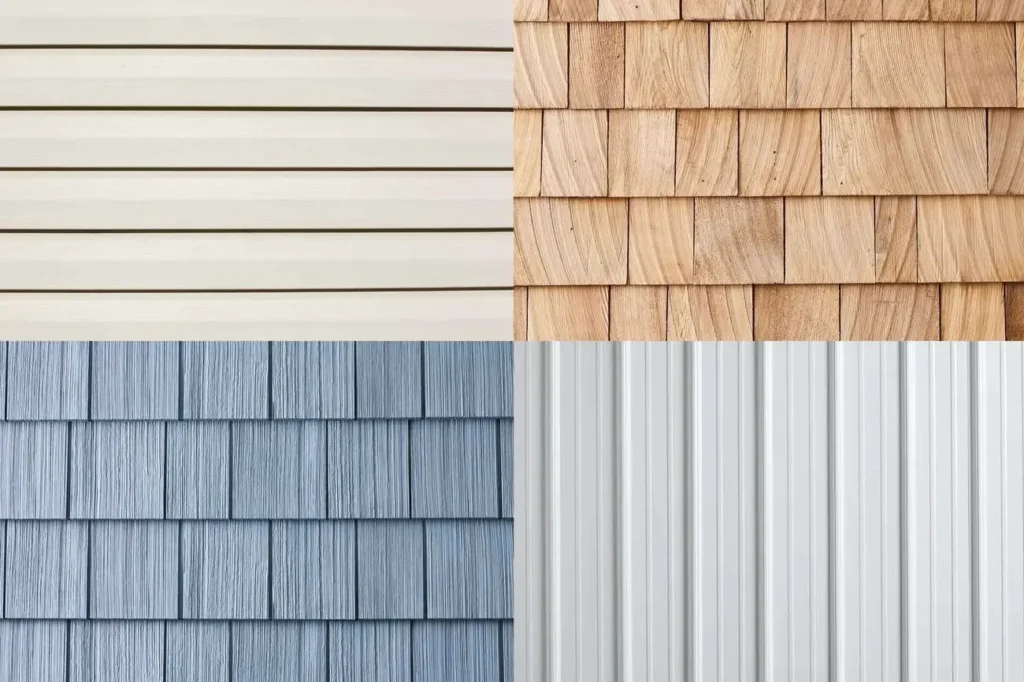
Image Source: The Spruce
Beyond their basic functions of protection, today’s siding materials have tremendous hidden advantages mostly ignored by the ordinary homeowner. These lesser-known benefits can deeply affect the security of your home, its efficiency, and its environmental footprint..
Vinyl: Eco-Friendly and Green Certified
Despite common myths, vinyl siding is actually surprisingly environmentally friendly. Compared to other materials, it takes far less energy to manufacture. In fact, fewer greenhouse gases are generated compared to brick and fiber cement options. Made to last, it can be expected to last 20-40 years, hence reducing the likelihood of replacement and waste disposal.
Vinyl siding is very sustainable because it can be recycled. The material can be ground and made into a new product almost infinitely without losing quality. According to industry reports, about 99 percent of vinyl siding produced is recycled into new products and kept out of landfills. Much of the vinyl products have been deemed “green approved” by the National Association of Home Builders after going through a rigorous third-party verification process.
Fiber Cement: Fire and pest resistance
Fiber cement siding is pretty much the best defense against these two deadly enemies of any home. It has a Class A fire rating, which means flame spread index 0, and that means the material doesn’t ignite when exposed to flames as well as when it burns up it doesn’t contribute fuel to an existing fire. Added precious minutes to the evacuation and emergency response in a wildfire situation.
Beyond the protection of fire, fiber cement is an uninviting source for harmful pests. Made from cement, sand, and cellulose fibers, it turns out not to be edible at all for termites and other wood boring insects that can infest traditional materials. Further, internal moisture resistance discourages even more pest infestations.
Metal: Modern look with minimal upkeep
Metal siding is very durable and gives a contemporary look. It lasts from 30 to 50 years under extreme weather conditions in considerable shape. Its prolonged life is because of moisture, rot, and pest resistance; therefore, no common maintenance problems can be encountered.
Above all, metal siding is an environmentally friendly option; it is fully recyclable and consists of significant recycled content. It withstands high winds-the most important asset in the hurricane-prone areas.
Wood: Natural insulation and charm
The natural insulation performance of wood siding is impressive in providing thermal performance. Houses can have their energy costs reduced by up to 20% with the wood exteriors due to its ability to control temperatures efficiently. At the same time, its cellular structure controls indoor humidity and minimizes outside noise.
For the environmentally-conscious homeowner, wood comes as a bonus since it can be a renewable and biodegradable resource when properly sourced. Emissions released in its manufacturing are lower than in petroleum-based alternatives, which give it an edge as a naturally sustainable resource.
Design Flexibility That Surprises
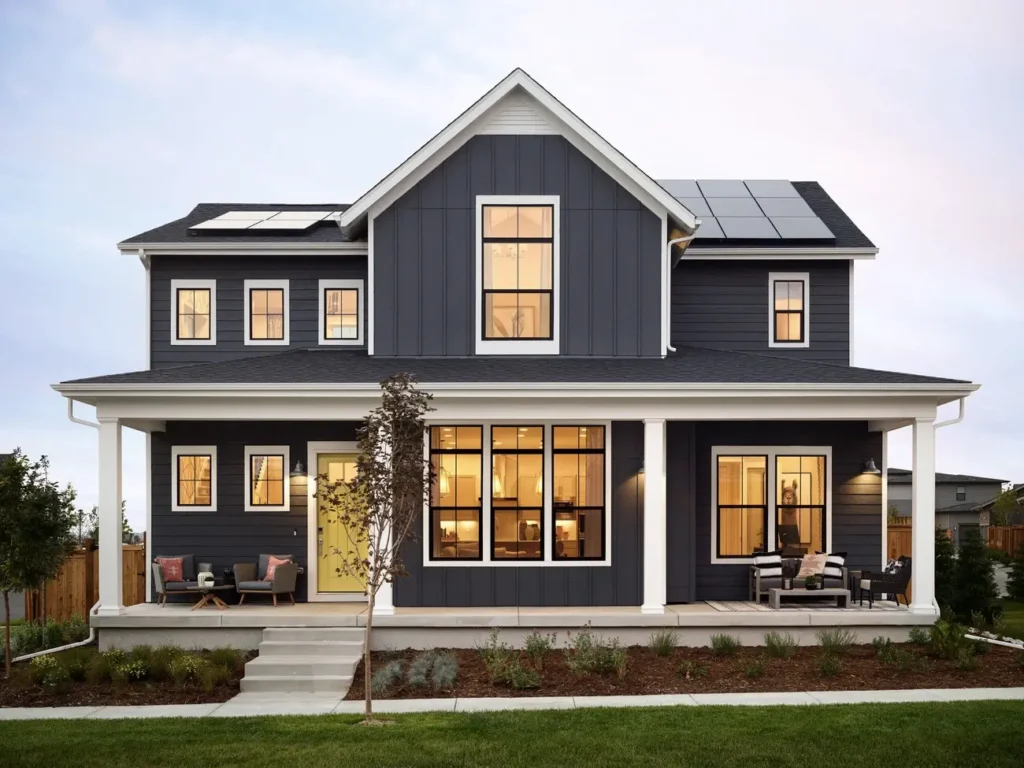
Image Source: This Old House
Modern siding transforms homes through unexpected design versatility that goes far beyond basic wall covering. The extensive customization options available today allow for truly personalized exteriors that reflect your unique style while maintaining structural protection.
Mix and match textures and colors
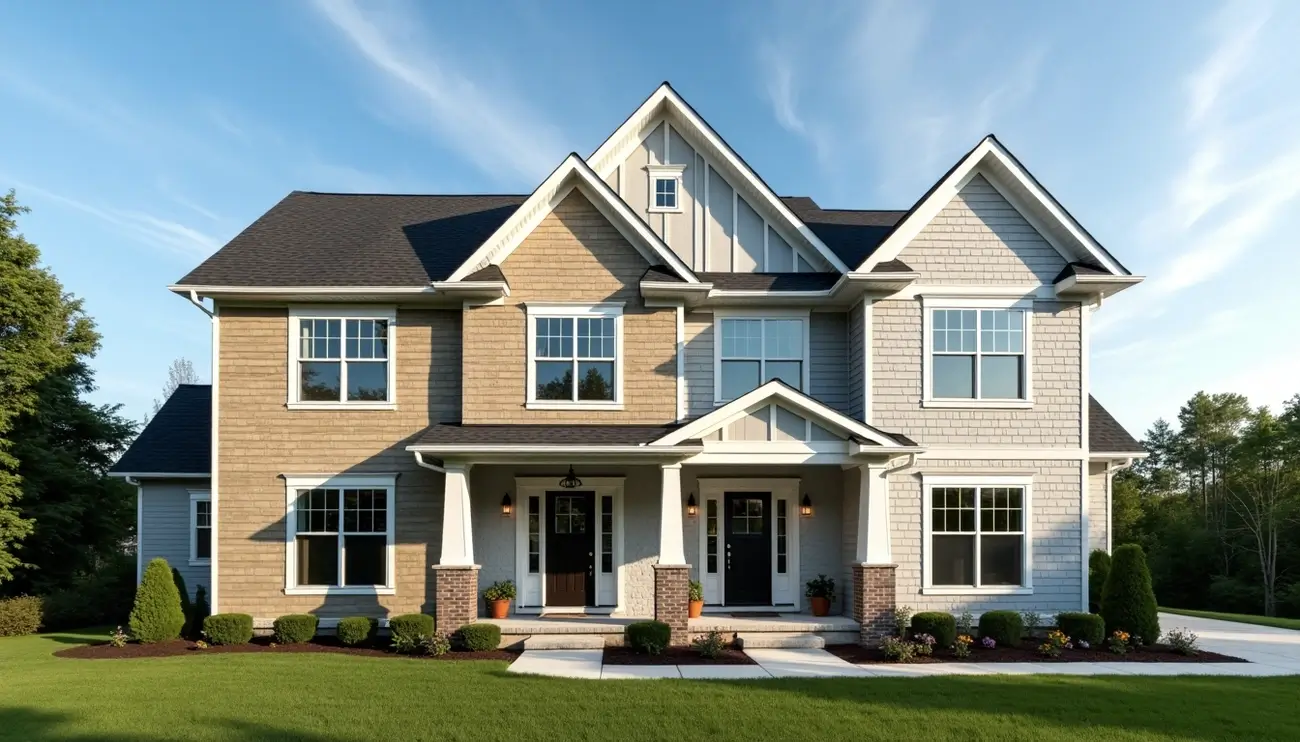
One of the best things about siding, though, is its ability to combine multiple textures and profiles to provide visual interest. From the architectural point of view, today’s homeowners are embracing lesser-used materials more than ever to accentuate such special features like entryways, gables, or second stories. This approach adds dimension and creates intentional, high-end aesthetics without compromising functionality.
Strategic mixing works particularly well in specific locations:
- Gables and upper stories for added dimension
- Bump-out walls to draw attention to architectural features
- Entry areas to create welcoming focal points
Using trim boards strategically helps define edges and transitions, adding depth and enhancing design elements for a polished finish. Even when blending vastly different textures like stone and stucco, the result is a dimensional, dynamic exterior that stands apart.
Mimics high-end materials affordably
Today’s engineered materials flawlessly replicate expensive options at a fraction of the cost.High-quality fiber cement and vinyl products very convincingly resemble the grain of natural wood, stone textures, and even brick patterns. Take for example the HardiePlank Cedarmill Lap Siding, providing the naturally warm appearance of wood while ensuring greater durability and much lower maintenance.
Faux stone and stone veneer create looks extraordinarily similar to that of the natural stone but at a much lower cost—usually $5.50-$10.75 per square foot. Likewise, modern metal siding alternatives such as T-8 PlankWall® emulate the rustic appeal of natural wood while offering the unbeatable durability of metal.
Customizable to any home style
Modern siding works in tandem with practically every architectural vision. Whether you have a quaint traditional cottage, a contemporary farmhouse, or a sleek urban dwelling, today’s materials match and complement all design aesthetics. Traditional colonial homes tend to be one color for one siding type while Victorian styles may use multiple sidings with different colors.
Virtual design tools have revolutionized the selection process. Many manufacturers offer visualization platforms where you upload photos of your home to experiment with different siding combinations and colors. Custom applications like Hardie™ Designer generate photo-realistic images within seconds, allowing you to adjust styles, materials, and colors before committing.
Siding’s Role in Long-Term Cost Savings
Smart homeowners increasingly recognize siding as a financial investment rather than merely an expense. Quality siding delivers substantial returns through multiple economic channels that directly impact your bottom line.
Reduces repair costs over time
Investing in premium siding materials effectively shields your wallet from the constant drain of home maintenance expenses. High-performance materials like fiber cement and vinyl create robust barriers against moisture penetration that would otherwise lead to costly structural repairs. Homeowners save thousands by avoiding repeated wood replacement and mold remediation after upgrading their siding.
Improves energy efficiency
Perhaps the most immediate financial benefit comes through reduced monthly utility bills. Insulated siding products create thermal barriers that minimize heat transfer, subsequently reducing heating and cooling demands year-round. Properly installed insulated vinyl siding can increase your wall’s R-value by up to R-4, complementing your existing insulation.
For a typical 1,500-square-foot home, this enhanced efficiency translates to approximately $200-$500 in annual energy savings, depending on your climate zone. Over a 20-year lifespan, your siding effectively pays for a significant portion of its installation cost through reduced energy consumption alone.
Qualifies for green home incentives
The financial benefits extend beyond direct savings into potential tax advantages. Several types of energy-efficient siding qualify for federal tax credits of up to 10% of the material cost (excluding installation). Additionally, many utility companies offer rebates between $50-$500 for upgrading to energy-efficient building materials.
Local incentives provide another layer of savings opportunities. In certain municipalities, homeowners can access property tax reductions of 5-10% for green building improvements. Sustainable siding choices also contribute to various green home certifications that increase property values by an average of 9% at resale.
Conclusion
Great siding would serve as a long-term investment extending to an entire spectrum of other factors far beyond the aesthetic necessity of siding. This has been alluded to somewhere in the article, and quite a few siding material types have their own benefits, much less recognized by consumers. Surprisingly, vinyl is quite green, while fiber-cement is even more resistant to burning and pests. On the other hand, metal siding is, of course, modern, needing much less upkeep, whereas wood naturally lends itself to insulation and beauty that transcends age.
A very broad spectrum of modern siding designs exists in terms of utilizing molds to economically imitate high-end materials or adapt to an architectural style that expresses oneself in creating these fantastic exteriors without compromising protection.
More such high-quality siding provides a clear positive annual return. Reduced repair costs, better energy efficiency, and the potential for green home incentives add up to considerable savings in the long run. Hence, this is not merely the amount of money that was very first figured; it actually is money earned via diminished energy costs, avoided repairs, and increased property value.
Since many homeowners are obviously knowledgeable about these hidden advantages, it is likely that they will make better decisions on siding materials. They will consider not only what the initial costs are but will extend their analysis to include what long-range value appears for each option examined. The correct siding will protect the home for decades while providing aesthetic enhancement and increasing efficiency. For professional siding advice and installation, visit River City Roofing to discover how the right siding can transform your home inside and out.
FAQs
Q1. What are the main benefits of installing new siding on a home?
New siding provides protection against weather elements, improves energy efficiency, enhances curb appeal, and can increase your home’s resale value. It also reduces maintenance costs and can offer additional insulation.
Q2. What is the average lifespan of one house siding?
It depends on different materials. The longest life is about 20-40 years for vinyl siding. Fiber cement siding probably is greater than 50 years while wood siding is ordinarily about 20-40 years if maintained properly. Generally, though, metal siding can last from 30 to 50 years.
Q3. Is siding good for energy cost reduction?
Without a doubt. Quality siding goes a long way in minimizing consumption costs associated with energy. Insulated siding gives thermal battering to the heat-transfer processes, to minimize levels of heating and cooling. Sometimes that could save energy costs amounting to a whopping $200-$500 annually for the average 1,500-square-foot home.
Q4. Is there a sustainable siding construction material?
Indeed. Eco-friendly vinyl siding with the lowest energy consumption in the production and fully recyclable. This is renewable and biodegradable: wood siding comes from responsibly sourced timber. Metal siding is also recyclable and usually contains recycled content.
Q5. How is siding helpful in pest prevention?
Good quality siding would seal the exterior without entry points for pest intrusion. These materials are not edible to termites or other wood-boring insects, such as fiber cement. Additionally, moisture-resistant siding creates an unwelcome environment for pest infestation.