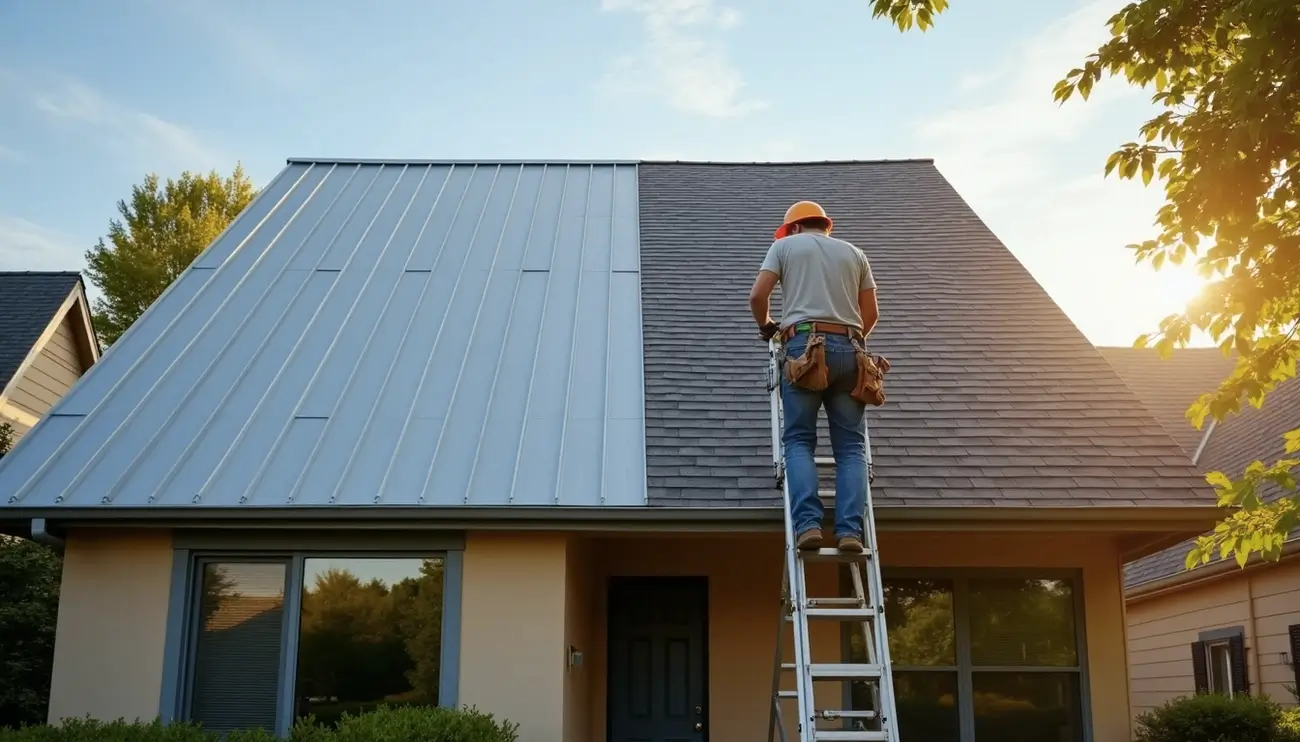
The price gap between tin roofs and shingles catches many homeowners off guard. Metal roofs cost between $15,000 and $24,500, while asphalt shingle roofs run from $6,000 to $9,800 for comparable areas.
The stark price difference reveals just one part of the story. Metal roofs have a lifespan of anywhere between 40 to 70 years, while shingle roofs must be removed and replaced after 15 to 30 years of service. Resale value of a home appreciates enormously with metal roofs that recover 85%-95% of their installation cost. So this becomes a good long-time investment despite their cost of installation being relatively high. This piece gets into whether metal roofs beat shingles by looking at current prices, material choices, installation needs, and the overall return on investment in 2025.
When choosing between a tin roof and asphalt shingles in 2025, the price difference is only the beginning of the story. Tin roofs can cost nearly double upfront, but they also offer double—or more—in lifespan and long-term savings. This blog from River City Roofing breaks down real numbers, current installation costs, and ROI so homeowners can make an informed decision that fits their budget and their plans for the future.
Tin Roof vs Shingles: What Are the Real Costs in 2025?
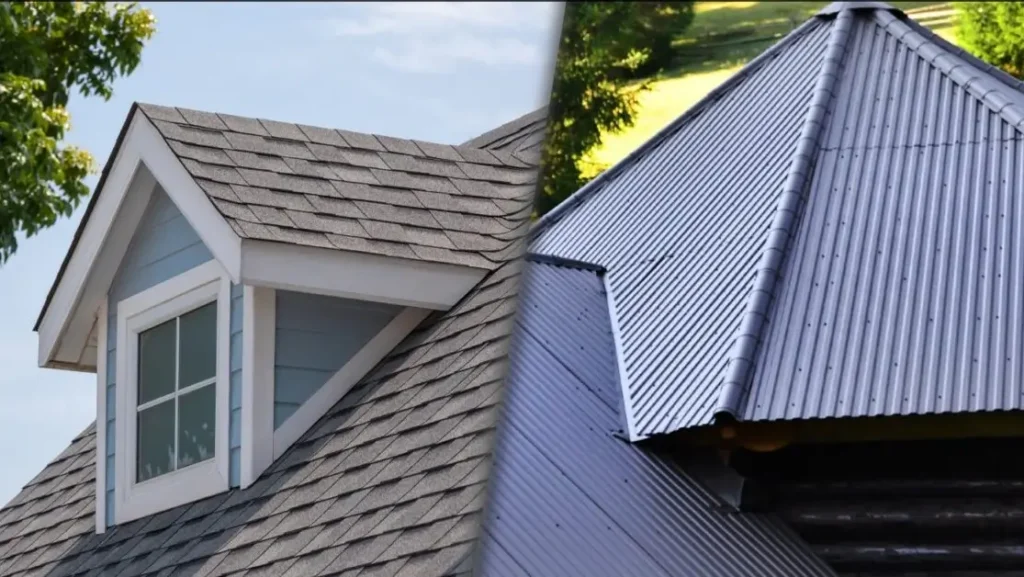
Image Source: METALCON 2025
The price gap between these popular roofing materials in 2025 tells an interesting story. Let’s get into the actual numbers to help you make the right choice for your home.
Average cost of tin roofs per square foot
Tin roofing material currently runs roughly from $5.00 to $12.00. Those prices vary based upon quality and how they are installed. At the lower-end of quality and price-wise, exist tin roofs running at $5-$8 per square foot best suited for those wanting the benefits of a metal roof without the additional expense.
Standard quality tin roofs generally run $7.50-$12.00 per square foot. Premium options can reach $12.00-$16.00, featuring special coatings or complex designs. Standing seam tin roofs are great for water resistance and modern looks, priced $7.00-$12.00 per square foot but are generally at $9.50 per square foot for most customers.
Average cost per square foot of asphalt shingles
Used to be that asphalt shingles were had at a price below. Now it is currently April 2025, and simple asphalt shingle jobs can get you a quote between $4.88-$6.36 per square foot. Any distinguishing price points go for the three major types: 3-Tab shingles (most basic option) would cost around $3.50-$5.50 installed, descriptions architectural shingles would fall between $4.50-$7.00 installed, with luxury asphalt shingles costing anywhere over $8.00.
Components alone for asphalt shingles cost between $1.50 to $4.00 per square foot, which makes them one of the cheapest roofing systems available.
Total installation cost range for both options
The full picture is shown by looking at complete installation costs. On average, tin roof installation costs $12,000 on an average house, with the majority of jobs costing between $7,500 and $18,000. The bigger the roof, the bigger the price-a 1500-square-foot house requires about $12,750 to $20,400 for tin roof installation.
For homes of similar size and condition, asphalt shingle roofs have lower initial installation costs. Typical homes cost about $10,500, and the vast majority fall into the range of $7,500 to $18,000. A two-thousand square foot house would be approximately $6,000-$9,800 for a whole shingle roof.
Labor makes up much of these costs. Tin roof installation labor runs $3.00 to $5.00 per square foot, which is more than asphalt shingles because it takes special skills. Roof designs can also bump up the price for both materials—steep slopes and complex layouts cost more.
The original investment clearly favors asphalt shingles, but there’s another reason to look beyond just the upfront costs, which we’ll explore next.
Material Breakdown: Tin Roofing vs Asphalt Shingles
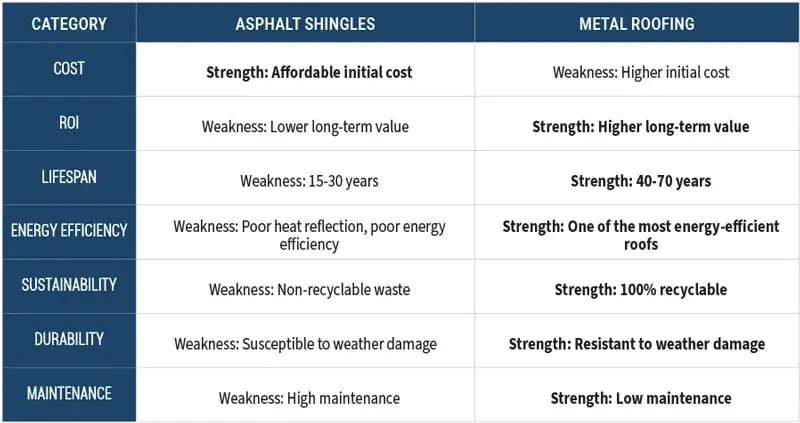
Image Source: DECRA Metal Roofing
The cost and performance differences between roofing options become clear when you look beyond simple pricing and material specifications.
Tin roof types and their price ranges
The name tin roofing describes steel sheets that have been coated with a tin alloy for protection. This tried-and-true material develops a unique patina with age and lasts quite long. Standard tin roofing can be found priced from $5.00-$12.00 per square foot, with prices shifting with quality and style.
Flat panels made from corrugated tin can cost between $3.50 and $6.50 per square foot. These panels, with their wave-like pattern, provide better structural strength. Standing seam tin roofs are $7.00 to $15.00 per square foot, featuring raised interlocking seams that keep out water. Metal shingles provide a traditional appearance, $6.00 to $12.00 per square foot.
Asphalt shingle types and their price ranges
Exist three different types of asphalt shingles available on the market. 3-tab shingles are your budget-friendly choice at $1.00 to $3.00 per square foot for materials. These flat, uniform shingles usually last 15-20 years.
Architectural shingles, which people also call dimensional or laminate shingles, have multiple layers that create depth. Materials cost $2.00 to $4.00 per square foot. Their premium construction means better durability and a more striking look.
Luxury asphalt shingles top the range at $8.00 to $13.00 per square foot installed. These top-tier products look like slate or wood shakes and come with extensive 30-50 year warranties.
Durability and lifespan comparison
The lifespan gap between these materials stands out significantly. Tin roofs serve you well for 50-70+ years with little upkeep, outlasting several asphalt roof installations. Most manufacturers back tin roofing with 30-50 year warranties.
High-quality asphalt shingles need replacement after 15-30 years. Harsh weather can force you to replace basic 3-tab shingles in just 15 years, though architectural shingles typically stay strong for 20-30 years.
Tin roofs withstand extreme Weather much better than asphalt. It sustains winds as high as 140 mph, heavy snow load, and the blazing sun without damages. The excellent durability of your tin roof will offset the higher initial cost as you won’t need to replace it as often throughout your home life.
Installation and Labor Costs Explained
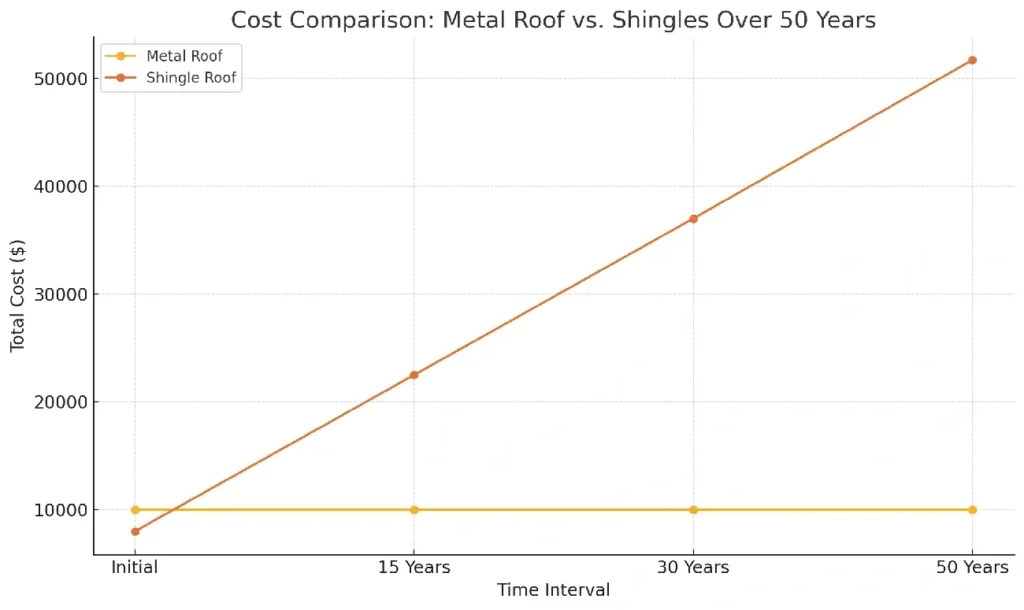
Image Source: Professional Metal Roofing
Labor costs create a big divide when comparing tin roof and shingle prices. These differences help explain the significant price gap between these popular roofing choices.
Why tin roofs cost more to install
Most general roofers don’t have the specialized skills that metal roofing requires, which drives up labor rates. The installation process needs precise techniques to make sure everything is sealed properly and performs well over time. Tin roof installation takes longer than putting on shingles, so you’ll pay for more labor hours per project . The metal panels are larger sheets that need careful handling and special equipment, which adds to the job’s complexity . While the precision required for metal roofing boosts the upfront costs, it ended up making the roof last longer .
Labor cost per square for shingles vs tin
The labor costs show dramatic differences. Asphalt shingle installation costs $200-$350 per 100 square feet , while metal roofing labor is double that amount . Your total roof cost has about 60% going to labor . You could save roughly $6,300 by installing asphalt shingles yourself, and DIY metal roof installation might save about $7,000 . All the same, experts strongly recommend professional installation since most manufacturers won’t honor warranties for DIY work .
Factors that increase installation complexity
The roof’s pitch makes a huge difference in installation costs. Any pitch over 6:12 (6 inches of rise per 12 inches horizontally) is steep and increases both difficulty and costs . Each roof penetration like skylights, chimneys, and vents needs extra materials, expertise, and time . Equipment access problems can drive up costs significantly .
Removing and disposing of old roofing materials adds $1.00-$5.00 per square foot to the total . Roofs with multiple angles and gables need more materials and special techniques, which pushes labor costs even higher .
Professional installation protects your investment through proper permits, building code compliance, and better-looking results .
Long-Term Value: Which Roof Saves More Over Time?
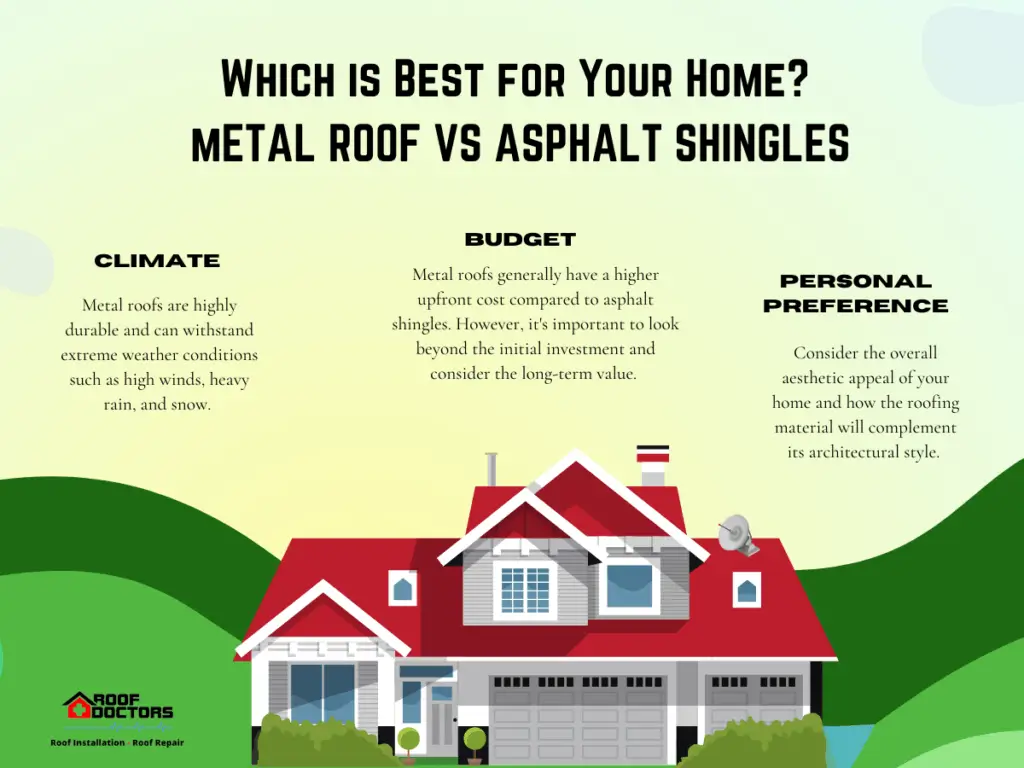
Image Source: Roof Doctors
The real cost story goes beyond what you pay upfront. A closer look at tin roof cost vs shingles over decades shows a different financial picture than what you see during installation.
Maintenance needs and costs
Tin roofs excel with their minimal maintenance requirements over their lifetime. Dirt from the roof gets removed only at long snapping intervals. It is fashionable in erring around rot: if not, then on cracking and warping occurrences of other asphalt roofs. When speaking of asphalt roofs, there are bade the breezing of moisture. These troubles create a milieu where mildew and algae crept inside. Routine maintenance burn money from the pocket. Metal roofing costs more at the initial time, but, later upside, you save on the repair bill.
Energy efficiency and utility savings
Performance, in terms of energy, of contrasting prices between shingle and metal roofs gains a fair deal. Metal roofing shows very good results for reflecting heat, thereby significantly reducing the cost of energy for cooling. Some studies have shown that the savings might be up to 50 percent. In addition, metal helps to maintain a cooler average indoor temperature during the summer. Metal also does not warm a room, as asphalt shingles do, by retaining heat at 20 to 25 degrees Fahrenheit. Conversely, as well, during cold weather, metal performs effectively, offering air flow for better insulation.
Resale value and ROI comparison
The return on investment shows mixed results. Remodeling Magazine’s 2023 Cost versus Value Report shows asphalt shingle roof replacements have a higher resale value (61.1%) than standing-seam metal roofs (48.9%). Other sources show metal roofs can boost home value by 1-6% [202]. Homeowners might recover 85-95% of installation costs when selling. The length of ownership determines which option makes more financial sense. Metal roofing becomes about 50% cheaper than asphalt after 15 years. After 30 years, you’ll spend roughly three times more on asphalt shingles than a metal roof because of needed replacements.
Conclusion
After considering the costs between metal roofing and shingles for themselves, the figures are evidence by themselves that validate it.Let’s put it this way: the initial costs of installing better metal roofing are nearly an eightfold increase as compared to asphalt shingles. Cost is just one set to consider; metal roofing is also turning out to be cost-efficient with many homeowners in most experiences.
Given their affordability, asphalt shingles rule. However, a homeowner will likely replace an asphalt roof twice during one lifetime of metal roofing for his home. There is another good point in the support of metal roofing while the cooling cost feels a 40% dent, contributing to annual utility savings.
As for ROI, asphalt shingles conquered the field of saving an unrewarding penny; on the contrary, metal roofing stands victorious by far in the long run on account of its long-lasting character and energy-efficaciousness. Roofing alternatives imply a distinction between the shorter and longer term now. Consultations with local service providers should be asked for, encompassing the longevity of your beauty parlor.
In your peculiar circumstances, the final decision lies. Asphalt shingles could work well if the situation demands selling your house anytime in the close future or if you are limited by an initial capital. On the contrary, the metal roof gives real-time and resounding benefits in the long run if you are staying in your home for years, regardless of the huge expenditure at the onset. We recommend obtaining detailed quotes from qualified construction firms for each option. Study the worn and weathered faces of your township, home design, and your personal requirements before committing.
FAQs
Q1. Average cost differences between tin roofs and asphalt shingles?
Average tin roofing costs are set somewhere between $12,000 and $24,500. Conversely, asphalt roofs may charge anywhere between $6,000 to $9,800 for an equal area covered. Initially, tin roofs cost double that of an initial asphalt shingling; are they quite cheap?.
Q2. The longevity of either tin roofs or asphalt shingles falls under comparison.
Tin roofs last for around 40 to 70 years, while asphalt shingles need replacement every 15 to 30 years. Longevity is one of the strongest selling points for tin roofs on the long value proposition?
Q3. Which are energy-saving benefits that this kind of roof will provide?
A tin roof can, because of its reflectivity against solar heat gain, save on cooling costs of about 40 percent. In the long run, will that be compared to the utility savings of asphalt shingles?
Q4. How does its maintenance compare with that of an asphalt roof?
Tin roofs hardly need any maintenance; inspection and removal of debris are all that is required. Conversely, asphalt shingles are well renowned for problem areas that include lifting, cracking, and absorption of water, which require fairly frequent repairs?
Q5. Does it add value to your home?
Initially, some sources stated that asphalt shingles had a higher resale value; however, homeowners would increase their home value between 1 and 6 percent directly with tin roofs and, on reselling, recover between 85 and 95 percent back of the installation costs. Most people learn this 15 years into ownership, about the time when the tin roof becomes worthwhile.?