
Is roof underlayment really necessary—or just another added expense? At River City Roofing, we have replaced thousands of roofs and have come to view underlayment as one of the most important layers of your whole roof system. It’s not only about keeping your house dry in storms; it’s about adhering to building codes, maintaining your warranty, and ultimately protecting your investment for the long haul.
If you’re unsure regarding what underlayment does or which is right for your home, this guide covers all the need-to-know information for homeowners. For professional personalized assistance with your roof, hit up River City Roofing.
What is roof underlayment and what does it do?
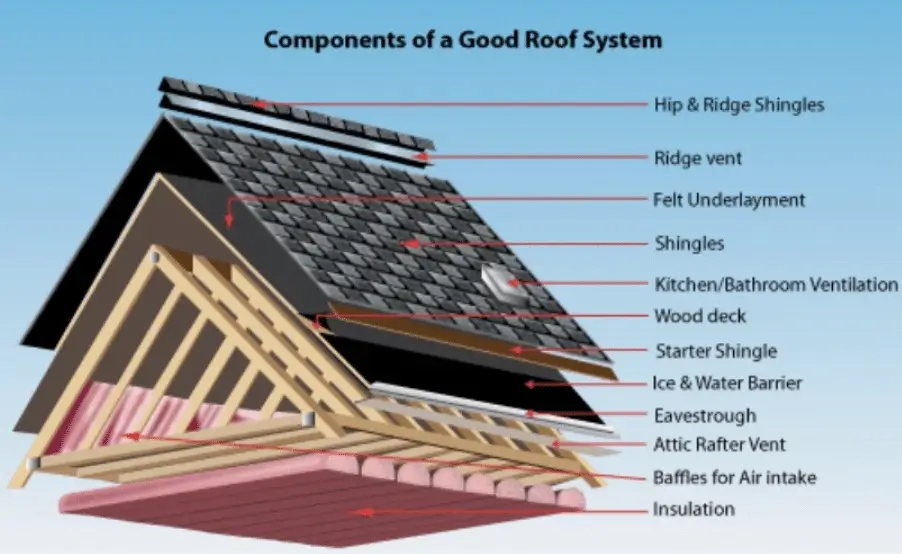
Image Source: Signature Exteriors
Roof underlayment works as the unsung hero of your roofing system. This thin yet vital layer rests directly on your roof deck and creates a protective barrier between your home’s structure and outer roofing materials.
Installed between roof deck and shingles
Your roof’s underlayment goes directly onto the deck before any shingles or roofing materials. It serves as the foundation for your entire roofing system and boosts your roof’s durability effectively. The underlayment creates a stable base for shingles and stops the wooden decking’s texture from showing through them – what professionals call “picture framing”.
Acts as a moisture barrier
We installed roof underlayment mainly to work as a secondary moisture barrier.Shingles create a barrier preventing water infiltration into their system.Shingle roofs are not leak-proof unlike the underlayment. Over a period of time, the shingles develop small openings or fissures which allow for the entry of water during storms or wet weather. The corner seams on the unsealed side may therefore allow water to enter under the upper overlapping shingles.
It will also be another line of defense for any moisture managed to penetrate the roof deck, causing rot, mold, or systemic problems to develop underneath. It is most needed during continuous rain in humid areas.
Protects against wind-driven rain and ice dams
Your gale-force winds might pull shingles apart from your roof cavity and expose your home. The underlayment becomes your backup protection if a major storm breaks your shingles loose. It keeps rain from getting through the roof deck and into your home.
In the cold climates where there is a formation of ice dams on roofs, these dams not only have severe warnings regarding roof integrity but can completely ruin the roof structure. An ice dam claims to rest in the middle due to warm air traveling to the deck and during the edges. Self-adhered underlayment products made for ice dam protection seal around fasteners and block water from these ice dams from leaking inside.
Your underlayment does more than just shield during installation. It’s a vital part that helps your roof system work against rain, wind, snow, and ice effectively.
Is roof underlayment necessary for every roof?
“Will it save you money not to install roof underlayment?” is a common question among homeowners. The answer is short and sweet: No, underlayment is pretty much compulsory for most roofs. Let’s find out why this component is so very much important for any good roofing work.
Building code requirements
The International Residential Code (IRC) has an underlayment requirement for each building system, except one roof system. According to the building codes, the underlayment installation will be compliant with the specific ASTM standards cited in D226, D1970, D4869, and D6757. These codes don’t just require underlayment—they specify exact application methods based on roof slope and local wind conditions.
Your region’s climate and weather patterns determine the installation requirements. Areas with high winds or severe weather have stricter codes that require heavier underlayment materials and specific fastening patterns. Years of research into roof performance and failure are the foundations of these requirements.
Manufacturer warranty conditions
Underlayment falls right at the center of the exuberance of your roof warranty coverage. Most warranties issued by shingle manufacturers will be honored only if some conditions regarding the underlayment attached to their warranties are met. Your roofing materials’ warranty becomes void without proper underlayment.
Manufacturers need at least three accessory products in their installations, and underlayment is non-negotiable. This requirement exists because manufacturers know underlayment substantially extends their products’ life and performance.
Risks of skipping underlayment
Skipping underlayment creates major risks for your home:
- Water damage – Rain driven by high winds can penetrate beneath shingles and soak your roof deck without underlayment
- Mold and rot – Your roof deck becomes perfect for mold growth and wood rot when moisture gets trapped
- Structural damage – Water intrusion can weaken your home’s structural integrity over time
- Increased repair costs – A small leak can end up requiring complete roof deck replacement
So, professional roofers consider underlayment essential. The upfront cost of underlayment protects your bigger investment in your home’s structure and roofing materials.
Comparing the 3 main roofing underlayment types
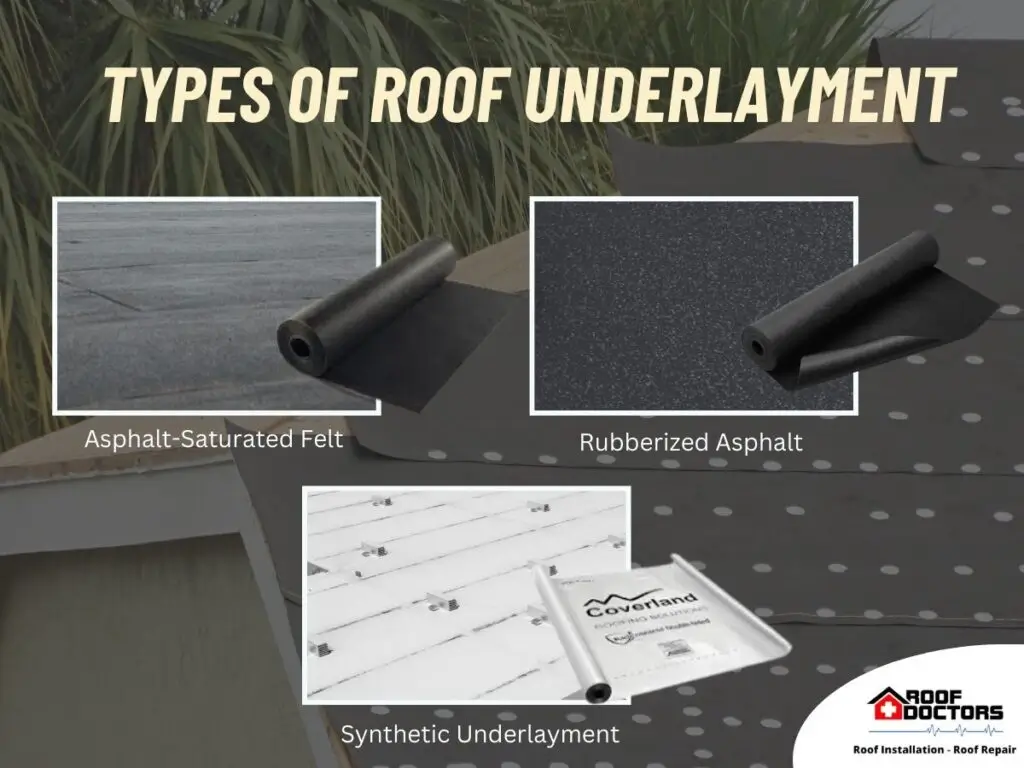
Image Source: Roof Doctors
A fitting roof underlayment assessment has to start with the learnings behind the three indispensable types. This actually will guarantee a complete long-term investment in protection and performance with that roof.
Felt underlayment (asphalt-saturated)
Felt asphalt-saturated, or better known as tar paper, is the very much old-school convention in roofing underlayment. The substance basically consists of asphalt- soaked paper or fiberglass mat, and is available in two weights, namely: twenty-one-pound (#15), and thirty-pound (#30) felt. Although greater tearing and durability would be offered by #30 felt, it is more inflexible compared to the lighter one.This classic option remains a popular choice because it’s affordable. You’ll pay between $0.05 and $0.50 per square foot—nowhere near the cost of alternatives. The felt lets vapor from your attic escape, unlike synthetic options.
The felt underlayment does have some drawbacks. Water absorption can make it wrinkle, which makes proper shingle installation tough. On top of that, it tears easily in high winds, doesn’t resist UV rays well, and usually lasts only 12-20 years.
Synthetic underlayment
There was a progressive development in and acceptance of synthetic underlayment from polypropylene or polyethylene polymers, particularly in the last decade. Modern underlayments have proven 12 times stronger than felt and have better water repellency.
Price tags range from $0.10 to $0.55 per square foot, but synthetic underlayment gives incredible benefits. Furthermore, the material is lighter in weight, tear-proof, and can withstand UV exposure for 3 to 6 months. It has a slip-resistant surface making installation much safer.
The Synthetic underlayment cannot soak water and thus minimizes the risk of possible mold growth. Clear marking lines with overlap guides are offered by most products for easier installation.
Rubberized asphalt underlayment
Rubberized asphalt underlayment is an excellent waterproofing medium synthesized from asphalt and rubber polymers. This form is self-adhering and is priced between $0.55 and $0.90. This is, therefore, the most expensive choice available.
Excellent sealing is its main feature: it seals itself around nails and fasteners, thus creating this waterproof barrier.This feature works great in areas that get ice dams and heavy rain. Good installation can make this underlayment last up to 50 years.
Water-resistant vs waterproof options
The difference between water-resistant and waterproof underlayment matters a lot. Water-resistant underlayment shields the roof deck from moisture but allows some water to get through. Most synthetic underlayments work this way because they can’t seal around fasteners.
Waterproof underlayment, like peel-and-stick rubberized asphalt products, blocks all water whatever the installation method. These self-sealing options stay waterproof even after fasteners pierce them.
Waterproof underlayment gives you the best protection in areas with lots of rain or on low-slope roofs. Water-resistant options work well enough for most standard roofing jobs in moderate climates.
How to Choose the Right Underlayment for Your Roof
The right underlayment has much to do with the effectiveness of your roof in terms of the needs specific to your roofing. A proper choice of roofing underlay can help maintain your roof for decades, while a poor one might result in premature failure.
Your local climate matters
Indeed, location really matters when it comes to the correct choice of underlayment. On the other hand, waterproof options like rubberized asphalt will prove effective in extremely rainy or snowy regions. Self-adhering membranes work adequately in the critical places of eaves, valleys, and dormers in areas that suffer ice dams. Synthetic underlayments are real heroes in hot climates as they are UV protected and remain intact under sun exposure for very long hours.
Pick what works with your roofing material
Different roof materials require different types of underlayment. Metal roofs produce a lot of heat under them; therefore, underlayments designed to withstand high temperature are required. Both felt and rubberized asphalt underlayment fit well with asphalt shingles. Durable underlayment is needed for slate tiles since they are known to last forever; hence, going for synthetic or rubberized asphalt options would serve best here.
Balance cost and durability
Traditional Felt underlayment is priced from $0.05 to $0.50 per square foot. In short, this is the cheapest one. Synthetic types are priced between $0.17 and $0.55 per square foot. Still, they tend to last 25-35 years versus felt’s 12-20 years. Premium underlayments might have an expensive initial price tag but can extend the duration of your roofing system up to four times longer, saving money in the long run.
Safety and ease of installation
Synthetic underlayments come with slip-resistant surfaces that keep workers safe. Many synthetic products show printed guidelines for fasteners and overlaps that make installation easier. Felt becomes harder to work with in cold or wet weather and weighs more. Peel-and-stick options make installation simple but need careful application so they don’t peel later.
Your roof’s slope and design
Low-slope roofs (2:12 up to 4:12) need underlayment courses that overlap by at least 19 inches. Steeper roofs (4:12 and higher) need minimum 2-inch overlaps. Complex roof designs with many openings work better with self-adhering membranes that protect areas around skylights, chimneys, and vents better.
Conclusion
Roof underlayment is one of the requirements in any quality roofing system. This critical layer protects your house from moisture, wind, and rain from all sides, and ice dams can cause severe destruction. Underlayment is required in most building codes throughout regions. Not having it can void the warranty of your shingles.
There are several types of underlayment, and each has its own advantages. Felt provides an economical option for affordable protection that has been increased for many decades. Synthetic materials exhibit higher strengths and longer durability but tend to be more expensive. Rubberized asphalt forms a waterproof barrier that self-seals around fasteners but can be the most costly. Roof underlayment can set aside all technicalities and remain a lifeline for your home. It makes all the difference between moisture protection, code compliance, and warranty preservation, all of which will cost you far more in the short end than the savings made skipping the layer. Whichever it is felt, synthetic, or rubberized asphalt, the right underlayment will complement the roofing system and ensure many years of service. Visit the professionals at River City Roofing for experienced installation and sound advice on the best materials for your region and roof type.
FAQs
Q1. Is roof underlayment really an absolute need?
Yes, underlayment is essential in roofing. It withstood moisture, wind-driven rain, and icing dams that probably would have caused an effective shingle collapse. Most building codes make their use compulsory, and not using them ends any remaining warranties you might have on shingles.
Q2. Can I install shingles directly on plywood and skip the underlayment?
Indeed, it could probably be done because it is technically possible. Technically it could be done but it isn’t advisable. Underlayment was meant to serve the needs as part of the already necessary collection barrier between an assembly of shingles and plywood. Moisture was kept out and also was there to damage plywood during any leakages. Underlayment may have been required by building codes and shingle manufacturers to validate warranties.
Q3. What are the main types of underlayment for roofing?
They are felt (asphalt-saturated), synthetic, and rubberized asphalt. Each has specific advantages in terms of cost, durability, and water resistance. The best choice for you, in the end, will depend on your specific roofing need and climate.
Q4. How does the climate influence your choice of underlayment?
Well, for sure, the biggest consideration. During heavy rains or severe storms, rubberized asphalt is preferred because it is more waterproof. Synthetic underlayments are preferable in the hottest climates because they are better suited to UV rays. Local weather cycles should also be considered when thinking of underlayment.
Q5. Is underlayment applied in metal roofing?
Yes, underlayment is necessary in metal roofing. It adds that extra barrier against water in case that moisture is not going to escape between the points wherein the metal sheets are connected. Minimizing noise and enhancing thermal insulation are also advantages it provides.