
Choosing the right roofing shingles is one of the most important decisions a homeowner can make. With about 80% of American homes featuring asphalt shingle roofs, understanding the difference between architectural (dimensional) shingles and traditional 3-tab asphalt shingles can help you protect your investment. Architectural shingles offer enhanced durability, superior wind resistance, and a more attractive, textured appearance compared to basic asphalt shingles. For trusted expert advice and professional installation, River City Roofing is a reliable partner committed to quality craftsmanship and long-lasting roofs.
This piece explores these roofing materials’ unique features to help you pick the option that matches your budget, style priorities, and long-term home improvement goals.
What are architectural and asphalt shingles?

Image Source: Metro City Roofing Contractors
Asphalt shingles rule the North American roofing market. They protect homes for decades with little upkeep and come in hundreds of styles and colors. Homeowners who want to replace their roof should learn about the different types of asphalt shingles before making their choice.
Understanding asphalt shingles as a category
Asphalt shingles combine multiple materials into one product. They start with a fiberglass or cellulose mat, get coated with asphalt, and finish with mineral granules on top. These granules expand the surface area and help fight UV rays. They keep your roof cooler and protect it from mold and algae. The asphalt category includes three main types: strip shingles (3-tab), dimensional shingles, and luxury shingles. People often call them “composition shingles” to set them apart from single-material options like wood shakes or clay tiles.
What makes a shingle ‘architectural’?
Architectural shingles hit the market in the 1970s and 1980s when homeowner’s priorities started changing. The defining characteristic of architectural shingles is their multi-layer construction. These shingles stand out from traditional 3-tab versions because manufacturers fuse two or more asphalt layers together. The result is a thicker profile with random patterns that looks like cedar shakes or natural slate.
Architectural shingles come with these benefits:
- Stronger adhesives and higher-quality asphalt
- Multiple layers bonded with asphalt sealant for improved waterproofing
- A unique contoured visual effect that avoids repetitive patterns
- Greater weight (up to 50% heavier than 3-tab shingles)
- Better resistance to high winds, with many rated for 110-130 mph winds
Are architectural and dimensional shingles the same?
Architectural and dimensional shingles are exactly the same product. Roofers use these names interchangeably, which sometimes confuses homeowners. You might also hear them called laminate shingles, high-definition shingles, or premium shingles. Whatever name you use, they’re all the same asphalt-based roofing material. They combine multiple layers of fiberglass, tar, and granules on a fiberglass mat to create dimension and visual appeal.
Key differences between architectural and asphalt shingles
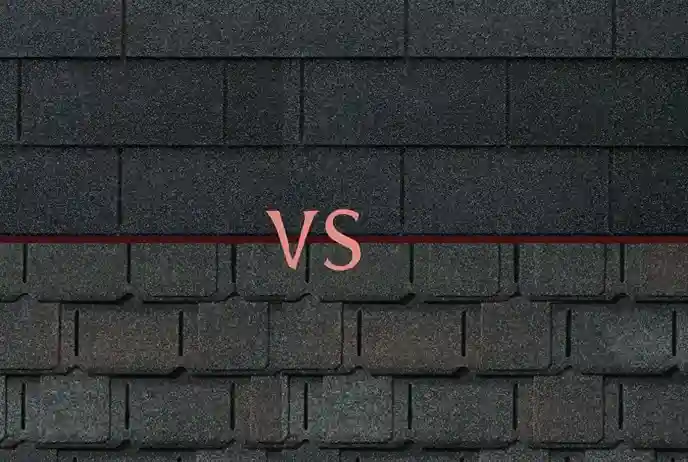
Image Source: Prime Roofing Jacksonville
The main differences between architectural and traditional asphalt shingles go well beyond their names. Homeowners need this information to make smart choices about their roofing materials.
Material composition and structure
Traditional 3-tab shingles are quite different from architectural shingles that feature multiple layers. Architectural shingles combine two or more layers of asphalt and fiberglass. They use better adhesives and higher-quality asphalt. The layers create extra dimension and better protection from weather. 3-tab shingles have a basic single-layer design with cutouts along the bottom edge.
Visual appearance and curb appeal
You’ll notice the visual differences between these roofing shingles right away:
- Architectural shingles look three-dimensional and textured, similar to premium materials like cedar shakes or slate
- Traditional 3-tab shingles have a flat, uniform pattern that looks two-dimensional
- Dimensional shingles come in more colors, textures, and shapes
Architectural shingles can look like expensive roofing materials. This improves your home’s curb appeal without the high price tag of natural materials.
Durability and weather resistance
Architectural shingles last much longer than 3-tab versions. They can last 30-50 years, while 3-tab shingles typically last 20-25 years. The wind resistance ratings show a big difference too. Architectural shingles can handle winds from 80-130 mph. 3-tab shingles are rated for winds up to only 60-70 mph.
Weight and installation complexity
Dimensional shingles are about 50% heavier than 3-tab varieties. They weigh 340-440 lbs per square compared to 240 lbs for 3-tab options. Surprisingly, architectural shingles are easier to install than 3-tab shingles. The extra weight means you should check your roof’s structural support before installation.
How do they compare in cost, lifespan, and warranties?
Homeowners often base their roofing material decisions on cost, longevity, and warranty protection. Let’s get into how architectural and traditional asphalt shingles compare in these key areas.
Average cost per square foot
Traditional 3-tab shingles and architectural shingles have a significant price difference. Traditional 3-tab shingles cost approximately $4.00 per square foot installed. Architectural shingles cost about $5.86 per square foot installed, which adds nearly a $2.00 per square foot premium.
A 2,000-square-foot home’s standard 3-tab shingles typically cost $8,300-$11,600. Architectural shingles range from $12,200-$17,100 for standard grades. Premium versions cost between $14,300-$19,500.
Expected lifespan in different climates
Manufacturers advertise 30-year lifespans for architectural shingles, but real-life performance reaches about 80-85% of claimed longevity. Homeowners can expect these realistic lifespans:
- 3-tab shingles: 10-15 years (up to 20 years in mild climates)
- Standard architectural shingles: 18-20 years
- Premium architectural shingles: 25-30 years
Your local climate significantly affects shingle longevity. Intense sunlight, dramatic temperature changes, and severe weather conditions speed up degradation. Milder climates allow both types to reach their maximum potential lifespan.
Manufacturer warranties and coverage
Standard warranties range from 20-25 years for 3-tab shingles. Architectural shingles come with 30-year standard warranties. Premium products can extend coverage up to 50 years.
Standard manufacturer warranties cover defective materials but not labor costs. Most warranties become prorated after 10 years, which reduces coverage as your roof ages.
Architectural shingles installed as complete manufacturer-specified systems qualify for enhanced warranties. These upgraded options provide 50-year non-prorated coverage and include materials and labor for the entire roof system.
Which type of shingle is right for your home?

Image Source: Besroi Roofing & Siding
The right roofing shingle choice depends on your situation and what matters most to you. Let’s get into what should shape your decision.
Budget vs long-term investment
Money plays a vital role in picking the right shingles. Traditional 3-tab shingles are the economical choice at less than $5.00 per square foot. Architectural shingles cost more, usually around $10.00 per square foot.
Your planned stay in your home matters too. Budget-friendly 3-tab shingles work well for short-term needs or rental properties. If you’re staying put for decades, architectural shingles give you better value despite costing more upfront. You’ll spend less on replacements and maintenance over time.
Esthetic priorities and HOA restrictions
Most Homeowners Associations have rules about roofing materials. Some HOAs want architectural-grade shingles instead of simple 3-tab options. Certain neighborhoods might even need specific thickness requirements like “50-year Architectural Shingles” rather than standard 30-year products.
Your home’s architectural style matters too. Architectural shingles create dimensional textures that look like premium wood or slate. These improve curb appeal for many home designs. Buyers often value these esthetic features when you sell your home.
Climate and regional considerations
Local weather should guide your shingle choice. Architectural shingles work better in severe weather zones with their improved wind resistance. Reflective shingles help homes in hot and dry areas by reducing heat absorption. Areas with heavy rain need materials that resist water well.
Local building codes might set minimum standards for roofing materials based on weather patterns. A professional roofer can help you find options that meet these requirements.
Resale value and home improvement goals
Roof choices affect property values substantially. Remodeling Magazine reports that asphalt shingle replacements in the southeastern US recover about 67% of their cost at resale. Premium shingles tend to bring better returns by boosting curb appeal and buyer confidence.
Buyers often try to negotiate lower prices when they see an aging roof. Quality architectural shingles eliminate this concern and might help you ask for higher prices.
Conclusion
Your roofing choice impacts your home’s protection, appearance, and value for decades. Architectural shingles provide better longevity, weather resistance, and curb appeal, while traditional 3-tab shingles serve as a budget-friendly option for short-term needs. To make the best choice for your home, budget, and climate, trust experienced professionals like River City Roofing. Their expert team can guide you through selecting and installing the perfect shingles to ensure your roof stands strong for years to come.
Cost remains the biggest concern for many homeowners. Architectural shingles just need a higher upfront cost at about $5.86 per square foot. Their longer lifespan and lower maintenance needs often make them a better long-term value. Standard 3-tab shingles cost around $4.00 per square foot and might work better for homeowners with tight budgets or short-term living plans.
Weather conditions, HOA rules, and future resale plans should shape your decision. Homes in harsh weather zones benefit from architectural shingles’ wind resistance and durability. Many neighborhoods now require dimensional shingles to keep community standards high.
Today’s roofing choice will affect your home for decades. Qualified roofing professionals can help evaluate your situation, budget limits, and long-term goals before you make the final decision. Whatever option you pick, proper installation by experienced contractors will without doubt help your roof perform better and last longer.
FAQs
Q1. What is the main difference between architectural and 3-tab asphalt shingles?
The main difference lies in their construction and appearance. Architectural shingles are multi-layered, providing a three-dimensional look, while 3-tab shingles have a single layer with a flat appearance.
Q2. How do architectural shingles compare to 3-tab shingles in terms of durability?
Architectural shingles are significantly more durable, lasting 30-50 years and withstanding winds up to 110-150 MPH. In contrast, 3-tab shingles typically last 10-20 years and can withstand winds up to 60-70 MPH.
Q3. Are architectural shingles more expensive than traditional asphalt shingles?
Yes, architectural shingles are more expensive upfront, costing around $5.86 per square foot installed, compared to about $4.00 per square foot for 3-tab shingles. However, they often provide better long-term value due to their longevity.
Q4. How do architectural shingles affect a home’s resale value?
Architectural shingles can positively impact resale value by enhancing curb appeal and providing longer-lasting protection. They often yield better returns on investment compared to basic 3-tab shingles.
Q5. Should I consider my local climate when choosing between architectural and 3-tab shingles?
Absolutely. Your local climate is a crucial factor in shingle selection. Architectural shingles are particularly beneficial in regions prone to severe weather due to their superior wind and impact resistance.