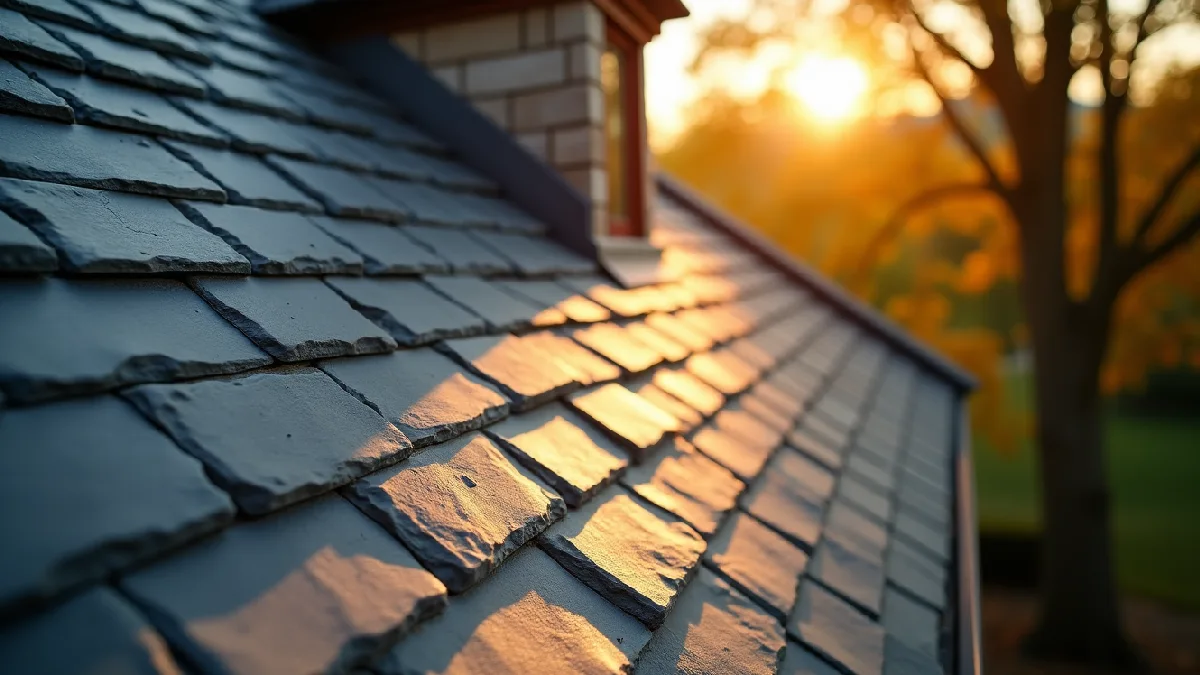
Slate roofs are renowned for their incredible longevity, often lasting 75 to 100 years or more—far exceeding most traditional roofing materials. Some premium natural slate roofs have protected homes for over 200 years when properly installed and maintained. This exceptional durability, combined with natural beauty and fire resistance, makes slate a highly valued roofing choice. However, achieving the full lifespan of a slate roof depends on factors like quality installation, slate grade, environmental conditions, and upkeep. For expert installation and guidance on slate roofing, trusted professionals such as River City Roofing can ensure your investment stands the test of time.
This piece will show you what makes slate such a lasting roofing choice. You’ll learn about the key factors that affect its durability and whether this investment matches your home ownership plans.
What is a Slate Roof and Why It Lasts So Long
Slate ranks as nature’s best roofing material. Deep within the earth, it forms over millions of years. This fine-grained metamorphic rock emerges when clay or volcanic ash changes under intense heat and pressure. The natural composition gives slate remarkable durability that lasts for centuries.
Natural slate vs synthetic slate
Quarries in Italy, Spain, and North America produce natural slate. Each piece shows unique character and authenticity that synthetic alternatives can’t match. Real slate roofs last 75-100 years minimum, and many perform well for over 150 years.
Synthetic slate shingles come from recycled materials or polymer blends that try to look like natural slate. Synthetic options weigh less and cost less, but they don’t last as long. The best synthetic slate only lasts 40-50 years, which is just 30-60% of natural slate’s lifespan.
Natural slate also insulates better, resists fire more effectively, and leaves a smaller carbon footprint. Among all roofing materials, authentic slate has the lowest embodied energy. This makes it environmentally friendly despite the higher upfront cost.
How slate is made and why it’s durable
The experience from quarry to roof needs careful craftsmanship. Geologists first check potential sites to verify slate quality. Large slabs come out using diamond-beaded steel cables. These slabs then move to factories where skilled workers shape them through several exact steps:
- Factory sawing into manageable blocks
- Hand-splitting by craftsmen to achieve ideal thickness
- Machine-beveling corners for the traditional chamfered edge
- Final inspection and quality grading
This hands-on process hasn’t changed much over centuries and creates an exceptionally durable product. The dense natural structure helps slate resist moisture, fire, temperature changes, and environmental damage.
Different slate varieties get their specific properties and colors from their makeup. Black slate comes from carbon, red and purple from hematite, and green appears from chlorite and ferrous iron oxide. Homeowners can pick slate that matches their architectural style without losing any performance benefits.
Slate lasts so long because it’s a natural stone, not something manufactured. A properly installed slate roof needs little maintenance and provides exceptional protection against nature’s challenges.
How Long Do Slate Roofs Last?
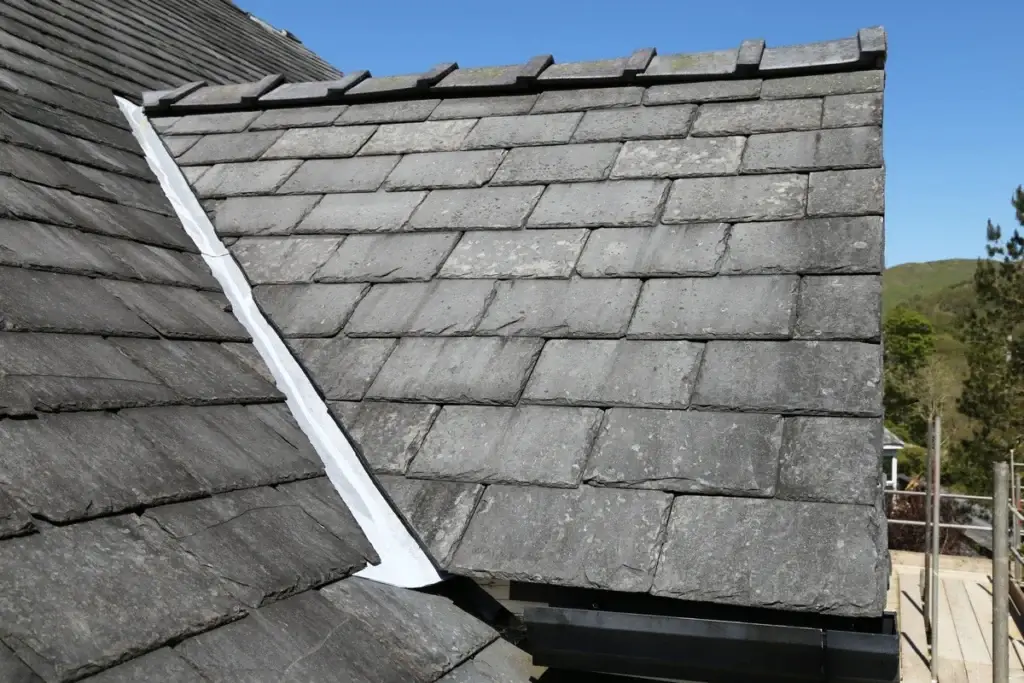
Image Source: Monarch Roofing
Looking at slate roof durability, the numbers will amaze you. Regular roofing needs replacement every few decades, but slate roofs can last for generations.
Typical slate roof lifespan range
Roofing professionals agree that slate roof lifespan ranges between 75 and 200 years. The quality and origin of the slate determine this impressive range. High-density premium slate can last more than a century. Softer, lower-grade varieties might only last 50-125 years.
The rock’s origin plays a big role in how long it lasts. Peach Bottom and Virginia slate are very durable and can last 200-300 years or more. Pennsylvania’s “soft-vein” slate usually lasts 70-110 years. Some historical buildings have slate roofs that are over 200 years old, which shows just how durable slate can be.
Do slate roofs last forever?
Slate roofs don’t literally last forever, but they come pretty close by human standards. Basic thermodynamics tells us that even the strongest materials eventually break down “from a state of order to disorder”. In spite of that, many homeowners joke that “your grandkids won’t even have to worry about it”.
Quality quarry slate can protect homes for centuries if maintained properly. Hard slates like Monson slate from Maine can last several hundred years. These roofs are basically “lifetime” investments for most practical purposes.
Slate roof life expectancy vs other materials
Slate lasts much longer than any other roofing option:
- Asphalt shingles: 15-30 years
- Metal roofing: 40-70 years depending on material type
- Cedar shake: 30-50 years with diligent maintenance
- Spanish tile: 50-100 years
- Synthetic slate: approximately 50 years
The best alternatives don’t come close to natural slate’s century-plus lifespan. This amazing durability makes slate worth the higher upfront cost. A single slate roof can outlast five complete replacements of asphalt shingles. This makes it a great long-term value for homeowners who want to keep their properties in the family for generations.
4 Hidden Factors That Affect Slate Roof Lifespan
A slate roof needs the right conditions to reach its maximum lifespan. The longevity of century-old slate roofs depends on several vital factors working together.
1. Quality of installation
The way we install slate roofs determines their lifespan. Proper nailing technique makes all the difference—slate nails should never be as tight as asphalt shingles but should let the slate hang freely on the nail shank. Nails driven too deep crack the slates, and protruding nails damage pieces above them.
The roof’s pitch plays a big role in how long it lasts. Steeper slopes help water run off faster, which slows down weathering. A roof with a 14:12 pitch could last 40 years longer than one with a 6:12 pitch using similar materials. On top of that, the right headlap and breathable underlayment help prevent early failures.
2. Type and grade of slate used
Each type of slate performs differently. The ASTM standard breaks slate into three categories:
- S1: Minimum lifespan of 75+ years
- S2: Rated for 40-75 years
- S3: Rated for 20-40 years
The slate’s origin makes a huge difference in durability—Pennsylvania Peach Bottom slate can last over 200 years, while softer types might only reach 60 years. The amount of calcite and iron sulfide in the slate determines how well it resists weathering.
3. Environmental and climate conditions
Location plays a major role in how long slate roofs last. Areas with frequent freeze-thaw cycles speed up slate delamination because moisture expands inside mineral impurities. Roofs in places with heavy rain, strong winds, or big temperature swings usually don’t last as long.
The way your roof faces and what’s around it matters too. Trees that create shade keep moisture around longer, and water flowing down from higher parts of the roof pools in specific spots. These areas wear out faster than other parts of the roof.
4. Maintenance and foot traffic
Regular inspections are your best bet to make your roof last longer. Small problems—like cracked slates, exposed nails, or wear holes—get worse if nobody fixes them.
People walking on the roof can cause serious damage because slate tiles crack under weight. Only trained professionals who know how to move around should walk on slate surfaces. Here’s a practical tip: when about 20% of your slates show damage, replacing the roof usually costs less than fixing it.
Cost vs Longevity: Is Slate Roofing Worth It?
The choice to invest in slate roofing comes down to weighing big upfront costs against benefits you’ll see down the road. Let’s get into the money side of this premium roofing choice.
How much does a slate roof cost?
Natural slate roofing will cost between $10 and $30 per square foot in 2025. Synthetic options are cheaper at $4 to $12 per square foot. An average 1,700-square-foot roof will set you back $20,825 to $26,010. Labor makes up about 60% of the total cost, while materials take up the other 40%.
Your final price depends on several factors:
- Hard slate costs more but lasts up to 200 years, while soft slate runs 50-100 years
- Synthetic options cost less upfront but don’t last as long
- Local labor rates can substantially change the final price
Long-term savings from fewer replacements
The real value shows up over time thanks to slate’s amazing lifespan. A well-installed slate roof outlasts five complete cycles of asphalt shingle replacement. Homeowners skip multiple roof replacements that usually happen every 15-30 years with regular materials.
Slate’s natural insulation properties help cut energy costs. These savings, combined with minimal upkeep needs, make slate roofing’s long-term value even better.
Impact on home value
Slate roofing boosts your property’s value. Buyers pay more for homes with slate roofs because they know about the looks and long-term durability benefits. The unique appearance creates great curb appeal and means no roof replacement worries for generations.
Professional installation can give you up to 85% ROI. A $35,000 slate roof installation might end up getting back $29,750 of your original investment. This great return happens because buyers will pay extra for homes that have this prestigious, maintenance-free roofing option.
Slate needs a big investment upfront, but its performance over 100+ years makes it a smart financial choice if you plan to stay in your home long-term or want to get the best resale value.
Conclusion
Slate roofing offers unmatched durability that can protect your home for generations, making it a smart long-term investment despite the higher upfront cost. While no roof lasts forever, a well-installed, high-quality slate roof often outlasts multiple replacements of conventional materials, adds significant curb appeal, and increases property value. To maximize your slate roof’s lifespan, it’s essential to work with experienced installers like River City Roofing and perform regular maintenance. When cared for properly, your slate roof can truly become a legacy for your home.
FAQs
Q1. How long can I expect a slate roof to last?
A typical slate roof can last anywhere from 75 to 200 years when properly installed and maintained. High-quality slate from premium quarries can even protect homes for centuries, making it one of the longest-lasting roofing materials available.
Q2. What are the main advantages of choosing a slate roof?
Slate roofs offer exceptional durability, fire resistance, and natural insulation properties. They also enhance a home’s curb appeal and can significantly increase property value. Despite higher upfront costs, their longevity often results in long-term savings by avoiding multiple roof replacements.
Q3. Are there any significant drawbacks to slate roofing?
The primary drawbacks of slate roofing are its high initial cost and heavy weight, which may require additional structural support. Repairs can also be challenging and expensive, as individual slate tiles are not easy to remove or replace without risking damage to surrounding tiles.
Q4. What factors can affect the lifespan of a slate roof?
The longevity of a slate roof depends on several factors, including the quality of installation, the grade and type of slate used, environmental conditions, and regular maintenance. Proper installation techniques, selecting appropriate slate for your climate, and conducting routine inspections are crucial for maximizing its lifespan.
Q5. How does the cost of a slate roof compare to other roofing materials?
Slate roofing is generally more expensive upfront, costing between $10 and $30 per square foot. However, when considering its exceptional lifespan of 75-200 years, it can be more cost-effective in the long run compared to materials that require replacement every 15-30 years. The investment often pays off through increased home value and energy efficiency.