
The lifespan difference between roofing felt and tar paper might surprise you as you plan your next roofing project. Tar paper can protect your roof for up to 20 years. Roofing felt usually lasts 10 to 15 years. Your home’s most important structural element needs more than just durability protection.
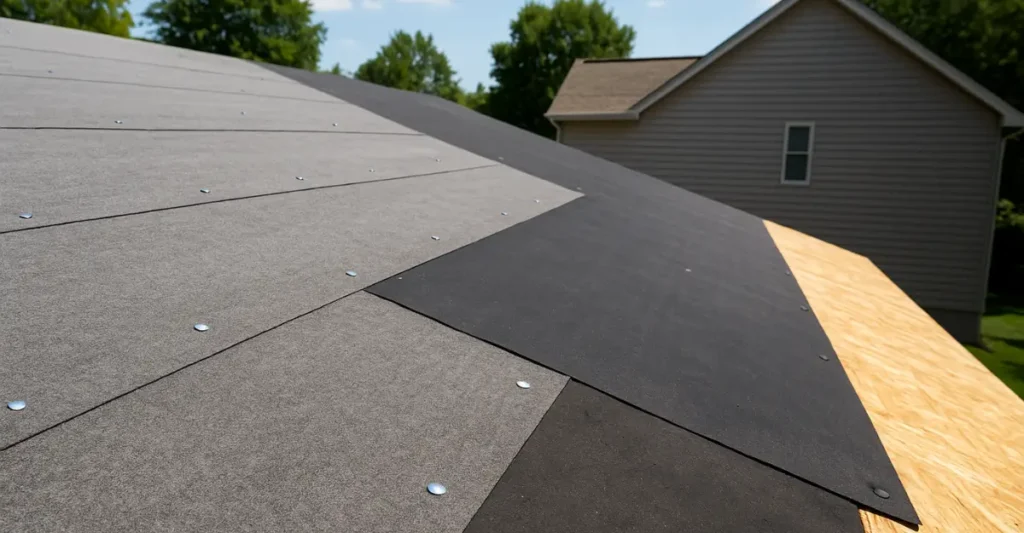
Tar paper works as a traditional underlayment that protects your roof. It doesn’t resist wind and sun exposure as well as other systems. Felt paper comes in two main types – No.15 and No.30. The No.30 felt offers more thickness and strength than No.15. These materials differ beyond their basic makeup. Manufacturers create synthetic roofing felt from fiberglass fleece or polyester with waterproofing treatments. Tar paper creates challenges during installation because it’s hard to walk on.
Your roofing project needs careful material selection based on your specific situation. Each option brings its own advantages and challenges regarding installation, weather protection, and overall value. This piece helps you pick the right material to protect your roof based on what matters most to you.
Which Underlayment Fits Your Project Needs?
Your project’s specific needs will determine the right underlayment choice. The decision between roofing felt and tar paper will affect your budget and your roof’s performance over time.
Best for Budget Projects: When to Choose Felt
Felt underlayment gives budget-conscious homeowners great value for their money. This tried-and-true option costs less than synthetic alternatives, making it perfect for smaller projects with tight budgets. You’ll find felt underlayment in two standard weights:
- No. 15 felt (15 pounds per hundred square feet)
- No. 30 felt (30 pounds per hundred square feet)
No. 15 might be enough if you live in an area with mild weather and have limited funds. No. 30 felt proves to be a better choice because it’s thicker and resists tearing better.
Best for Harsh Weather: When to Choose Tar Paper
Synthetic tar paper delivers better protection in regions with extreme weather conditions. These synthetic options stand up better to environmental factors than traditional felt. Tar paper becomes the smart choice if your area gets:
- Heavy rainfall or snow accumulation
- Strong winds that could tear standard materials
- Extreme temperature swings
Synthetic tar paper holds up well against UV exposure without breaking down. This protection becomes vital if your installation takes longer than a few days. Homes in severe winter areas benefit from self-adhered underlayments that use high percentages of asphalt and rubber polymers to create a waterproof barrier between the roof deck and underlayment.
Contractor Preferences and Regional Trends
Experience and local factors shape professional roofers’ material choices. Some contractors prefer felt underlayment with slate or tile shingles, while others lean toward synthetic options.
Local climate plays a big role in material selection, and self-adhered underlayments work great in regions with harsh winters. Modern contractors tend to pick synthetic underlayment because it weighs substantially less (up to four times lighter than felt) and makes installation faster and easier.
Many roofing warranties require synthetic underlayment for coverage. That’s why checking the manufacturer’s requirements becomes essential before making your final choice.
Material Composition and Performance
The main difference between roofing felt and tar paper comes from what they’re made of, which affects their long-term performance.
Organic vs Synthetic: What It Means for Durability
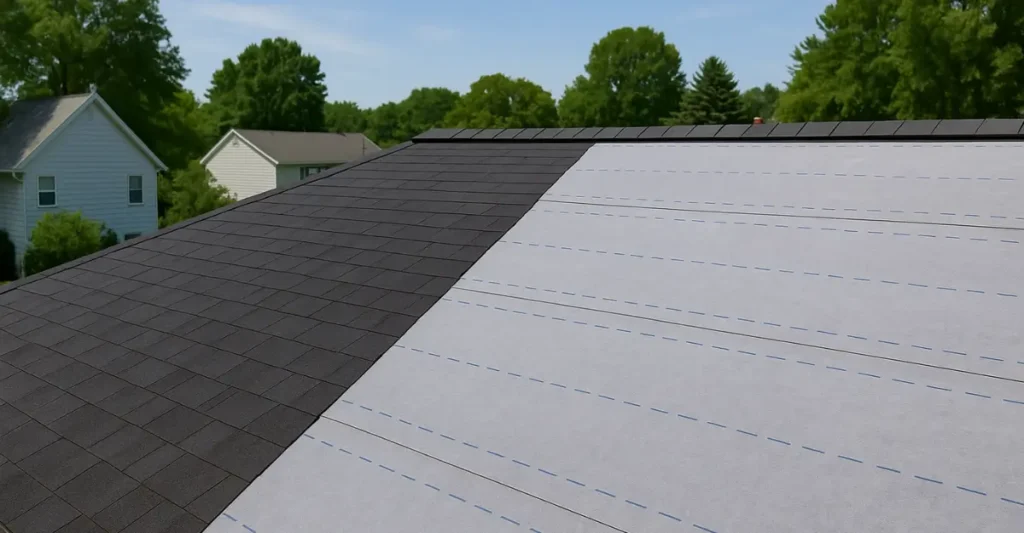
Traditional felt underlayment uses either organic materials (cellulose/paper) or fiberglass mats soaked in asphalt for waterproofing. People call it “organic,” but felt paper contains asphalt that isn’t good for the environment. Synthetic underlayment, on the other hand, is made from long-lasting polymers like polyethylene or polypropylene. These different materials create a big gap in how long each type lasts.
You can’t easily tear synthetic underlayment, and it holds up well against UV rays. Its polymer structure fights off wrinkles, cracks, and fungal growth. So synthetic options usually last longer than felt, and some products stay strong for up to 30 years with proper installation.
Waterproofing Capabilities: Saturation vs Repellence
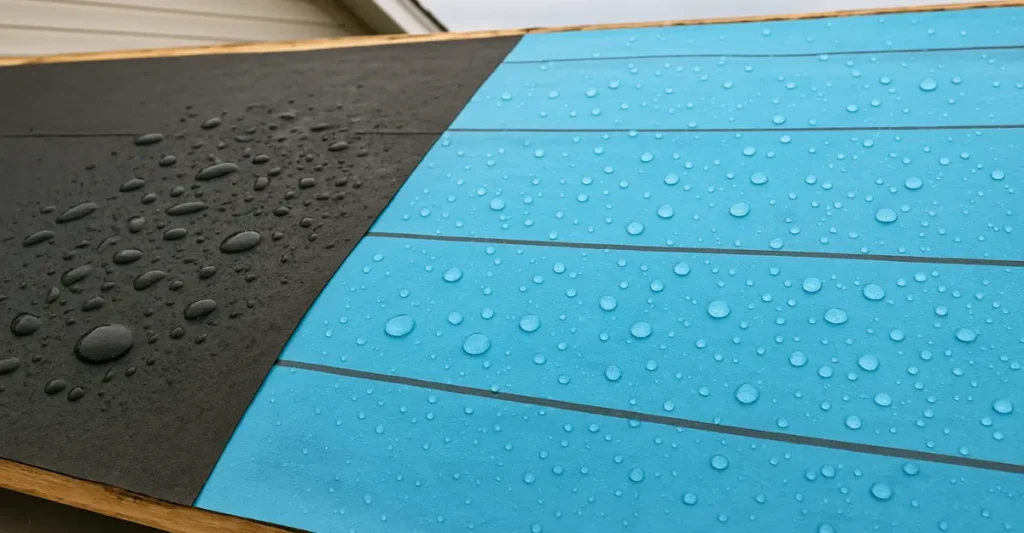
These materials handle water resistance in two different ways:
- Felt underlayment: Works through saturation—the asphalt helps push water away, but isn’t fully waterproof.
- Synthetic underlayment: Works through repellence—pushes water away instead of soaking it up.
This difference is vital during installation delays or bad weather. Felt products tend to soak up moisture when exposed, while synthetic underlayments keep water out. This makes synthetics especially useful in areas that get lots of rain or have longer construction times.
Fire Resistance and Mold Prevention
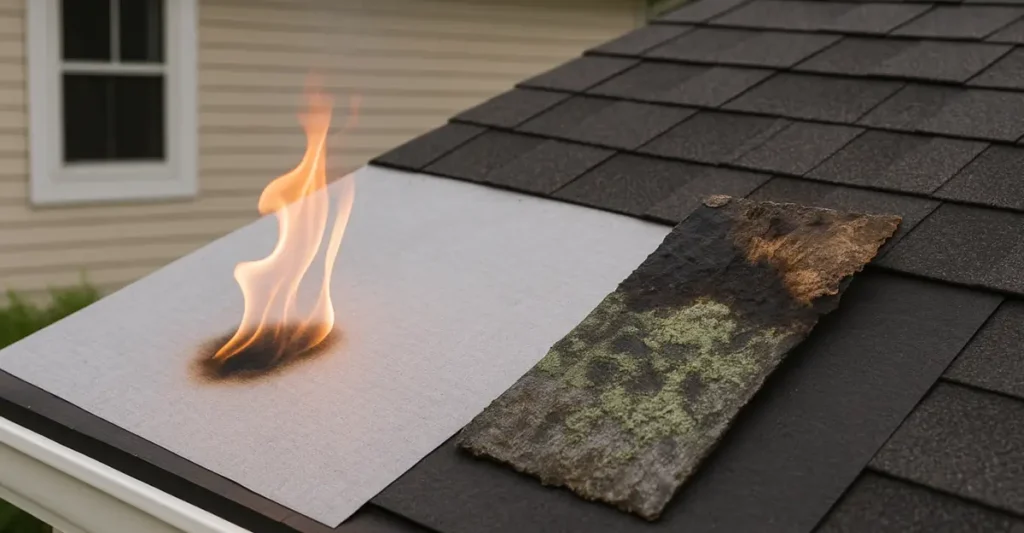
Fire safety is another key performance difference. Many synthetic underlayments come with a Class-A fire rating, giving the best protection against fire. Traditional felt depends on UV-degraded mineral granules added during production to boost fire resistance. All the same, the asphalt component might catch fire if damaged.
Synthetic underlayment’s inorganic makeup naturally fights off mold growth. This helps keep indoor air healthy because synthetic materials let moisture escape from attics and prevent mold and mildew buildup. Felt underlayment doesn’t breathe as well, so it can trap moisture and encourage rot and mold problems over time.
Installation Process and On-Site Handling
The differences between roofing felt and tar paper become clear when workers start installing them. These hands-on experiences shape contractors’ priorities just as much as how well the materials perform.
Roll Weight and Labor Requirements
Traditional felt and synthetic underlayment have a big difference in weight, which improves efficiency by a lot. Traditional felt weighs about 130 pounds per ten square feet, while synthetic felt weighs only 23 pounds for the same area. This huge weight gap affects everything from moving materials to placing them on the roof.
Roll sizes make these efficiency differences even bigger. Synthetic underlayment rolls usually cover 1,000 square feet, while felt rolls cover just 400 square feet. A typical 2,700-square-foot house needs only three synthetic underlayment rolls compared to fourteen rolls of No.30 felt. This means fewer ladder trips and faster installation.
Safety During Installation: Slip Resistance
Worker safety is a vital installation concern. Synthetic underlayments come with specially designed slip-resistant surfaces that give better grip in wet and dusty conditions. These textured surfaces reduce fall risks a lot during installation.
Traditional tar paper has more safety issues. The smooth surface doesn’t grip well and creates risky working conditions, especially on steeper roofs. On top of that, synthetic products have printed guides for overlap and fastener placement that help ensure accurate installation.
Exposure Time Before Shingling
Materials handle exposure quite differently:
- Traditional Felt: Needs covering within 7-10 days because UV rays can quickly damage it
- Synthetic Underlayment: Stays strong for 90-180 days of exposure, depending on quality
This exposure difference helps a lot when weather delays or scheduling issues pop up. Traditional felt can dry out or lose oils in heat, which hurts its ability to protect against moisture. Synthetic options keep working well even after long sun exposure, giving more flexibility with construction schedules.
Cost vs Value Over Time
Understanding the long-term financial effects of your underlayment choice shows key differences between roofing felt vs tar paper. These differences go way beyond the price tag.
Original Cost Comparison
Tar paper costs less upfront than synthetic underlayment. Felt underlayment ranges from $0.65 to $1.10 per square foot. This makes it a great choice for budget-conscious projects. Synthetic underlayment costs between $1.25 and $3.00 per square foot, while premium rubberized options can reach $5.50 to $12.00 per square foot. The price difference comes from advanced materials and manufacturing processes used in synthetic products.
Maintenance and Replacement Frequency
Traditional felt underlayment lasts 20-30 years, while synthetic alternatives protect for 25-30 years. You can extend the underlayment’s lifespan with regular inspections every 3-5 years. Extreme weather conditions might speed up deterioration. Roof underlayment replacement costs between $0.75 and $4.00 per square foot. Labor adds another $0.65 to $3.20 per square foot. Synthetic’s longer lifespan ended up making up for its higher upfront cost.
Warranty Implications with Each Material
Different materials come with varying warranty coverage. Basic manufacturer warranties cover material defects at first, then switch to prorated coverage. Synthetic underlayment comes with 25-50 year warranties, compared to felt’s 12-20 years. It’s worth mentioning that some roofing manufacturers void material warranties if you install felt underlayment instead of synthetic. Full-system warranties offer the most complete protection for both labor and materials, though they cost more upfront.
Conclusion
Your choice between roofing felt and tar paper depends on your situation, budget, and local weather. Felt underlayment is budget-friendly and works well in mild climates. Synthetic tar paper gives better protection against harsh weather, UV exposure, and moisture.
The choice goes beyond just costs today. Traditional felt costs less, making it good for short-term projects. Synthetic underlayment lasts longer, stays durable, and offers better safety features for long-term value. It also meets most manufacturers’ warranty requirements, which makes it crucial for your roof’s protection.
Your region’s weather should guide your decision. Synthetic underlayment works best in areas with heavy rain, strong winds, or extreme temperatures because it repels water better and stays intact. Traditional felt might work fine in milder climates.
Synthetic options make installation safer. Workers handle lighter materials easily, and slip-resistant surfaces reduce fall risks. Your project timeline stays flexible because synthetic underlayment can handle months of exposure when plans change.
Talk to local roofing experts who know your area’s requirements and weather patterns before deciding. Your roof protects your home’s most vital systems. The right underlayment choice ensures lasting protection for your home and everything inside it.
FAQs
Q1. What is the main difference between roofing felt and tar paper?
Roofing felt is typically made from organic materials or fiberglass mats saturated with asphalt, while tar paper is a synthetic material made from polymers like polyethylene or polypropylene. Synthetic tar paper offers superior durability and weather resistance compared to traditional felt.
Q2. How long can roofing felt and tar paper be exposed before shingling?
Traditional roofing felt should not be exposed for more than 7-10 days, as it can deteriorate under UV rays. Synthetic tar paper, on the other hand, can typically withstand 90-180 days of exposure, depending on the quality of the product.
Q3. Which underlayment is more cost-effective in the long run?
While tar paper has a higher initial cost, its longer lifespan (25-30 years) and superior durability often make it more cost-effective in the long run compared to traditional felt, which typically lasts 20-30 years but may require more frequent replacement in harsh conditions.
Q4. Are there safety differences during installation between felt and tar paper?
Yes, synthetic tar paper often features slip-resistant surfaces that provide better traction in wet and dusty conditions, reducing fall risks during installation. Traditional felt has a smoother surface, which can be more hazardous, especially on steeper roof pitches.
Q5. How do warranties differ between roofing felt and tar paper?
Synthetic tar paper typically comes with longer warranties, often 25-50 years, compared to felt’s 12-20 years. Some roofing manufacturers now void material warranties if felt underlayment is used instead of synthetic, making the choice of underlayment crucial for warranty coverage.