If you’ve ever stood in your backyard staring at a project you swear should be simple, like adding a small studio or fixing up a shed, you’ve probably ended up wondering why roof styles have to be so confusing. One slope, two slopes, funky angles… It’s a lot for something that’s supposed to just keep the rain out.
A common point of frustration is the shed roof. People hear the name and assume it’s only for storage buildings, then find out it’s actually used on modern homes, additions, porches, pretty much anywhere. The problem is, most explanations online make it sound more complicated than it really is.
So this post clears that up. We’re going to break down what a shed roof actually is in normal, practical terms so you can figure out if it fits your project.
By the end, you’ll understand how it works, why so many builders like it, and when it makes the most sense to use one without needing a dictionary of roofing terms to get through it.
What Is a Shed Roof?
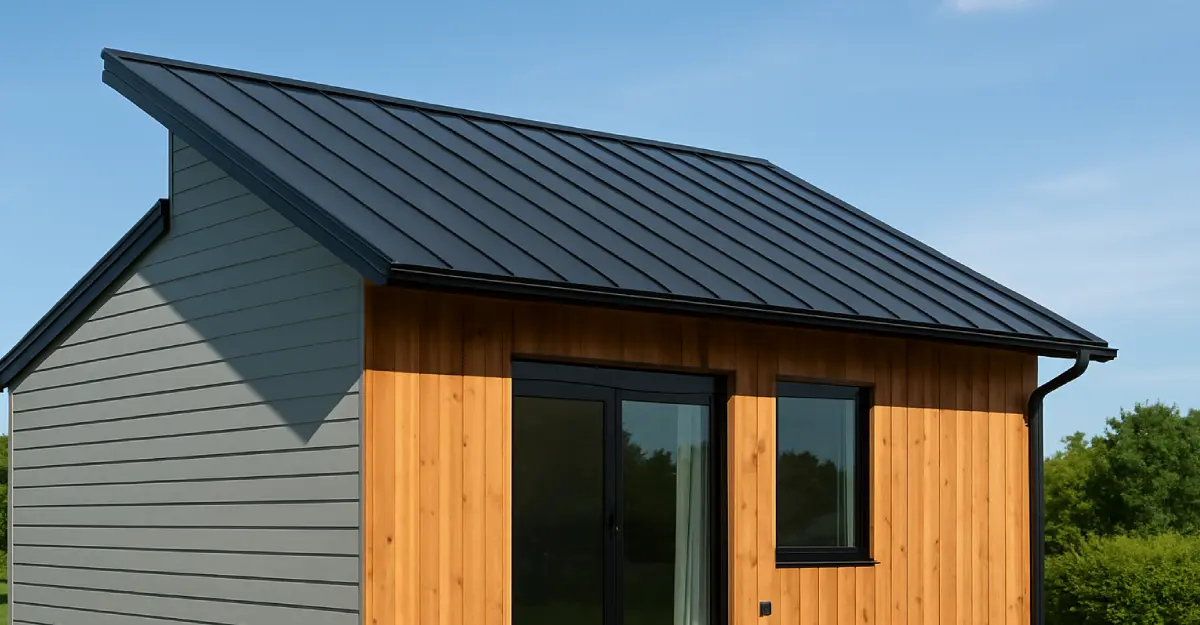
A shed roof uses one simple slope. That’s the whole idea. We like it because it’s easy to build and works on many projects.
You’ll recognize it by its single plane tilting in one direction. One side sits higher, the other drops down. This gives a clean, modern look without trying too hard.
It’s not like a gable roof, which has two slopes forming a peak. A hip roof slopes on all sides, so it’s heavier and usually costs more. Flat roofs look flat, but still need a pitch. A shed roof handles drainage with its natural tilt.
Many people think it’s only for storage sheds. Not true. You’ll see shed roofs on studios, extensions, tiny homes, pretty much anywhere.
History of Shed Roofs
Shed roofs started as simple lean-to structures that farmers and builders used for quick cover or storage. Over time, designers noticed the clean slope worked well in tighter spaces. Modern and minimalist architecture picked it up because the line feels light and uncluttered. Today, architects use it when they want strong natural light, easier builds, and a shape that doesn’t fight the landscape.
How Shed Roofs Work
A shed roof uses one simple slope, and that’s the whole idea behind it. You tilt the roof in a single direction so water, snow, and debris move off without a fight. This design also keeps construction straightforward, which helps when you’re trying to avoid complicated framing.
Most shed roofs use a pitch between 2:12 and 7:12. You can go steeper, but you don’t need to unless you want a certain look. Lower slopes work too, though you should double-check your roofing material because some options don’t love shallow angles.
Water drainage stays pretty predictable with a shed roof. Everything flows to the low side, so make sure that edge has solid gutters or a plan for runoff. If you skip that, you’ll deal with puddles or messy erosion near the foundation.
You also want to think about structural loads. Snow pushes down, and wind pushes up, especially on the higher edge. We sometimes forget this until a storm shows us the weak spots. If you’re in a heavy-snow region, use stronger rafters or tighter spacing. Windier areas may need extra anchoring or stronger connectors so the roof doesn’t try to lift.
Where Shed Roofs Are Most Commonly Used
Home additions
You see shed roofs a lot on add-ons because they tie into an existing house without much fuss. The single slope keeps the build simple, and you don’t fight with complicated framing. If you want more light inside, you can tilt the roof higher and slip in a row of windows.
Cabins, studios, and tiny homes
Small spaces love this roof style. It gives you more headroom without blowing up the footprint. We also get a cleaner look outside, which helps if you want something modern but not too flashy. Builders lean on it because it saves time and still feels intentional.
Porches and lean-tos
A shed roof works great when you just need quick coverage. It attaches fast, and you won’t need a heavy structure under it. You can angle it slightly to push rain away from the house, which keeps that area drier over time.
Modern residential builds
Many newer homes use shed roofs to create sharp lines and varied heights. It’s a simple shape, but it lets you play with light and space. Some designers mix a few shed roofs together, and the home ends up with a layered look that feels relaxed but stylish.
Garages and workshops
These spaces benefit from a roof you can build without overthinking it. A single slope means fewer cuts and fewer materials. You also get an easy spot for vents or even a solar panel if you want one. It’s practical, sturdy, and not hard to maintain later.
Advantages and Disadvantages of a Shed Roof
| Advantages | Disadvantages |
| Simple framing and faster builds | Limited attic or storage space |
| Great sun exposure for solar panels | One side can take more wind pressure |
| Clean, modern look that fits small or big projects | Drainage can struggle if the pitch is too low |
| Works well for additions or backyard structures | Insulation needs careful planning in some designs |
| Costs less than many multi-slope roofs | Might not blend with every home style |
Shed Roof Materials
Choosing the right material matters more than most people think. It affects how your shed roof handles weather, noise, and long-term upkeep. Let’s look at a few common options so you can choose without second-guessing yourself later.
Metal Roofing
Metal is a favorite for shed roofs because it handles rain quickly and doesn’t require much maintenance. You get a clean look, and the panels last a long time.
Pros:
- Metal sheds water quickly.
- It lasts 40–70 years, depending on the type.
- It stays light, so your framing doesn’t fight extra weight.
Cons:
- It can get loud in heavy rain.
- It costs more upfront than basic shingles.
- You might see dents if debris hits it hard.
Asphalt Shingles
Asphalt shingles work well when you want something familiar and budget-friendly. Most homeowners know how they look, so they blend easily with existing buildings.
Pros:
- They’re affordable.
- You can install them without special tools.
- They come in many colors.
Cons:
- Shingles don’t last as long as metal.
- They can lift in strong winds.
- They need more upkeep than people expect.
EPDM (Rubber Roofing)
EPDM is a solid pick for low-slope shed roofs. It handles sun exposure well and works best on simple roof shapes. You’ll see it used a lot in modern studios and small backyard offices.
Pros:
- It resists UV damage.
- It installs in large sheets, so you avoid leaks.
- It stays flexible in hot and cold weather.
Cons:
- It can look plain if you want style.
- Sharp tools can puncture it.
- It requires a smooth base layer.
Longevity Considerations
Every material lasts differently, so think about how long you plan to use the structure. Metal will outlast most choices by decades. Asphalt sits in the middle with 15–30 years. EPDM can reach 25–40 years if you install it cleanly and keep an eye on the edges. Choose the one that matches your budget, weather, and how often you want to bother with repairs.
Cost Overview
The cost of a shed roof can swing a lot, but most projects land in a mid-range budget. Materials and labor tend to make up the biggest chunk. Your price changes fast when the roof gets larger or the pitch gets steeper. Some regions also charge more for skilled labor, and certain materials jump the total even higher. You can try a DIY build if you’ve got tools and patience, but hiring a pro usually saves stress. We want you to choose the option that fits your time, skills, and comfort level.
Conclusion
A shed roof is simple, clean, and surprisingly flexible for many projects. It uses one slope, but it still gives you solid drainage, a modern look, and room for smart design choices. That mix makes it worth considering, especially if you want something straightforward that still feels intentional.
Before you decide, think about what your space really needs. Look at sunlight, drainage, and how the roof will tie into your home. We all want a roof that looks good, but it also has to work well for years. Take your time here. A thoughtful choice saves you from headaches later.
If you’re unsure which direction to take, that’s normal. You don’t have to figure it all out alone. Explore a few designs, sketch ideas, or walk around your property to see what feels right. And if you want real clarity, talk with a local roofer who knows what works in our area.
When you’re ready, reach out to River City Roofing. We’ll walk you through your options and help you choose a roof that fits your project and your budget without the stress. Let’s get your plan moving.
Comments are closed