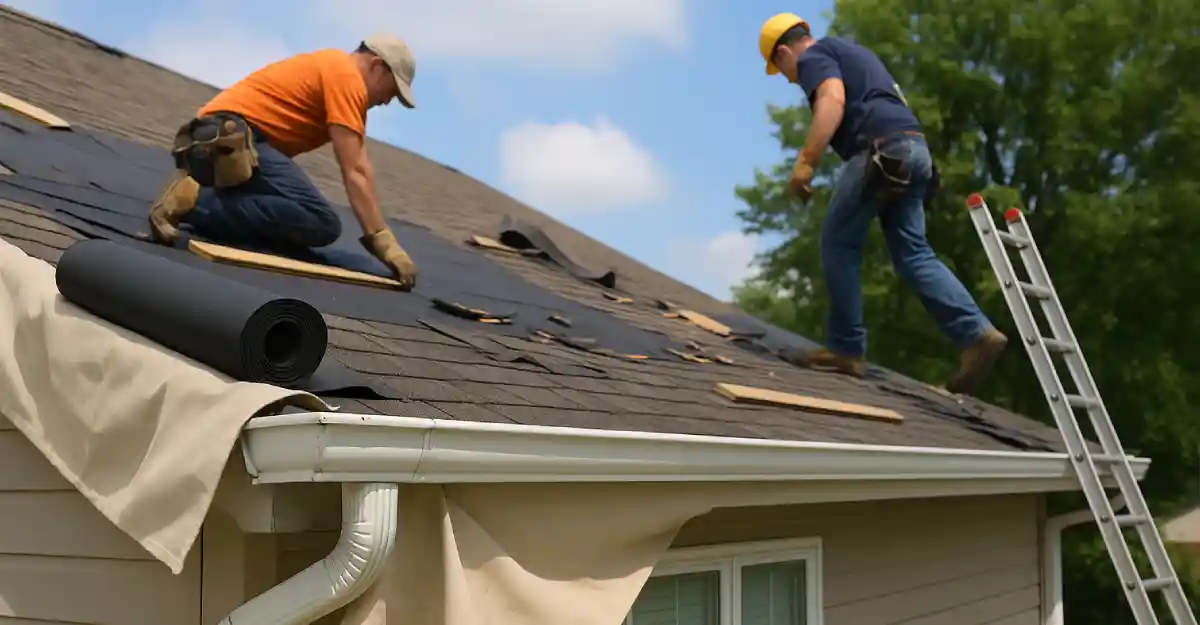
You’ve probably seen it happen before: a ladder shifts, a shingle slips, and suddenly a perfectly good gutter looks rough. As a roofing team, we hear this worry from homeowners all the time, and honestly, it makes sense. Your gutters sit right under the busiest part of a roof replacement, so they’re often the first thing at risk.
The challenge is that even a small dent or clog can lead to drainage issues you never asked for. And when you’re already investing in a new roof, the last thing you want is extra damage tagging along.
That’s why we put together this guide on how to protect gutters during roof replacement. We want you to feel informed, prepared, and confident before work even starts.
Why Gutters Are at Risk During Roof Replacement
Your gutters sit right under the busiest part of the project, so they take a lot of action. When we set ladders, the pressure can push on the gutter edge more than you expect. A small shift or bad angle might bend the metal before anyone even notices. Tools also move fast during roof work, and one dropped hammer can dent a section in seconds.
Falling debris creates another problem. Old shingles slide off with real weight, and they don’t fall gently. If they hit the gutter, they can crack brackets or clog a downspout. Even lighter scraps add up when they land in the same spot again and again.
There’s also the hidden stuff most homeowners don’t see. Gutters that already sag a little can fail under stress. Loose fasteners might give out once the crew starts moving around. And if debris builds up inside the gutter during the job, water can back up and cause a mess later.
We watch for these risks because they show up fast. When you understand them too, it’s easier to protect your gutters before the first ladder goes up.
Pre-Replacement Preparation
Before any shingles come off, we take time to look at your gutters the right way. A quick walk-around helps us spot small issues that could turn into bigger headaches once work starts.
Inspect existing gutter condition.
We begin with a simple check. We look for dents, loose brackets, and places where water already hangs. You can join us if you want a clearer picture of what’s going on.
Identify weak points or sagging sections.
If a section sags or feels soft, we call it out early. These weak spots can fail fast under extra weight or vibration. Catching them now saves you trouble later.
Communicate concerns with the roofing crew.
We talk through every concern with the team before ladders go up. This keeps everyone alert and helps us avoid careless pressure on the gutter line.
Set expectations with the homeowner.
We tell you exactly what we’ll protect, how we’ll handle debris, and what you might hear during the process. Clear expectations prevent surprises and help the project run smoothly for everyone.
Protective Measures Roofers Should Use
Ladder standoffs and stabilizers
We use standoffs to keep ladders off your gutters, so the weight never crushes the metal. These stabilizers give us a steady grip on the roof edge and let the crew climb without leaning into your system. It’s a simple tool, but it saves a ton of unnecessary damage.
Gutter guards or temporary coverings
Before work starts, we add light guards or cover the gutters with protective boards. This stops nails, granules, and stray scraps from getting trapped inside. You don’t want to deal with a clogged gutter right after a roof job, and honestly, neither do we.
Debris management: tarps, chutes, and ground protection
We set tarps and debris chutes before tearing anything off the roof. This keeps the mess moving in the right direction, down and away from your gutters. It also protects your siding and landscaping, which usually sit right below the action.
Safe shingle removal techniques
Our crew avoids pushing old shingles toward the gutter edge. We lift and pull them in a controlled direction, so nothing slides off and bends the gutter lip. It sounds small, but careless scraping is one of the quickest ways to dent a gutter.
Proper crew training and supervision
Good protection only works when the team follows the plan. We train every roofer on ladder safety, debris control, and gutter awareness. A supervisor checks the work zone throughout the day to catch issues early and keep the pace steady.
How Homeowners Can Help
You play a bigger role in protecting your gutters than you might think. A few simple steps make the whole job smoother and safer for everyone.
Clearing gutters before work starts
Start by giving your gutters a quick clean. When you clear out leaves or old gunk, we can see any weak spots right away. Clean gutters also stop debris from piling up during the tear-off. You don’t need a perfect job, just remove the noticeable buildup so nothing hides damage.
Making sure the driveway and yard are accessible
Please keep the driveway open if you can. We bring heavy materials, and tight spaces slow everything down. Clear any furniture, toys, or small decorations from the yard. This helps us move ladders without squeezing around stuff and lowers the chance of bumping your gutters by accident.
Asking the right questions before signing the contract
Before you sign anything, ask how we protect gutters on every job. You deserve straight answers. Ask about ladder standoffs, debris handling, and cleanup. You can also ask who checks the gutters after the project. These questions help you understand what to expect and make sure we stay accountable.
When to Replace Gutters Along With the Roof
Sometimes your gutters look fine from the ground, but the close-up view tells another story. When we’re already on the roof, we often spot wear that homeowners didn’t know existed. Replacing gutters during roof work isn’t always required, but it can save you stress later.
Signs your gutters are too worn to keep
- If you see sagging runs, that’s a warning. Water won’t drain right, and you’ll fight overflow every storm.
- Cracks or small splits matter too. They spread fast once the weather hits them again.
- Peeling paint or rust patches show water has been sitting too long.
- Watch for seams pulling apart or fasteners slipping. That usually means the system can’t hold weight anymore.
- If water leaks behind the gutter, you may already have fascia damage. Don’t ignore that one.
- When several of these signs show up at once, the gutter is near the end of its life. You’re better off replacing it while the crew is already there.
Pairing gutter replacement with roof work for cost savings
- Doing both jobs together cuts down on labor time because our crew only sets up once.
- We also remove the risk of new gutters getting scratched or bent by later work.
- You avoid paying for separate inspections, truck rolls, and cleanup.
- Everything fits cleanly because we align the gutter system with the new roof’s edges and pitch.
- If your gutters struggle now, pairing the replacement with the roof project keeps your home protected and saves you a headache down the road.
Conclusion
Protecting your gutters isn’t complicated when the proper steps are in place. Most issues never show up when a crew pays attention and treats your home with genuine care. You deserve that kind of service every time. We take gutter safety seriously because we know how fast minor damage turns into frustration. When you work with River City Roofing, you get a team that watches the details and keeps your whole exterior in good shape. If you want a roof replacement without surprise problems, reach out to us. Schedule an inspection, ask for a quote, or set a quick consultation. We’ll walk you through your options and make the whole process easier.
Comments are closed