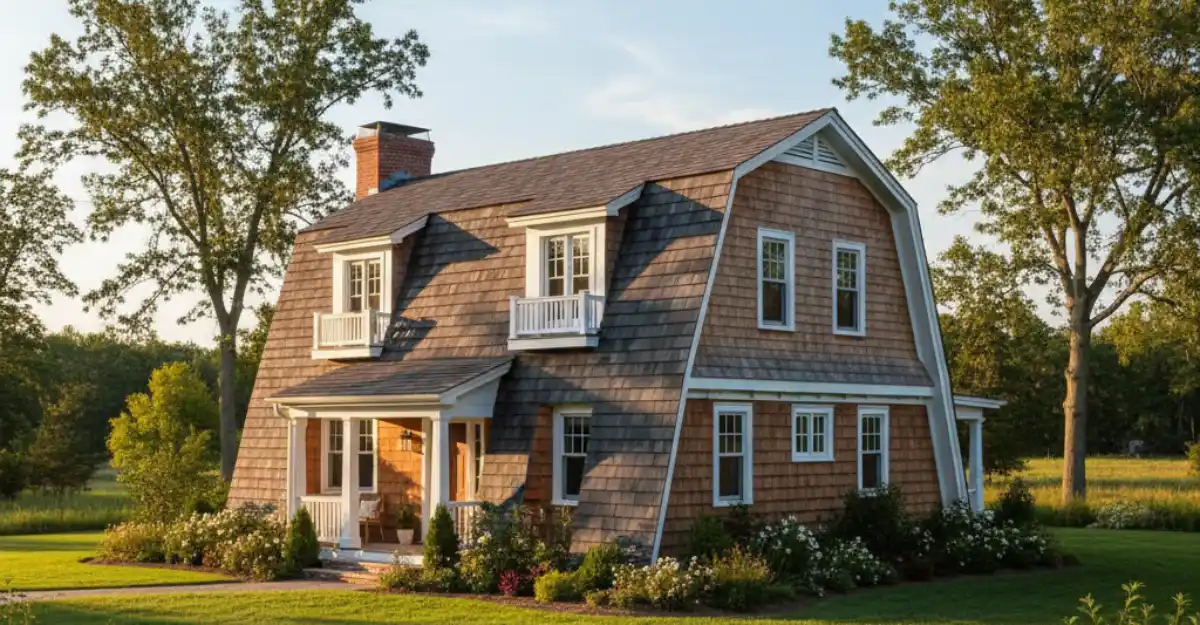
The gambrel roof is a distinctive architectural feature known for its dual-sloped design and timeless charm. With a steep lower slope and a gentler upper slope, this roof style not only enhances a building’s visual appeal but also maximizes interior space. Popularized in Dutch Colonial homes, traditional barns, and modern farmhouses, the gambrel roof combines aesthetic elegance with practical benefits such as improved water drainage, additional living space, and efficient use of materials. Understanding its design, function, and construction reveals why this roof has remained a favored choice in American architecture for centuries.
What is a Gambrel Roof?
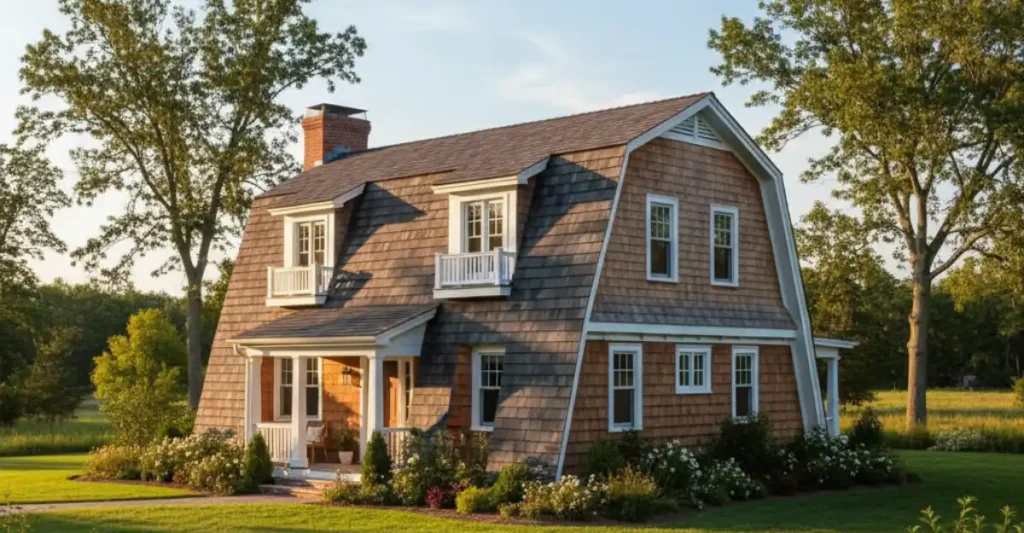
The gambrel roof stands out with its symmetrical design and two distinct slopes on each side. Each side’s lower slope sits at a steep angle that reaches up to 60°. The upper slope appears more gentle at less than 30°. This unique design creates a look that people often associate with barns, farmhouses, and Dutch Colonial homes.
“Gambrel” traces its roots to the Medieval Latin word gamba, which means horse’s hock or leg. The name makes sense because the roof’s shape looks like a horse’s hind leg at the time you compare it with the lower leg. Americans coined the term “gambrel,” though Europeans had already named this style a curb (kerb, kirb) roof.
These roofs made their mark on North American architecture in the late 1600s and became a signature element of Dutch Colonial homes, Georgian-style houses, and traditional American barns. The design’s clever configuration creates more headroom in the building’s upper level. This is a big deal as it means that you get extra space without building a complete second story [3, 10].
The gambrel roof differs from simple gable roofs that use just one slope per side. The design also stands apart from mansard roofs. Though they might look similar in cross-section, gambrel roofs feature vertical gable ends instead of hipped corners. On top of that, it typically extends beyond the façade, unlike mansard roofs.
The gambrel roof’s structure offers several key benefits:
- More living space: The steep lower slope creates extra attic room that works great for storage, lofts, or living areas
- Better water drainage: Water runs off quickly thanks to the steep angle, which reduces the risk of leaks
- Smart use of materials: The roof needs fewer materials than similar styles, despite its complex look
This design strikes the perfect balance between a sloped roof’s advantages and shorter rafter spans. The result combines beautiful esthetics with practical benefits, securing the gambrel roof’s place as a lasting style in American architecture.
How Does a Gambrel Roof Work?
The gambrel roof design works through a simple yet clever structural approach that brings multiple practical benefits. This architectural style depends on exact geometry that creates visual appeal and functional advantages for buildings of all types.
Two slopes per side
Gambrel roofs employ two different slopes on each side of the structure. This dual-slope setup creates the roof’s unique silhouette and serves specific purposes. The design’s most important feature lies in its symmetry—both sides of the roof mirror each other, which helps distribute weight evenly and keeps the structure stable. The symmetrical layout also helps the roof handle various weather conditions better than other designs.
Steep lower slope for space
The steep lower slope, which usually stays under 60 degrees, is a vital part of how the gambrel roof works. We designed this steeper section to maximize headroom and create much more usable space inside the attic or upper floor. This extra area works great as bedrooms, storage, or home offices without expanding the building’s footprint. The space-creating feature makes gambrel roofs valuable especially when you have smaller homes or properties where you can’t expand horizontally due to terrain or well water access.
Shallow upper slope for stability
The upper slope sits at a much gentler angle, usually below 30 degrees. This shallow pitch serves many purposes. It keeps the structure stable by cutting down the overall height and material needs compared to a continuously steep pitch. The gentle slope also helps rainwater and melting snow flow away from the roof quickly. It also makes installing ventilation systems easier, which helps control indoor temperatures.
These two distinct slopes work together to balance form and function. The gambrel design shortens what would be a tall roof and reduces the span needed for each set of rafters. This smart solution makes the gambrel roof stand out visually while staying structurally sound and space-efficient.
Popular Gambrel Roof Styles
Gambrel roofs show up in a variety of architectural styles. Each style adapts this distinctive roof shape to create unique esthetic and functional characteristics. The versatility of gambrel designs has kept them popular from colonial times through today’s architecture.
Dutch Colonial
Dutch Colonial homes showcase the most recognized use of gambrel roof designs. These structures emerged between 1725 and 1775 with a broad gambrel roof and flaring eaves that extend over the long sides. The modern Dutch Colonial style took shape during the Colonial Revival period (1900-1925). Its distinctive gambrel roof creates extra interior space on the upper level. Key features include wide overhangs, dormers, small oval windows in the gable ends, and sometimes a porch beneath the overhanging eaves supported by columns. People called them “Dutch Roofs” in the 18th century, but this architectural style blended influences from both Dutch and German settlers along the Rhine region.
Barn-style
Barn-style gambrel roofs represent the heart of traditional American rural architecture. These roofs first appeared in the 18th century. Farmers valued them because they knew how to keep snow and rain from building up while providing weather-resistant shelter. The classic barn gambrel creates maximum headroom and excellent ventilation, making it ideal for agricultural use. Today’s versions of barn-style gambrels mix traditional elements like board-and-batten siding with modern materials such as metal roofing. This style remains a top choice for outbuildings, sheds, and increasingly for residential “barndominium” designs that blend living spaces with storage or workshop areas.
Modern farmhouse
Modern farmhouse designs have refreshed gambrel roof architecture for today’s homes. This style blends traditional gambrel shapes with clean lines and contemporary materials. Modern farmhouses usually feature timber frame construction and exposed support beams that create stunning ceiling structures. These homes typically include wrap-around porches, open floor plans, and soaring ceiling heights. These elements boost the gambrel roof’s natural spaciousness. The modern farmhouse style keeps the classic silhouette while adding contemporary architectural elements that make the most of both function and beauty.
Gambrel with dormers
Gambrel roofs with dormers show the natural progress that improves both form and function. Dormer windows extend from the lower slope and bring natural light and better airflow into the attic space. This change turns basic storage space into comfortable living areas. Dormers add up to 40 square feet each of useable upstairs floor space. Builders commonly use 4-foot wide gambrel dormers for smaller structures and wider 6-foot and 8-foot dormers for larger buildings. Beyond their practical value, dormers add character and visual interest to the roof’s profile.
How to Build a Gambrel Roof
A gambrel roof’s distinctive dual-slope structure demands careful planning and step-by-step execution. The construction process follows several key stages that build upon each other.
1. Plan the roof pitch and dimensions
Your gambrel roof design starts with angle selection. Lower slopes should measure about 60 degrees, while upper slopes need to stay around 30 degrees. Scale drawings help you visualize different gambrel designs before settling on final measurements. The building width and desired roof height determine exact rafter lengths. A speed square guides you to mark boards at 22.5-degree angles where joints meet.
2. Install trusses evenly
Each truss needs 2×4 or 2×6 lumber cut at precise angles. Plywood gusset plates (½-inch thick) reinforce all joint connections. The trusses should sit 16 inches apart to maximize strength. Toe-nailing with 3-16d nails secures each truss end to the wall plate. Metal straps provide extra stability against harsh weather.
3. Add sheathing panels
¾-inch exterior plywood panels cover the roof structure. The installation begins at a bottom corner. The outside edges must line up perfectly with trusses. Staggered panel joints boost structural strength. 8d common nails fasten panels every 8 inches around perimeters and 12 inches at interior supports.
4. Apply underlayment and shingles
The entire roof deck needs roofing felt (#15 weight for standard pitches, #30 for low slopes). Drip edge protection goes along all perimeter edges. Shingle application starts at the lowest corner and works upward in offset rows. The transition point between slopes requires careful bending of shingles secured with roofing adhesive.
5. Finish with flashing and vents
26-gage corrosion-resistant metal flashing protects the transition break. Gasketed fasteners secure the lower flange over downslope shingles. Self-adhering underlayment covers the upper flange before upslope shingles continue. Proper ventilation systems regulate temperature and prevent moisture damage. High-quality sealant seals all joints for weathertight protection.
Conclusion
The gambrel roof is more than just a classic silhouette—it is a smart architectural solution that blends form and function. Its dual slopes create spacious interiors, facilitate better water runoff, and allow for efficient material use, making it both practical and visually striking. From historical homes to modern farmhouses and barn-style structures, the gambrel roof continues to offer versatility, durability, and timeless appeal. Whether for residential or agricultural purposes, its design ensures that this iconic roof style will remain a staple in architecture for years to come.