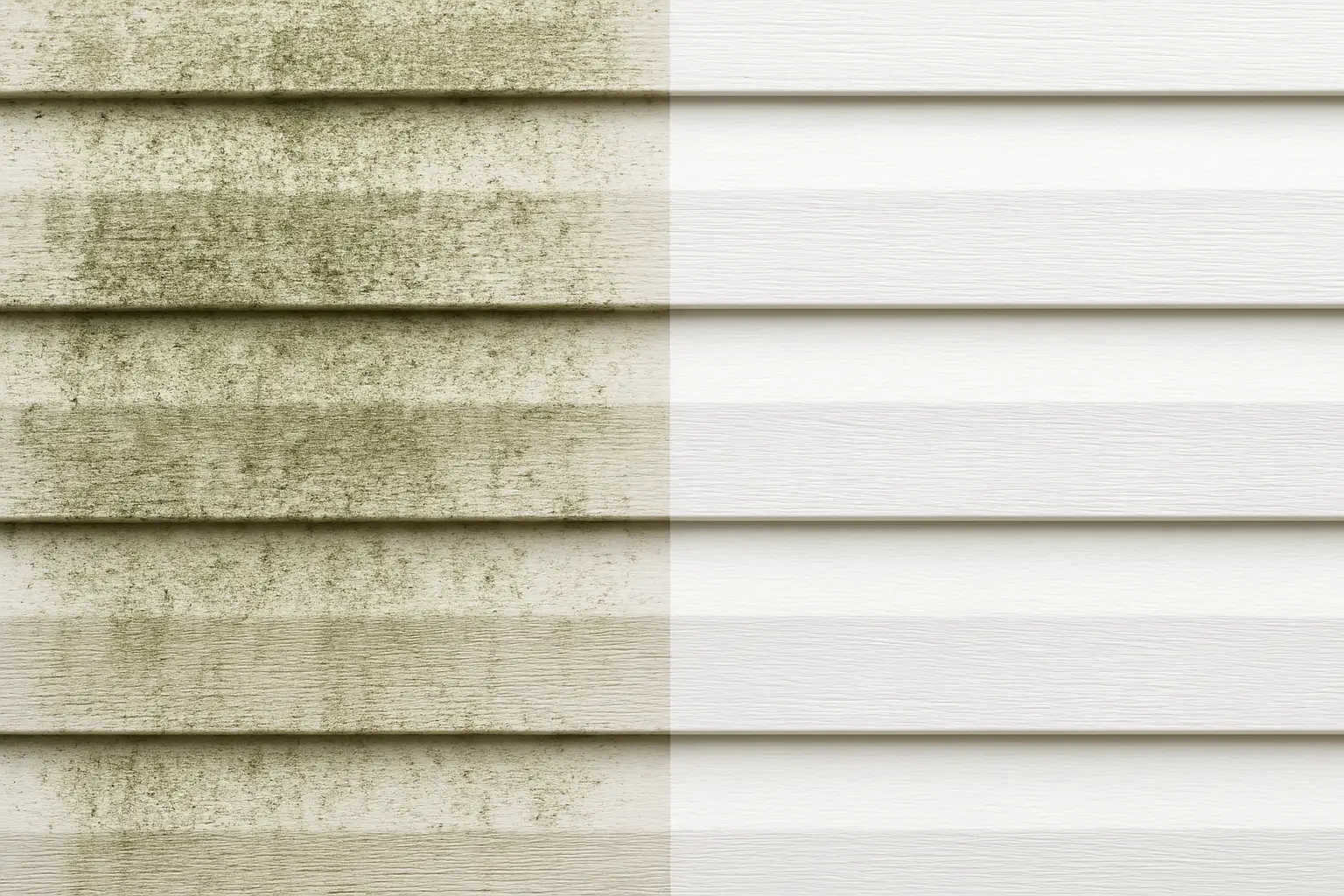
If you live in a humid climate or near water, chances are you’ve seen that ugly green film creeping across your vinyl siding. That mildew isn’t just unsightly—it can also spread to other surfaces like stucco, painted wood, and fiber cement siding.
Mildew thrives in damp, shaded areas with little airflow, but the good news is it’s easy and affordable to clean. Most cleaning solutions cost between $20 and $30, whether you choose a commercial cleaner or go the DIY route. In this guide, you’ll learn step-by-step how to safely and effectively remove mildew—and restore your home’s exterior to its fresh, clean look.
Identify and Understand the Mildew Problem
Seeing mildew on your home’s exterior means it’s time to act. You need to understand what causes this stubborn problem to remove it and stop it from coming back.
What mildew looks like on vinyl siding
The original signs of mildew might look like dirt, but you can spot some clear differences. Mildew shows up as:
- Black streaks or spots that show up especially in damp, shaded spots
- Green or brown patches that love moisture-rich spots
- Powdery or fuzzy textures that look like dust or cotton
Mildew usually has a powdery or fluffy look and starts gray, white, or yellow before turning brown. Mold looks different – it shows up as black or green patches. So that dirt you see might actually be mildew starting to grow. These fungi create patterns unlike dirt, often appearing in streaks or clusters on areas that don’t get much sun.
Why it forms and where it spreads
Mildew needs specific conditions to grow. Here’s what makes it show up on vinyl siding:
Excessive moisture and humidity create perfect spots for mildew to grow, even on vinyl siding that needs little maintenance. This explains why mildew gets worse in humid weather or after heavy rain.
Lack of direct sunlight is a vital part since mildew loves dark places. Your house’s north side tends to get hit harder because it doesn’t get as much sun. Areas covered by trees, shrubs, porches, or other structures stay wet longer and give mildew the perfect home.
Poor air circulation makes a big difference in mildew growth. Moisture stays trapped against surfaces when air doesn’t move freely.
Dirt accumulation feeds mildew because it eats organic stuff like dirt, pollen, and tree sap. Vinyl siding naturally fights off mildew, but once it gets dirty, mildew finds it easy to grow, especially in humid places.
Mildew loves spots that rain can’t reach regularly, like under eaves and porch covers.
Choose the Right Cleaning Solution
Your choice of cleaning solution plays a vital role in getting rid of mildew from vinyl siding. Each option comes with its own set of pros and cons that depend on your needs.
Vinegar vs. bleach vs. oxygen bleach
Chlorine bleach has major drawbacks for use on vinyl siding. It dries up too fast to eliminate fungal roots, which leads to mildew coming back. The bleach can also pollute the environment, eat away at metal fasteners, harm certain siding, kill plants, and leave stains on clothes.
Oxygen bleach (hydrogen peroxide) works better than traditional options. It naturally breaks down into water and oxygen, making it eco-friendly and safe for plants. The solution soaks deep into porous surfaces and attacks mildew roots to stop them from growing back.
Vinegar gives you a natural, budget-friendly option. Mix one part white vinegar with one part water or three parts vinegar with seven parts water. This solution tackles mildew without damaging your garden.
Best commercial mildew removers
Tough mildew spots need powerful commercial products that deliver results:
- Oxygen bleach concentrates like Scotts Outdoor Cleaner Multi Purpose Formula work great in garden sprayers or pressure washers
- Simple Green Oxy Solve brightens surfaces with peroxide instead of bleach and won’t harm plants or pets
- Wet & Forget Outdoor Cleaner includes a trigger sprayer that makes it easy to target stubborn stains
Look for commercial cleaners that use inorganic solvents like water or hydrogen peroxide. Stay away from organic solvents – they can damage your vinyl siding.
Test before applying to large areas
Whatever solution you pick, test it first on a small hidden spot. This quick check helps you avoid any unwanted discoloration or damage to your specific type of vinyl siding.
Note that different vinyl siding materials react uniquely to cleaning solutions. A product that works perfectly on one house might cause problems on another.
How to Clean Mold and Mildew Off Vinyl Siding
You’ve picked your cleaning solution, and now it’s time to deal with the mildew. The right technique will help you remove those unsightly stains and make your siding look great again.
Spray with water first
Start by rinsing your vinyl siding with a garden hose. This first rinse gets rid of loose dirt and sets up the surface for a deeper clean. A hose with a spray nozzle works best because it gives good coverage and lets you reach your home’s higher sections.
Apply cleaner from bottom to top
This might surprise you, but you should start applying your cleaning solution from the wall’s bottom and work your way up. The strategy prevents streaking because any solution sprayed above will run down onto wet surfaces. Put plenty of solution on affected areas and let it sit for 10-15 minutes so it can break down the mildew.
Scrub gently with a soft brush
The solution needs time to work its magic. Then use a soft-bristled brush or sponge to clean the affected areas with gentle strokes. Your vinyl siding can get damaged if you scrub too hard. Pay extra attention to spots where you can see mildew growing.
Rinse from top to bottom
After scrubbing, rinse right away with clean water. Start at the top and work your way down. A good rinse makes all the difference – any leftover solution can actually attract more mildew.
Repeat for stubborn spots
Some mildew spots just won’t give up easily. Put more cleaning solution on these stubborn areas. Let it sit again, scrub a bit harder this time, and give everything a good final rinse.
Prevent Future Mildew Growth
Your best defense against future mildew growth is prevention. Taking steps now will save time and effort later.
Improve drainage and airflow
Good drainage stops moisture from building up and causing mildew growth. Keep your gutters and downspouts clear of debris so they work properly. The soil around your foundation should slope away from your home. You should also adjust sprinkler systems to avoid direct spray on siding. Adding soffit vents will improve air circulation in your attic and, without doubt, reduce moisture levels.
Trim trees and shrubs.
Mildew loves to grow in shaded, damp areas created by overgrown plants. Keep all bushes, trees, and plants trimmed back from your siding. This lets sunlight reach your home’s exterior and helps air move freely. You might want to remove climbing vines completely since they prevent siding from drying properly.
Clean siding regularly
Clean siding plays a vital role in stopping mildew. A yearly cleaning with a mild detergent solution helps catch mildew before it spreads. You should check your siding once a year to fix small problems before they turn serious. Using a garden hose and soft-bristle brush every couple of months helps prevent dirt from building up.
Use mildew-resistant sealants
Several mildew-resistant sealant options work well for vinyl siding. Products like Titebond DuraMaster™ Sealant stick excellently to common building materials while fighting mold and mildew. These sealants create a protective barrier that stops mildew growth and keeps your siding looking clean.
Conclusion
Removing mildew from vinyl siding takes effort, but the results are worth it. Using the right cleaning solutions—like oxygen bleach—and proper techniques can safely restore your siding without harming nearby plants.
Preventing mildew starts with good habits: ensure proper drainage, improve airflow, trim back vegetation, and clean regularly. These small steps go a long way in protecting your home’s exterior.
Always test your cleaning solution on a small spot first, and consider mildew-resistant sealants for extra protection. With the right tools and care, you can handle mildew yourself and keep your home looking fresh year-round.
FAQs
Q1. What’s the best way to clean mildew off vinyl siding?
A mixture of 70% water and 30% white vinegar is an effective and safe solution for removing light mildew stains from vinyl siding. For tougher stains, you can use a commercial cleaner specifically designed for vinyl siding or make a stronger DIY solution with laundry detergent, household cleaner, and bleach.
Q2. Can I use a pressure washer to remove mildew from vinyl siding?
While pressure washing can be effective, it’s not recommended for vinyl siding as it can cause damage. Instead, use a garden hose with a spray nozzle and apply your cleaning solution from bottom to top, scrubbing gently with a soft-bristled brush before rinsing from top to bottom.
Q3. How can I prevent mildew growth on my vinyl siding?
To prevent mildew growth, improve drainage around your home, ensure proper airflow, trim vegetation away from the siding, clean the siding regularly, and consider using mildew-resistant sealants. Also, make sure your gutters and downspouts are functioning correctly to avoid moisture accumulation.
Q4. Is bleach safe to use on vinyl siding?
Chlorine bleach is not recommended for cleaning vinyl siding as it can damage the material, harm nearby plants, and may not effectively kill mildew at its roots. Instead, opt for oxygen bleach (hydrogen peroxide) or vinegar-based solutions, which are safer and more effective.
Q5. How often should I clean my vinyl siding to prevent mildew?
It’s generally recommended to clean your vinyl siding annually with a mild detergent solution to prevent mildew growth. However, you should inspect your siding at least once a year and address any visible mildew or dirt buildup promptly to maintain your home’s appearance and protect the siding.