You might be surprised to learn that buckling shingles can expose your home to leaks, speed up roof deterioration, and hurt your curb appeal.
These wavy, distorted shingles become easy targets for water infiltration if left unchecked. Water damage leads to leaks, rot, and could cause serious structural damage to your home. Moisture problems usually trigger buckling roof shingles – either water gets trapped in the roof deck and causes swelling, or your attic doesn’t have enough ventilation. The problem shows up as distorted shingles that line up with the joints in your roof deck panels.
What’s behind these buckling shingles? Trapped moisture tops the list of culprits. Your roof decking swells up after absorbing water and pushes the shingles upward, which creates that telltale buckling pattern. On top of that, wrinkles in the roofing underlayment or shifts in the wood decking can also cause problems.
Smart homeowners never ignore this issue. These problems only get worse with time and can lead to bigger, more expensive repairs. The good news? You don’t always need a complete roof replacement to fix buckling shingles. Several repair options exist, depending on what’s causing the problem and how bad it is.
Let’s take a closer look at how you can spot, fix, and stop shingles from buckling to protect your home and make your roof last longer.
What Does Buckling Shingles Look Like?
Your roof repair bills can get pricey if you don’t catch buckling shingles early. These damaged shingles have a distinct look that becomes easy to spot once you know the signs.
How to spot early signs of buckling
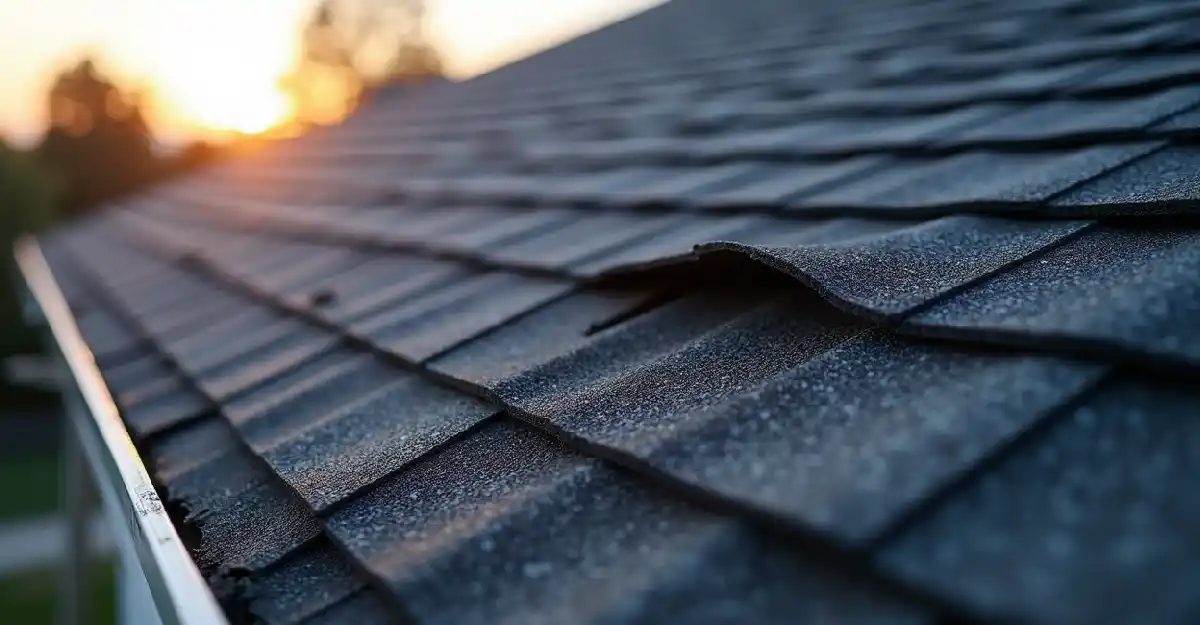
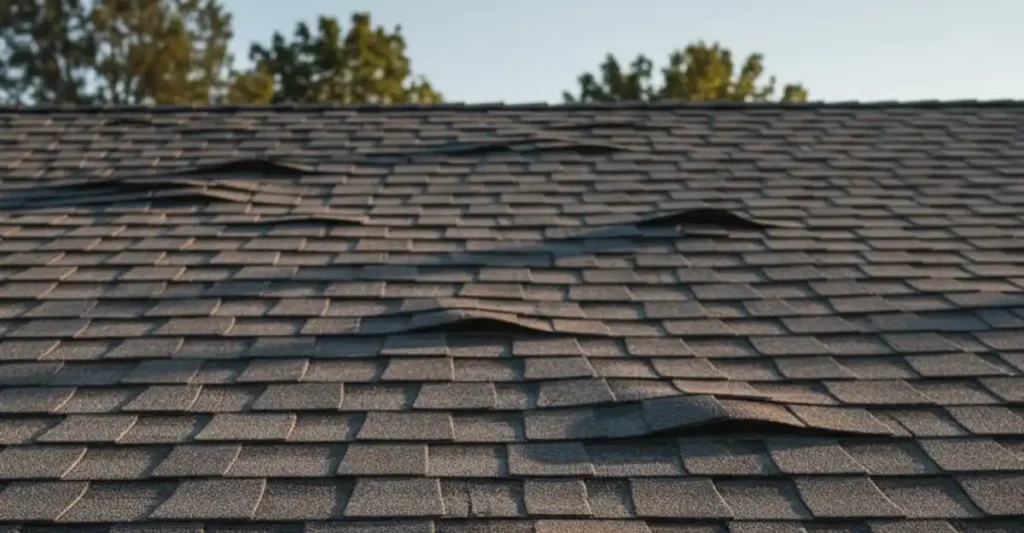
Buckled shingles don’t lay flat against the roof deck and look raised or distorted. Your roof surface might show waves or ripples that create an uneven look. The most obvious sign shows shingles that seem to push upward from underneath. Look for these distortions:
- Vertical ridges or waves that follow the decking seams
- Surfaces that wrinkle or bubble with a blistered look
- Edges that curl up while the middle stays attached
- Shingle surfaces that sink in the middle while edges point upward
New installations might show slight buckling, especially in cold weather. This normal buckling usually goes away after 1-2 weeks of warm, sunny weather. The areas that stay lifted after sun exposure point to bigger problems.
Why visual inspection matters
A quick visual check helps you catch buckling before it causes serious damage. An uneven or bumpy surface seen from the ground often means trouble. Visible buckling from ground level needs immediate attention.
Quick detection stops water from seeping in and causing leaks, rot, and damage to your home’s structure. Strong winds can easily tear off buckled shingles during storms, making them a major risk.
Common areas where buckling starts
Specific roof areas tend to show buckling first. The way shingles distort gives clues about why it happens. Random distortions across the roof usually mean the underlayment has wrinkles. Buckling that follows roof deck joints points to decking problems.
Roofs with multiple layers face more risks since their second layer of shingles isn’t as secure. Poor ventilation and bad installation often create spots where buckling begins.
What Causes Shingles to Buckle?
Learning about buckled shingles can help you avoid getting pricey home repairs. Your shingles buckle because the roof deck moves or the underlayment wrinkles beneath them.
Improper installation techniques
Bad installation stands out as the main reason shingles buckle. Roof installers need to leave enough space between deck panels (minimum 1/8″ gap). Without this gap, expansion forces the shingles up. Nails driven too deep or not deep enough create weak spots where shingles lift. Adding new shingles right over old ones (a “roof-over”) will definitely cause buckling.
Trapped moisture in the roof deck
Your roof deck’s hidden enemy is moisture. Wet wood decking swells and pushes shingles up. This often happens during replacements if rain or dew hits exposed wood. Each board in dimensional lumber decks expands and contracts differently as moisture levels change.
Poor attic ventilation
Bad airflow lets heat and humidity build up in your attic. The wood deck warps without proper ventilation. Many newer homes face this issue. Their tight construction and heavy insulation create the perfect environment for moisture to get trapped in the roofing system.
Old or worn-out shingles
Shingles lose their flexibility with age. Buckling happens naturally once they start to warp. These older, brittle shingles can’t handle moisture changes well. They become too stiff to lay flat against your roof’s surface.
Wrinkled or wet underlayment
The layer between your shingles and roof deck matters a lot. Moisture during installation creates wrinkles. These wrinkles push your shingles up, leaving visible bumps. You’ll see random buckling across the roof surface, unlike deck-related issues that follow joint patterns.
Buckled shingles signal more than just looks – they warn you about serious roof problems that need quick attention.
How to Fix Buckling Shingles
Your roof’s buckled shingles need quick attention to stop further structural damage. Here’s a practical guide to fix this common roofing issue.
Flattening and re-nailing minor buckles
A simple fix might work for buckles that affect just a few shingles. Lift the problem shingles gently and secure them back with roofing nails or adhesive. This works best on small areas with minimal damage but will give a temporary solution.
Replacing damaged shingles
Specific sections with buckling need shingle replacement. Start by removing the damaged shingles with care. Check the area beneath for additional damage. Install fresh shingles using the right nailing methods so they stay flat against the roof.
Fixing underlayment issues
Wrinkled underlayment is a common cause of buckled shingles. Remove the affected shingles first and cut out the wrinkled tar paper. Reattach it flat against the surface. This job takes time, but proper underlayment repair will keep your new shingles secure and level.
Improving attic ventilation
Poor attic ventilation leads to shingle buckling. The rule of thumb is one square foot of vent area for every 150 square feet of attic floor space. Ridge vents, soffit vents, or attic fans help improve airflow. Better ventilation stops buckling and helps your roof last longer.
When a full roof replacement is needed
Extensive buckling might point to deeper issues that need a complete replacement. A full roof replacement makes sense if:
- Large sections show buckling
- Your roof is close to 20-25 years old
- You have structural issues underneath
- Multiple repairs haven’t worked
Note that letting moisture escape from your roofing system is vital. Once repairs are done properly, moisture levels should return to normal and your shingles will lay flat again.
How to Prevent Buckling in the Future
You can save thousands on future roof repairs by taking preventive measures now. Your roof needs attention in several key areas to stop buckling shingles from coming back.
Schedule regular roof inspections
Regular checks of your roof can catch problems before they get pricey. You should get professional inspections once a year, especially after bad weather. Keep an eye on your roof from the ground throughout the year to spot early signs of buckling. Watch for uneven surfaces, lifted shingles, and spots where water might collect. Quick detection stops small issues from turning into big structural problems.
Use proper materials and installation methods
Quality materials are the foundations of a buckle-free roof. You need moisture-resistant underlayment that meets ASTM standards. You should also leave 1/8-inch gaps between roof deck panels so they can expand naturally. Follow manufacturer guidelines exactly for shingle installation—the right nail placement and quantity cuts down buckling risk by a lot. Bad installation remains the biggest cause of buckling roof shingles, so make sure you hire certified contractors who know the right techniques.
Ensure attic ventilation and insulation
Good ventilation creates balanced airflow that stops moisture buildup. The best setup combines soffit and ridge vents with at least 1 square foot of ventilation for every 150 square feet of attic space. This ratio can drop to 1:300 if you add a quality vapor barrier on the warm side of the ceiling. The right insulation levels work with ventilation to control temperature and prevent condensation that guides to buckling.
Avoid installing new shingles over old ones
Putting new shingles over old ones almost always leads to buckling. This method stops you from checking the underlayment and decking for damage. Building codes in most areas also limit homes to two shingle layers maximum. Multiple layers trap moisture, put too much weight on your roof, and usually void manufacturer warranties. The best approach is to remove all old materials before installing new shingles.
Conclusion
Buckling shingles are a sign of serious roof problems that just need your immediate attention. These distorted shingles let water seep into your home when left unchecked. This leads to major structural damage and repairs that can get pricey. You can save thousands by spotting early signs like waves, ripples, or raised sections.
Moisture issues and installation errors cause most buckling problems. Your roof’s condition worsens from trapped water in the deck, poor attic ventilation, and improper installation methods. On top of that, it deteriorates further due to wrinkled underlayment and aging shingles.
The severity of your situation determines how to fix buckled shingles. Minor buckling might only just need re-nailing. More extensive damage requires shingle replacement or underlayment repair. A complete roof replacement becomes the only viable option when multiple areas show major distortion.
Your best defense against future buckling is prevention. Book professional roof inspections yearly, particularly after severe storms. Make sure your attic has proper ventilation with the right mix of soffit and ridge vents. Work only with certified contractors who know correct installation techniques and use quality materials.
Your roof shields everything you value—your home, possessions, and family. Quick action at the first sign of buckling shingles protects your roof’s integrity and your peace of mind. A roof that’s managed to keep its condition serves as your home’s primary shield against the elements. This makes proper care an investment rather than an expense.