Did you know just one cubic foot of packed snow can weigh up to 30 pounds? And when it’s wet, even a few inches can stress your roof like several feet of dry snow. For homeowners in colder regions, keeping snow off the roof isn’t just a winter chore—it’s essential to prevent ice dams, leaks, and serious structural damage.
This guide breaks down simple, effective ways to protect your roof from snow buildup. Whether you plan to handle it yourself or hire a professional, you’ll learn safe removal techniques, cost-saving tips, and key prevention strategies to keep your home safe all winter long.
Prepare Your Roof Before Snow Season
Your roof needs proper preparation before winter arrives. Taking action now helps you dodge pricey damage later and makes snow removal easier throughout the season.
Clean gutters and downspouts
Clear gutters protect your roof from winter problems. You should clean your gutters twice yearly—once in spring and again in late fall after trees have shed their leaves. Blocked gutters substantially increase the risk of ice dam formation because they slow drainage and trap water that can freeze.
Remove all leaves, twigs, and debris that might block water flow. Watch out for corners and junctions where leaves pile up. A good rinse with your garden hose will reveal hidden clogs and show if downspouts drain properly.
Your downspouts should extend 3 to 5 feet away from your home’s foundation to keep water from seeping into unwanted areas.
Inspect attic insulation and ventilation.
Good attic insulation and ventilation will prevent ice dams. Expert recommendations call for attic insulation with an R-value of at least R-30, while R-38 works better in northern climates.
Good airflow from under the eaves or soffit area along your roof’s underside and out through roof vents plays a vital role. This ventilation keeps your attic cold enough to stop the freeze/thaw cycle that leads to ice dams.
Keep attic soffit vents clear of insulation—rafter vents and soffit vents maintain proper airflow. Leave an air gap of at least 2 inches between insulation and your roof deck’s underside.
Schedule a professional roof inspection.
A full professional inspection before winter spots problems early. Your inspector looks for wear, tear, and issues that might cause leaks when snow piles up.
Professional inspectors check your roof’s exterior, flashing, and gutters. They search your attic for leaks, water damage, and ventilation problems. Fall weather creates perfect conditions to make repairs, since roofing work needs clear days with temperatures above 45-50 degrees.
Install heating cables if needed.
Homes prone to ice dams might need heating cables (also called roof de-icing cables or heat tape). These electric cables create melt paths for better drainage and stop ice from building up in freezing temperatures.
Pick a dry day when ladder use is safe to start installation. Begin at a roof corner and create 15″ wide triangles with zigzag patterns from the overhang to your roof’s warm area. Each bend point needs cable brackets, then run the cable inside your gutter and down the downspout.
Experienced homeowners can tackle this DIY project, but professional installation guarantees proper placement and might reveal better ways to prevent ice dams.
Watch for Signs of Snow Overload
Your roof can face dangerous overload during heavy snowfall, even with good preparation. You can save your home from serious structural damage by spotting early warning signs of too much snow weight.
Creaking or popping sounds from the ceilings
Your house tells you when it’s under stress. Creaking, groaning, or popping noises usually mean snow weight puts pressure on your roof structure. Building materials adjust under the snow’s weight and make these sounds. You need professional help right away if you hear loud, sudden bangs after heavy snowfall. These sounds become more noticeable as temperatures change and materials expand and contract.
Sagging or cracks in walls and ceilings
You’ll often see signs along with worrying sounds. Look for visible sagging, bowing, or drooping in your ceiling, especially in the room. Your interior walls might show new cracks around doorways or windows. Small cracks can grow bigger and let moisture seep in, causing more damage. A sagging roofline seen from outside needs immediate expert evaluation.
Leaks or water stains in the attic
Your attic might show signs of water getting in. Water stains on ceilings, wet insulation, or obvious leaks point to snow damage. Water pooling in unusual spots on low-slope roofs shows drainage problems that can lead to structural issues. Your attic might start to smell like mold or mildew if moisture problems stay unfixed.
Doors and windows are becoming hard to open.
Stuck doors and windows can warn you about roof stress. Your building frame might shift slightly under heavy snow. This movement makes doors and windows stick or become hard to open. Multiple doors or windows that suddenly start sticking after heavy snowfall need your attention.
How to Safely Remove Snow from the Roof
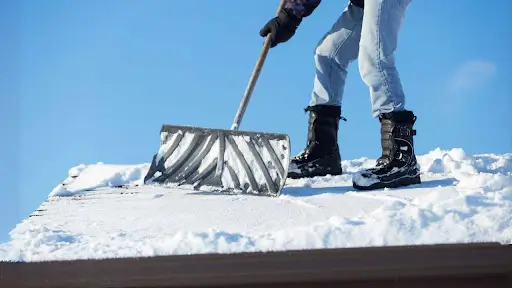
The time comes to remove snow from your roof once it piles up to six inches or more. Your safety should come first during this task.
Use a roof rake from the ground.
The safest tool to remove snow from your roof is a rake with a telescoping handle. These special tools come with plastic blades that smoothly slide across shingles without damaging them. Stand firmly on solid ground and pull the snow down with gentle strokes.
Avoid climbing ladders or walking on the roof.
Never step onto a snow-covered roof or use ladders in icy weather. Most people get hurt from falls while removing roof snow. The best option is to use extended roof rakes that let you work safely from the ground.
Work in small batches to reduce risk
Begin at the roof’s edge and move upward section by section. Remove snow bit by bit instead of tackling large areas at once. This method helps spread out your effort and stops dangerous snow piles from forming.
Leave a thin layer of snow to protect shingles.
Keep a 1-2 inch layer of snow on your roof rather than scraping it completely clean. Too much raking can harm your roofing materials and strip away protective granules.
Avoid sharp tools and harsh chemicals.
Stay away from metal shovels, ice picks, or mechanical equipment on your roof. Salt products should also be avoided because they can stain shingles and damage your plants.
When to Call a Professional for Roof Snow Removal
Professional help might be needed despite your best efforts to prevent problems. Your safety remains the priority during the winter months.
If the snow is too deep or heavy
You should call professionals if snow accumulation reaches 20 pounds per square foot. Remove snow from your roof once it gets deeper than 6 inches. Professionals become necessary when you can’t manage the snow accumulation by roof raking from the ground level. Icy conditions make ladder use extremely dangerous—call professionals right away.
If ice dams have already formed
Ice dams need professional attention immediately. These barriers form when melted snow refreezes along colder eaves and blocks proper drainage. Water pools behind the dam and can seep under shingles, which causes major interior damage. Professional ice dam removal costs between $650 and $2,000. This expense prevents much bigger repair bills later.
If you notice structural damage
Several warning signs signal the need for professional help. Watch for sagging rooflines, strange creaks or noises, visible leaks, or doors and windows that suddenly stick. Quick action stops water from getting in and causing rot, decay, and mold.
Choosing a qualified and insured contractor
Look for contractors who have proven experience in winter conditions. Make sure they have proper insurance that covers accidents and property damage. Review their references and certifications, like CSP or SIMA membership, and ask about their removal methods. Snow removal by professionals typically costs $200 to $700 based on your roof’s size and complexity.
Conclusion
Keeping your roof snow-free requires preparation, awareness, and timely action. Heavy snow adds dangerous weight that can strain your roof’s structure, so it’s essential to start with clean gutters, proper insulation, and early inspections. Watch for warning signs like ceiling sagging, unusual creaks, or sticking doors—they often appear before major damage sets in.
When snow piles up or ice dams form, don’t take chances. Use roof rakes from the ground and avoid climbing in slippery conditions. If snow exceeds six inches or your roof shows stress, call in professionals. The cost of expert snow removal is far less than repairing structural damage. With smart prevention and safe practices, you’ll protect both your home and your peace of mind all winter long.
FAQs
Q1. How much snow accumulation warrants removal from a roof?
Generally, you should consider removing snow when it reaches a depth of 6 inches or more on your roof. However, the exact threshold can vary depending on the type of snow (wet vs. dry) and your roof’s structural capacity.
Q2. What’s the safest way to remove snow from a roof?
The safest method is to use a roof rake with a long handle while standing on the ground. This allows you to remove snow without climbing onto the roof or using a ladder, which can be extremely dangerous in icy conditions.
Q3. Can leaving snow on the roof cause damage?
Yes, excessive snow accumulation can lead to structural damage, ice dams, and leaks. It’s important to monitor snow buildup and remove it when necessary to prevent these issues.
Q4. Are there signs that indicate too much snow on the roof?
Watch for warning signs such as creaking or popping sounds from the ceiling, sagging or cracks in walls and ceilings, leaks or water stains in the attic, and doors or windows becoming difficult to open or close.
Q5. When should I call a professional for roof snow removal?
You should contact a professional if the snow is too deep or heavy to safely remove yourself, if ice dams have already formed, or if you notice any signs of structural damage. It’s also advisable to seek professional help if you’re not comfortable or equipped to handle the task safely.