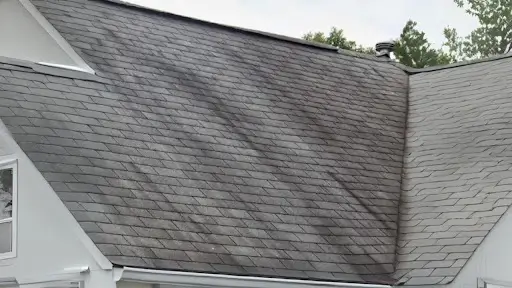
Black streaks slowly spreading across your roof? You’re not alone. These stains are a common problem for homeowners, especially in humid areas.
While many people think the marks are caused by dirt or mold, the real issue is Gloeocapsa Magma, a type of blue-green algae. It spreads through airborne spores and creates a dark pigment to protect itself from sunlight. This leads to those noticeable black stains on your shingles. They won’t damage your roof’s structure, but they can lower curb appeal and resale value.
The good news is that you can remove these stains with the right cleaning approach. Whether you use a commercial product or a homemade mix, this guide will walk you through safe removal methods and offer tips to keep algae from coming back.
What Causes Black Stains on Roofs
Black stains that ruin your roof’s appearance come from a specific type of blue-green algae called Gloeocapsa magma. These unsightly marks aren’t dirt, soot, or mold – despite what many homeowners might think.
Why do algae form on roof shingles?
Your roof runs on asphalt shingles that contain limestone filler (calcium carbonate) from the manufacturing process. The algae feed on these roof materials and slowly weaken the shingles over time. The algae create a dark protective coating that shields them from harmful ultraviolet rays, which causes those black streaks you see.
Airborne spores help the algae spread easily from one roof to another. This explains why you’ll often see similar black staining patterns across entire neighborhoods. On top of that, it spreads even faster when animals carry these spores between surfaces.
How moisture and shade contribute to black streaks
Environmental conditions are vital to algae growth. These organisms love:
- Warm, humid climates
- Areas with limited sunlight exposure
- Shaded sections of the roof (particularly north-facing)
- Regions with high moisture retention
Tree branches that hang over your roof create perfect conditions. They provide extra shade and drop debris that holds moisture. You’ll usually spot the algae first on the north side of roofs since that area gets less direct sunlight during the day.
Common misconceptions about roof stains
Homeowners often misunderstand these roof stains. The black streaks don’t come from mold, mildew, dirt, or acid rain. In stark comparison to this common belief, untreated algae can damage your roof by trapping moisture on your shingles. This trapped moisture ages your shingles faster, makes them deteriorate, and repairs can get pricey.
There’s another reason people get it wrong – they think algae only grows in certain climates. The truth is, Gloeocapsa magma has spread throughout the entire United States and Canada since the early 1990s.
How to Safely Prepare for Roof Cleaning
You need to prepare safely before you start cleaning black stains from your roof. Roof cleaning can be dangerous without the right precautions and might lead to injuries or damage to your property.
Everything in safety gear and tools
The right equipment makes all the difference in safety. Start by getting these protective items:
- Non-slip rubber-soled shoes that keep you steady on wet surfaces
- Full-body safety harness that you’ll need for steep or high roofs
- Eye protection to guard against cleaning solutions
- Durable work gloves to keep your hands safe
- Hard hat to protect from falling debris
A sturdy ladder on stable ground makes a big difference, and it helps to have someone watch you while you clean. Skip roof cleaning if you don’t feel comfortable with heights or using ladders. You’ll also need a garden hose with a spray nozzle, a soft-bristle brush, and the right cleaning solutions to do a good job.
Protecting plants and surroundings
Your landscaping can suffer damage from cleaning solutions, especially those with bleach. Start by soaking all plants and shrubs around your house really well, and pay special attention to plants right under the roofline. Cover smaller plants with clear plastic tarps, but watch them so they don’t get too hot.
You can control runoff by putting trash bags on downspouts or setting buckets to catch the runoff. A professional surfactant in your cleaning mix helps reduce runoff and makes the solution stick to your roof longer.
When to avoid cleaning your roof
The right timing is vital to work safely and effectively. Don’t clean your roof:
- On sunny days when solutions dry too fast
- In windy weather, that could blow chemicals onto you or nearby properties
- During rain or when rain might come within 24 hours
- On very hot days, that speed up chemical reactions or stress plants
Your roof might have serious structural problems or be too steep. In these cases, it’s better to call professionals instead of risking your safety.
Best Methods to Remove Black Stains from the Roof
Safety equipment comes first before you start working on those stubborn black stains. Different cleaning methods balance effectiveness, safety, and how they affect the environment.
Using bleach and TSP solution
A mix of bleach and trisodium phosphate (TSP) is the most common method. Here’s a standard formula:
- 1 quart bleach (6% sodium hypochlorite)
- 1 gallon of water
- 1/4 cup TSP
This solution kills 99% of organic growth in just 20 minutes. TSP helps the solution stick to your roof instead of running off right away. You can apply it with a garden sprayer, wait 15-20 minutes, and rinse it off with low-pressure water.
This method has its downsides, though. Bleach might damage nearby plants, corrode metal flashings, and fade some shingle colors. It also dries out shingles if you use it too often, which leads to curling and a shorter lifespan.
Eco-friendly alternatives like oxygen bleach
Oxygen bleach (sodium percarbonate) works more gently. It turns into hydrogen peroxide and soda ash when mixed with water. Plants and pets stay safe with this biodegradable solution.
You’ll need 1/2 cup per gallon of water or 1 pound to clean 1,000 square feet. It costs 15-30% more than regular chemicals but protects longer, and you won’t need to cover plants.
Oxygen bleach takes longer to work than chlorine-based cleaners but creates a shield that prevents regrowth for up to 12 months. Many experts suggest leaving it on without rinsing.
Commercial roof cleaners: pros and cons
Professional cleaners usually last 30-50% longer between cleanings compared to DIY solutions. Some products, like Roof Shampoo, work without bleach or phosphates, while others use zinc sulfate to stop regrowth.
These products remove deep stains better and last longer. They’re also made specifically for different roof types and stain problems.
The biggest downside is the price, both for buying the products and hiring professionals. You’ll need to balance quick fixes against long-term benefits.
How to clean black streaks off the roof without damage
The right application technique prevents damage, no matter which cleaner you pick:
- Never use pressure washers – they remove protective granules
- Start cleaning from bottom to top so shingles stay in place
- Use soft-bristle brushes only when needed, working downward
- Use a garden hose to rinse – avoid high pressure
Make sure to wet and cover plants before using any chemicals. Let cleaning solutions sit long enough, but don’t let them dry completely.
Severe stains or delicate roofing materials might need professional help. Experts know special techniques that work best while avoiding damage.
How to Prevent Black Stains from Coming Back
You’ve won the battle against those stubborn black stains on your roof. Now let’s make sure they don’t come back. A few smart preventative steps will keep your roof clean and fresh for years.
Installing zinc or copper strips
Metal strips near your roof’s ridge create a powerful defense against algae. Rain carries tiny metal particles down your roof as it flows over these strips. These particles stop algae from growing. Copper works better than zinc – it protects about 15-20 feet of roof area while zinc covers less. Make sure you put strips on both sides of every roof peak. Your roof might need a second row halfway down if it extends beyond 14 feet from the ridge.
Choosing algae-resistant shingles
The next time you need a new roof, pick algae-resistant shingles that contain copper or zinc granules. These special shingles release metal ions that keep algae from setting up shop. Many shingle makers now offer StreakFighter or StreakGuard technology. These come with 10-25-year warranties against algae growth.
Improving roof ventilation and sunlight exposure
Good ventilation keeps moisture levels low, which makes it harder for algae to grow. Your attic needs both intake vents (soffits) and exhaust vents (ridge or gable) to keep air moving. Cut back any overhanging tree branches, too. More sunlight means more UV rays, and UV rays are natural algae fighters.
Routine maintenance tips to avoid roof stains
Check your roof often to catch algae problems early. Keep those gutters clean to prevent water from pooling. Your bathroom fans and dryers should vent outside, not into your attic. This simple fix helps keep humidity levels down.
Conclusion
Black stains on your roof need careful planning to clean properly. Those ugly streaks from Gloeocapsa Magma algae make your home look bad and can lower its value. You need to take action with the right cleaning methods and preventive steps to keep your roof looking good and working well.
Your safety should be the top priority while cleaning. The right gear, protection for your plants, and good weather conditions will keep you safe and prevent damage to your property. Your specific situation and environmental concerns will determine whether you use bleach solutions, oxygen bleach alternatives, or commercial cleaners.
It’s nowhere near as hard to prevent stains as to clean them repeatedly. Zinc or copper strips are a simple and budget-friendly solution that creates an environment where algae can’t grow. Algae-resistant shingles give you built-in protection when you need to replace your roof. Good ventilation and strategic tree trimming will improve your defense against future staining.
Regular maintenance is your best defense against those black streaks coming back. Quick inspections help you spot algae growth early, before it spreads all over your roof. Removing black stains takes work, but your home will look better and your investment will stay protected for years.
FAQs
Q1. What causes black stains on roofs?
Black stains on roofs are primarily caused by a type of blue-green algae called Gloeocapsa magma. This algae thrives on the limestone filler in asphalt shingles and produces a dark pigment to protect itself from UV rays, resulting in the characteristic black streaks.
Q2. How can I safely clean black stains off my roof?
To safely clean black stains, use a mixture of bleach, water, and trisodium phosphate (TSP). Apply the solution with a garden sprayer, let it sit for 15-20 minutes, then rinse thoroughly with low-pressure water. Always wear protective gear and avoid pressure washers to prevent damage to your shingles.
Q3. Are there eco-friendly alternatives for removing roof stains?
Yes, oxygen bleach (sodium percarbonate) is an eco-friendly alternative. It’s biodegradable and safe for plants and pets. While it works more slowly than chlorine-based solutions, it can prevent algae regrowth for up to 12 months.
Q4. How can I prevent black stains from returning to my roof?
To prevent black stains, install zinc or copper strips near your roof’s ridge, choose algae-resistant shingles for your next roof replacement, improve roof ventilation, and increase sunlight exposure by trimming overhanging branches. Regular maintenance and inspections also help catch early signs of algae growth.
Q5. Do I need professional help to clean my roof?
While many homeowners can safely clean their roofs, professional services may be advisable for severely stained roofs, steep slopes, or delicate roofing materials. Professionals use specialized techniques to maximize effectiveness while minimizing damage, and their services often result in longer-lasting cleanliness.
Benjam Indrenius
localbot texts new contact-form leads back in seconds, qualifies them, and sends you a summary so you can call back before competitors do: localbot.io
Benjam Indrenius, founder of localbot
[email protected]