

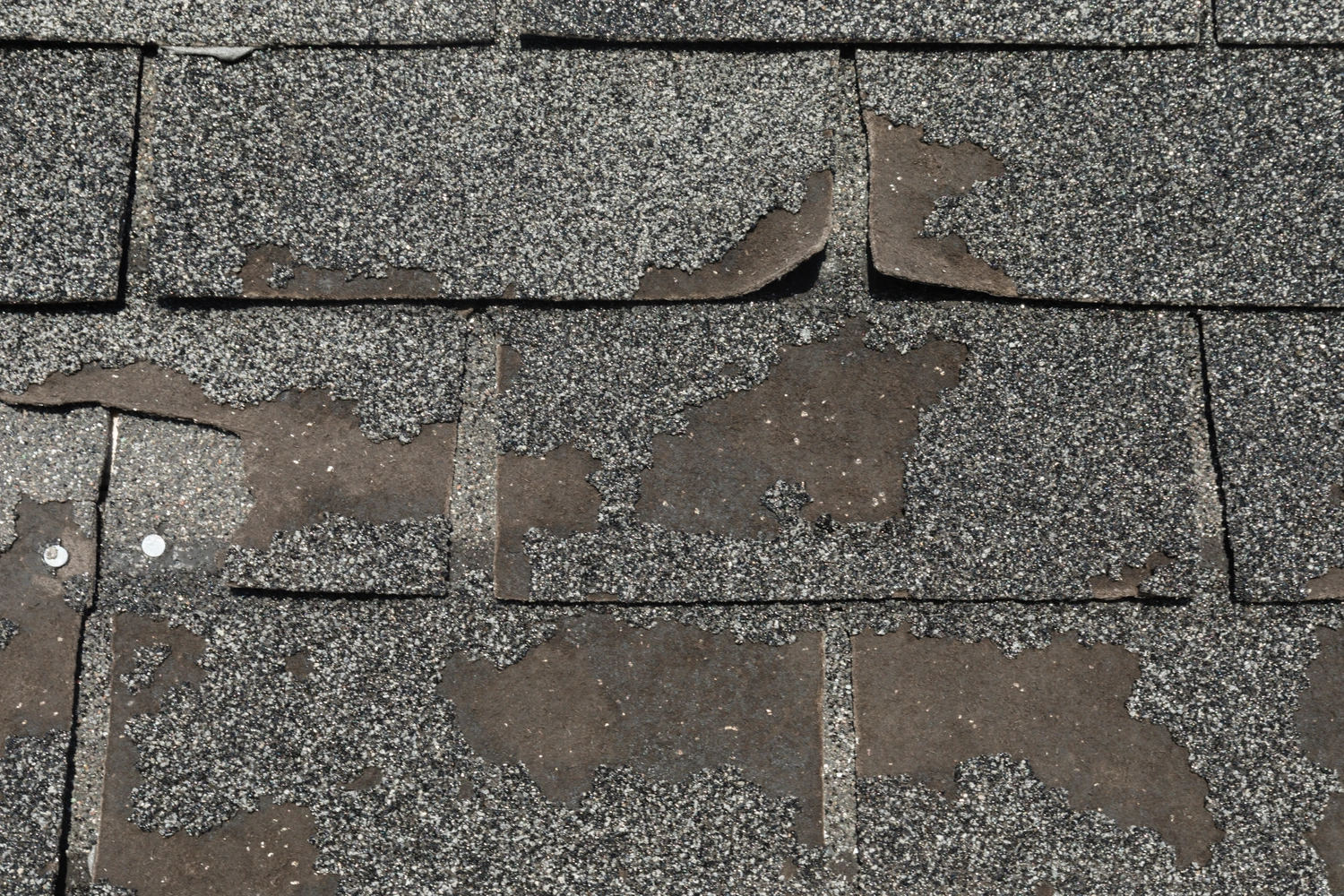
You might have spotted small, gritty particles gathering in your gutters or along your sidewalks. These particles could be granules falling from your roof – a common problem that affects asphalt shingles as they age. Your shingles naturally shed their protective granules over time.
A few loose granules shouldn’t worry you, but heavy granule loss points to a serious issue. Weather and age typically cause your roof’s granular loss, though damaged shingles can also be the culprit. Your roof likely needs replacement if you notice widespread granule shedding. Quick action becomes essential as this problem can lead to extensive damage.
Let’s explore what your roof’s granule loss means, what makes it happen, and how it impacts your roof’s performance and lifespan.
What is Granular Loss on a Roof?
Roof granules are small, mineral particles made from crushed stone that stick to asphalt shingles. These tiny, colored particles create the outermost protective layer of your roof’s shingles. Manufacturers press these granules onto asphalt-coated shingles at the time of production, which creates a strong bond that lasts decades.
Granular loss happens when these protective particles break free from shingles and fall off the roof. Loose granules often collect in gutters, downspouts, or scatter around your home’s foundation.
These granules do more than just look good. They shield against harmful ultraviolet (UV) rays that speed up roof damage. The granules also improve fire resistance, repel water better, and add a lot to your roof’s lifespan by protecting the asphalt layer underneath.
Your new roof might shed some granules, which is normal. These are just the original loose particles that didn’t stick well during manufacturing. But after 15-20 years, the adhesive that holds granules weakens naturally, and more granules fall off.
Too much granule loss creates problems because the exposed asphalt cracks and becomes brittle in sunlight. Missing granules leave your roof open to moisture damage, which can lead to leaks and structural problems.
What Causes Granular Loss on Shingles?
Normal ageing isn’t the only cause of granule loss on shingles. Shingles naturally shed some granules as they age, but specific conditions speed up this process.
Harsh weather damages shingles and leads to premature granule loss. Hailstorms can dislodge granules with their force and leave small craters on the surface. Water from heavy rains washes away granules, especially in areas where drainage concentrates. Strong winds can loosen shingles and create friction that scrapes off the protective layer.
Your roof’s granule adhesion suffers from physical damage. The asphalt base softens when temperatures reach 80 degrees, and walking on your roof during hot weather can dislodge granules. Tree branches that rub against shingles work like sandpaper and wear away the granular coating.
Poor installation often causes early granule loss. Weak points form when shingles aren’t arranged properly, nails are placed incorrectly, or sealing is inadequate. Manufacturing defects can also cause problems – insufficient asphalt mix or weak bonding agents lead to uneven granule application.
UV radiation breaks down the asphalt binder that keeps granules in place. South and west-facing slopes deteriorate faster because they get more direct sunlight. The breakdown process speeds up when roof ventilation is poor and causes overheating.
Drainage issues also lead to granule loss. Water pools and wears away at shingles faster when gutters clog, causing granules to wash away.
How Granular Loss Affects Your Roof
Your roof might look fine with a little granule loss, but this creates serious problems throughout the roofing system. Those protective particles shield your roof, and once they’re gone, ultraviolet radiation attacks the exposed areas. The asphalt layer dries out and becomes brittle without this protection. Cracks start appearing faster than normal.
Missing granules trigger a chain reaction of damage. A roof that should last 20-30 years might fail in just 5-7 years when it develops the most important bald spots. The ageing process speeds up with even minor shedding (10-20% loss). Major bare patches (50%+ loss) can slash your roof’s remaining life by up to 70%.
Exposed areas become weak points where moisture can seep in. Completely bare sections often start leaking after just 1-2 years. Water gets inside and guides the way to structural damage, mould, and interior problems.
Your roof also absorbs more heat without its reflective granules. This makes your attic warmer and drives up cooling costs. The constant heating and cooling create more dramatic expansion and contraction. Your shingles fail faster as a result.
Large amounts of granules in your gutters usually mean the end of the road for 15-year-old roofs. You should get a professional to look at it. They can tell you if repairs are enough or if you need a new roof.
Conclusion
Granular loss serves as a clear warning that your roof needs attention. Your roof will naturally shed some granules throughout its life, but excessive loss can substantially speed up deterioration. These missing mineral particles leave your roof vulnerable to UV radiation, moisture infiltration, and harsh weather conditions.
Quick action on granular loss could save you thousands in future repairs. Detecting issues early lets you extend your roof’s life through targeted maintenance instead of replacing the entire structure. Regular checks of gutters and downspouts will help you spot dislodged granules, particularly after storms. Protect your home with professionals who care. Connect with River City Roofing today.
Comments are closed