You’ve probably walked past a house with a roof that looks almost vertical on the sides and sharply angled on top, distinctive enough to catch your eye even if you don’t know what it’s called.
The problem is, when you try to look it up or consider something similar for your own home, roof terminology gets confusing fast. It’s hard to tell what makes one style different from another.
This guide clears that up by answering a simple question: What is a mansard roof? You’ll get a straightforward explanation of the design and why it’s still used today.
What Is a Mansard Roof?
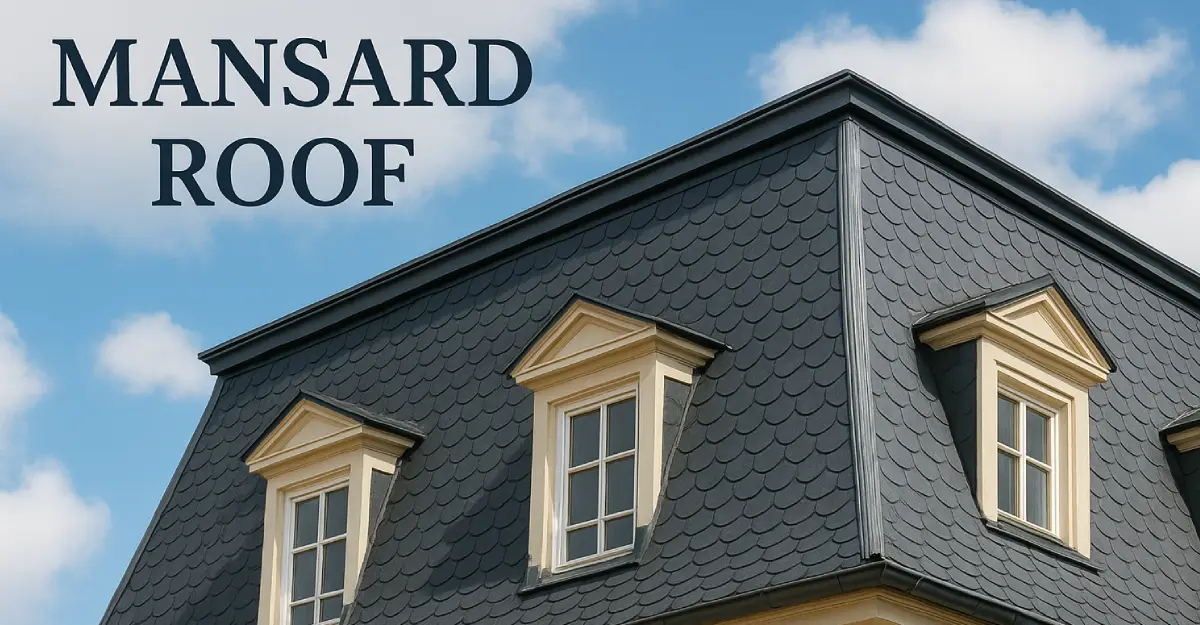
A mansard roof is a four-sided roof with two slopes on each side. The top slope sits at a mild angle, while the lower slope drops sharply and creates extra space inside the upper floor.
Think of it as a roof that leans gently at the top and then falls almost straight down. You get more room, more light, and a distinct look.
Many people mix it up with a gambrel roof. A gambrel has two slopes on only two sides. A mansard wraps its double slopes around all four sides, which makes it easy to spot once you know the difference.
This style comes from 17th-century France. Architect François Mansart used it so often that the roof took his name. The design spread fast, and we still see it because it blends charm with practical space.
Key Characteristics of a Mansard Roof
Structure and Geometry
- You’ll notice two distinct slopes: a steep lower slope and a gentler upper one.
- This shape gives you more usable attic or top-floor space.
- The lower slope often feels almost vertical, which boosts interior headroom.
- We rely on this stacked design when we want style and function in one roof.
Materials Commonly Used
- Many homeowners choose slate because it lasts long and looks classic.
- You can also go with asphalt shingles if you want something budget-friendly.
- Metal panels work too, and they handle tough weather better than people expect.
- Pick a material that fits your home’s style and what you’re willing to maintain.
Window Styles Often Paired With It
- Dormer windows pop out from the steep slope and bring in real light.
- You’ll see them in many historic homes because they add charm and space.
- Eyebrow windows soften the roofline and feel a bit more decorative.
- We add these window types when we want air, brightness, and character in the upper rooms.
Variations (Convex, Concave, Straight-Sided)
- Straight-sided mansards keep clean lines and suit modern or simple designs.
- Convex styles curve outward and give the roof a fuller, rounded look.
- Concave versions curve inward, which creates a softer and more elegant profile.
- Choose the variation that fits your taste and the vibe of your home.
Why the Mansard Roof Became Popular
The mansard roof took off because it added real usable space under its steep lower slope. You could fit a roomy upper floor without feeling boxed in. In packed cities, that extra height helped people grow upward when land ran short.
The style also carried a distinct charm that people instantly noticed. Its bold lines felt elegant without looking fussy. French Second Empire architects pushed the design even further, and we kept it because it simply works and still looks great.
Benefits & Drawbacks of a Mansard Roof
| Benefits | Drawbacks |
| Creates more usable space in the top floor | Costs more to build than basic roof styles |
| Offers flexibility for future expansion | Needs careful maintenance around dormers |
| Brings in more natural light | Can struggle in heavy snow or rainy climates |
| Adds strong visual appeal | May face local code limits in some areas |
| Can increase your home’s value | Requires skilled contractors to get it right |
Is a Mansard Roof Right for Your Home?
A mansard roof offers space and style, but it won’t fit every situation. Start with your budget. This design usually costs more because of its extra angles and details.
Climate matters too. Heavy snow or constant rain can push this roof harder, so you need solid materials and good drainage.
Check local rules before you commit. Some areas limit roof height or restrict certain historic styles, and you don’t want surprises later.
Think about your long-term plans. If you expect to expand, a mansard roof gives you room to grow without major structural changes.
It’s a strong fit for additions, tight urban lots, and older neighborhoods where the style already plays well with surrounding homes.
But it’s not ideal if you want the lowest cost or very low maintenance. The shape and dormers need more care.
Look at your needs, budget, and climate. If everything lines up, a mansard roof can add space, charm, and flexibility to your home.
Tips for Homeowners Considering a Mansard Roof
Choosing durable materials: Pick materials that hold up in your weather. Slate lasts, but it’s costly. Metal is lighter and steady. Good shingles work fine if you avoid the bargain stuff.
Working with architects familiar with mansard design: Hire someone who has built mansard roofs before. This style needs skill. Ask for past work so you know they can handle the angles.
Ensuring proper waterproofing and drainage: Make sure the crew installs solid flashing and membranes. Steep changes in slope push water around fast. Good gutters help prevent surprise leaks.
Getting accurate cost estimates and permits: Ask for a clear estimate before you commit. Check permit rules early since some areas limit roof shapes. It saves headaches later.
Conclusion
A mansard roof gives your home extra space and a memorable, distinctive look. It blends style with function, and that balance is why it continues to show up in both historic and modern homes.
Think about what you want from your space. Do you need more room? Do you want a stronger architectural presence? Or maybe you’re drawn to the charm it adds. If any of that feels right, a mansard roof could be a solid choice for you.
If you’re still unsure, that’s completely normal. Roofing decisions can get confusing fast, and you don’t need to sort it out alone. Reach out to River City Roofing, and we’ll walk you through your options. We can look at your home, talk through costs, and help you decide what truly fits your needs with no pressure.
Comments are closed