The cost to change your roof’s pitch might shock you. A simple switch from a low-slope to a steep-pitched roof can push prices from $4.00 to $16.00 per square foot.
These numbers show how your roof’s angle affects the final price tag. Steeper pitches need more materials because they cover more surface area. Workers also need safety gear like harnesses and support frames to work safely. The labour costs go up, too, since the work becomes tougher and takes longer on steep angles.
A roof replacement needs careful planning and budget consideration. To cite an instance, a 9/12 slope (rising 9 inches for every 12 inches horizontally) could set you back $8,300 for an average 40-by-50-foot roof. But you should think about more than just the cost.
This piece breaks down the actual costs of changing your roof’s pitch and what drives these prices. You’ll find that a steeper pitch’s benefits—like better water and snow drainage—make sense for your home and budget.
What is Roof Pitch and Why Does It Matter

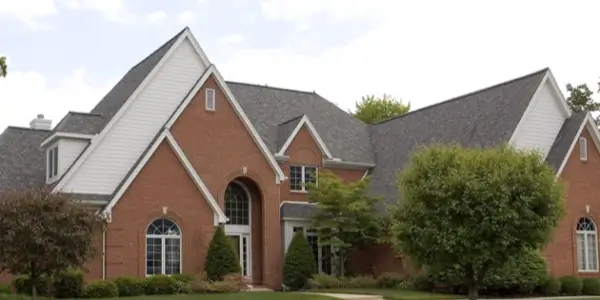
Image Source: Leap
Roof pitch represents your roof’s steepness, expressed as a ratio of vertical rise to horizontal span. This measurement shows how many inches your roof rises vertically for every 12 inches of horizontal distance. A 6/12 pitch means the roof rises 6 inches for every 12 inches horizontally.
The measurement plays a vital role and affects everything in your roofing system. Your roof’s steepness determines how well water drains—steeper roofs shed water and snow better, which reduces the risk of leaks and damage. The roof’s angle also dictates which materials you can install. Asphalt shingles perform best with pitches between 4/12 to 20/12, while rubber membranes suit much lower pitches (.25/12 to 3/12).
Residential homes typically have conventional slopes between 4/12 and 9/12, though architectural styles differ. Commercial buildings often use low-slope roofs (under 3/12) because they offer economical solutions for larger structures.
Your home’s appearance depends heavily on the pitch, which makes up to 40% of its exterior visual appeal. The decision to modify your roof’s pitch should balance your priorities with functional needs like climate conditions, building codes, and material compatibility.
How Roof Pitch Impacts Cost
Your roof’s steepness plays a crucial role in replacement costs through several factors. These elements help explain why changes in roof pitch can affect your budget significantly.
The pitch of your roof multiplies the amount of materials you’ll need. A 5/12 pitch asks for 9% more materials than a flat roof, and this number jumps to 25% more materials at a 9/12 pitch. This happens because steeper roofs cover more surface area, even with the same building footprint. Labour costs rise sharply as pitch increases. Workers can walk on roofs with pitches of 5/12 or less with standard safety gear. When the pitch goes beyond 6/12, your workers must use extra fall protection systems. These safety rules add 20% labour time at a 7/12 pitch and over 50% at a 9/12 pitch.
Each pitch type calls for specific materials that affect costs. You’ll just need single-ply or built-up roofing solutions for low-slope roofs (2:12 to 4:12). Gravity makes it necessary to use specialised materials like luxury asphalt shingles, synthetic shingles, or cedar shake on very steep roofs.
Steep roofs call for specialised equipment like harnesses, supports, and mechanical lifts. These access challenges make projects longer and drive up labour costs. The steeper pitches often come with complex architectural features that need precise installation.
Material and Design Considerations
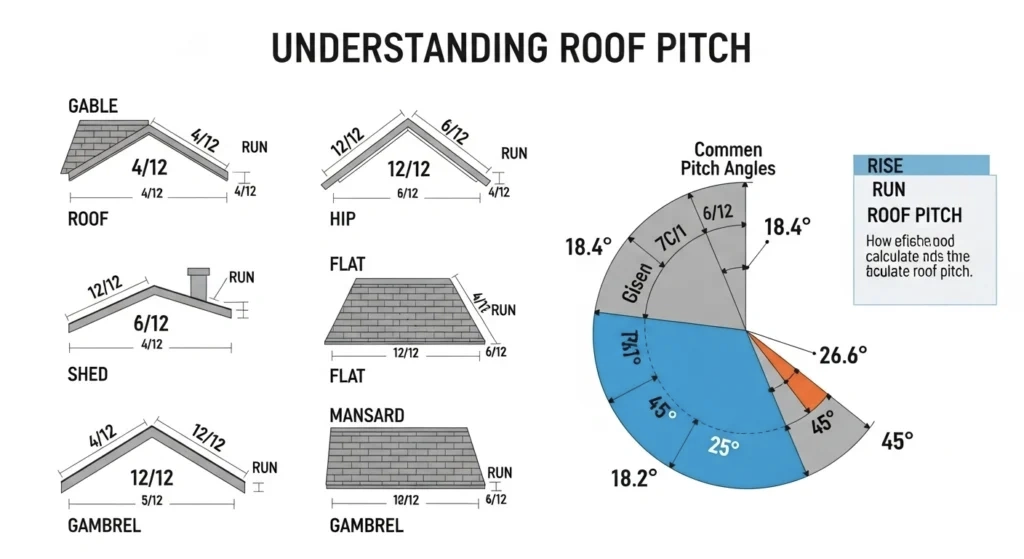
Image Source: OC Roof Kings
Your roof’s pitch plays a crucial role in choosing the right roofing materials. Different angles need specific materials to drain water properly and keep the structure sound.
Traditional shingles don’t work on low-slope roofs (below 3:12 pitch). These roofs need specialised materials like EPDM rubber membrane, TPO, PVC, or built-up roofing (BUR). Water drains slowly on flatter surfaces, so these materials create essential waterproof barriers.
Residential pitches (4:12 to 9:12) give you more options to work with. Asphalt shingles are the top choice in this range because they’re affordable and shed water well. Wood shakes, metal panels, and clay tiles work great too.
Materials on steep-slope roofs (above 9:12) must stay secure during installation and storms. Metal roofing and dimensional asphalt shingles excel at these angles.
Your local climate affects material choice, too. Steeper pitches (6:12 or greater) help prevent snow buildup in cold regions. Houses in hot areas benefit from white membrane or metal roofing that reflects heat.
Roofing materials last different lengths of time. This is a big deal as it means that slate roofing can last over 100 years while asphalt shingles typically last 15-30 years. These lifespan differences often justify spending more on steeper pitch modifications.
Conclusion
Roof pitch substantially affects your replacement costs in several ways. Steeper pitches need more materials—up to 25% more at a 9/12 pitch. They also need extra safety equipment and specialised labour, which drives up the total cost.
Your climate is a vital factor in choosing the right pitch for your home. Steeper roofs do a better job of shedding water and snow, which cuts down on damage over time. Flatter roofs might work better in warmer, drier areas. On top of that, it helps to know that specific materials work best at certain pitch ranges, and this affects your final cost.
Talk to qualified contractors who can assess your specific situation before starting any roof replacement project. Learning about the connection between roof pitch and cost will give you the knowledge to make smart financial choices that protect your home for decades. Ready to take the next step? River City Roofing is here to help you plan your project from start to finish
Comments are closed