The adoption of sustainable lifestyle practices prompts homeowners and businesses to choose green roofs as their preferred building solution. The installation of vegetation as a growing medium on roofs transforms them into green roofs that deliver multiple environmental advantages, including better building energy efficiency alongside reduced heat island effects and effective storm water management. Your green roof’s successful performance and long service life depend heavily on selecting suitable materials. People seeking expert consultation for residential and business green roof installations should work with River City Roofing for sustainable roofing solutions. This document presents a thorough examination of modern green roof materials together with their role in building efficient and sustainable roof systems.
Understanding Green Roofs: A Brief Overview
A green roof incorporates waterproof membrane layers that function alongside root barriers and drainage as well as growing medium and vegetation. The rooftop’s configuration follows two possible options, either a “sedum” or an “intensive” green roof, which depends upon the planting medium’s thickness and selected plant types for cultivation. Sedum roofs are shallow, require little to no maintenance, and are lightweight, while intensive green roofs need a thicker growing media and can support large plants such as shrubs and trees.
To select a type of green roof, the user must consider his/her objectives, climate, and the strength of the building structure. Therefore, the choice of green roof materials, regardless of design, plays a crucial role in tailoring the performance of the roof and improving its lifespan and environmental performance.
Green Roof Materials: Essential Components
In order to build an efficient green roof, a number of essential materials are specialized to be compatible with each other. Below are some of the top green roof materials to be taken into account for a green and durable installation.
a. Waterproof Membranes
A top-notch waterproof membrane is the basis for any green roof. It shields your building from the ingress of water without impeding the growth of plants and soil on top of it. Waterproof membranes need to be strong, flexible, and have good puncture resistance and damage resistance from plant roots.
Ethylene Propylene Diene Monomer (EPDM), a synthetic rubber membrane, is one of the most widely used waterproofing materials for green roof structures due to its high flexibility and the ability to withstand ultraviolet rays (UV). TPO (Thermoplastic Polyolefin) is also a frequently used material, providing rigidity, reflective characteristics, and simplicity of installation. To offer a more sustainable solution, some green roofs are equipped with recycled materials, including artificial rubber or thermoplastic membranes, to decrease their ecological footprint.
b. Root Barriers
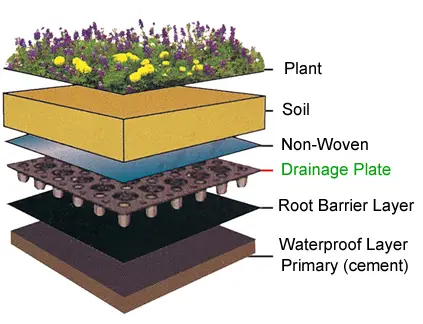
Root barriers constitute essential components in green roof structures because they protect plants that develop significant root systems. The waterproof membrane remains protected from water root penetration through a barrier system designed to prevent root damage.
These barriers are usually composed of polyethylene, polypropylene, or other robust materials impermeable to root intrusion. It is necessary to select a compatible root barrier with the waterproofing membrane so that the installation and its long-term performance will be good.
c. Drainage Layers
Good drainage is an absolute requirement for any green roof. With no effective drainage layer, rainwater can pool on top, eventually causing the plant roots to wilt and even damage your roof, which is prone to collapse. The drainage layer ensures that the runoff from the roof is deflected away from the plants, avoiding excessive soil waterlogging and ensuring the proper water supply for their needs.
Drainage systems come in various forms, e.g., plastic drainage mats, gravel, or modular drainage tiles. Plastic mats are lightweight, easy to install, and can be used for both extensive and intensive green roofs. In the case of heavy green roofs, gravel is commonly used because of its good drainage and support structures. Modular drainage tiles are also a new way out, which is easy to construct and adapt to different roof sizes and roof structures.
d. Growing Medium (Soil)
The growing medium, or soil or substrate, is the layer where the plants will be rooted and develop. A stable medium in which the plants can grow while not overly heavy to affect the structural integrity of the structure is desirable. Growing media for green roofs are, however, almost always mixtures of mineral aggregates, organic matter, and sometimes a low proportion of lightweight clay.
A good growing medium should have proper water retention, good aeration, and nutrient content. The selection of growing medium depends on the plant species to be grown. Low-maintenance, drought-tolerant plants are best grown in a light-growing medium with excellent drainage for a sedum roof. For a green roof that can potentially carry larger plants, a thicker, enriched growing medium containing nutrients is needed to support plant growth.
e. Vegetation: Choosing the Right Plants
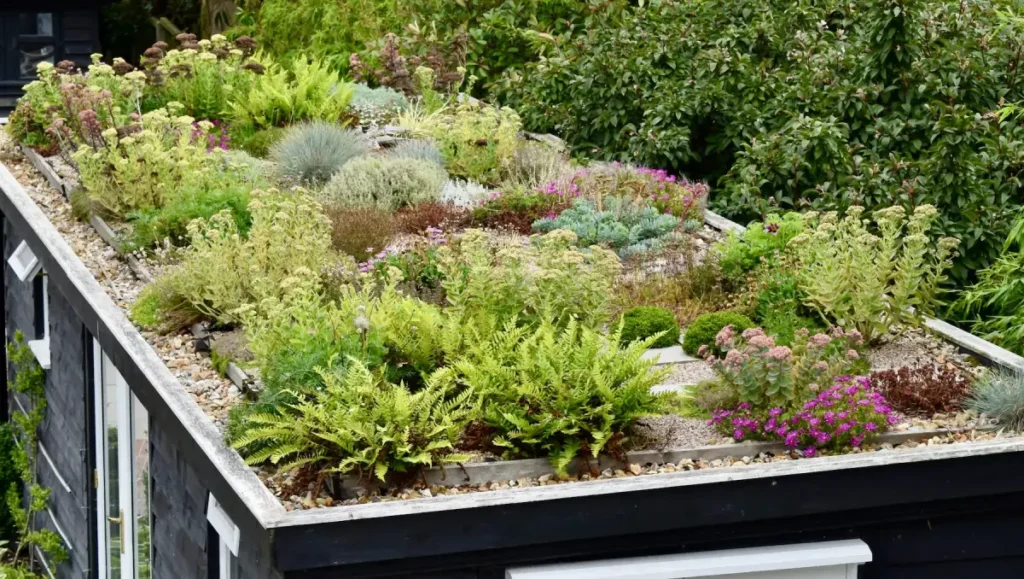
Extensive Green Roof Vegetation: Such vegetation is very much a low-growing type and needs little upkeep. Common choices include sedums, grasses, mosses, and herbs. These plant types are also good for shallow-growing substrates and can withstand hard environmental conditions.
Intensive Green Roof Vegetation: Extensive green roofs support a greater range of plants, such as shrubs, small trees, and flowers. It demands a richer growing medium and more frequent care, but they have higher biodiversity and aesthetic value.
The selection of native plants is one of the major aspects corresponding to the sustainability of green roofs. Natural plants better match the climate of the area, use less water, and provide habitat for pollinators.
Additional Green Roof Materials to Consider
a. Irrigation Systems
In regions with low rainfall or the green roof establishment stage, an irrigation system is required to ensure that the vegetation is sufficiently supplied with water. Drip irrigation is a common choice for green roofs as there is no waste of water when water is supplied directly to the roots. Alternatively, schedule-based watering can be used by automated irrigation systems, by which the plants will be watered on a set schedule so as to avoid overwatering or underwatering.
b. Insulation
Adding insulation materials to the green roof system can provide another layer of energy efficiency. Insulation can be provided by the roof (through the soil and plants) naturally. Still, a thermal insulation layer beneath the waterproofing membrane can be used to enhance the energy performance further. This is particularly useful for buildings located in extreme temperature locations.
c. Green Roof Trays and Modules
Green roof trays and modules are convenient for homeowners who want a modular option. These pre-planted trays or modules may be laid directly on the roof, providing an easier and more accessible installation option for home builders. They also provide the ability to be highly flexible in terms of plant choice and plant design.
Benefits of Green Roofs for Sustainable Living
Green roofs have several advantages and, thus, contribute to a more sustainable residential environment. Some of the key advantages include:
Energy Efficiency: Green roofs provide building insulation, lessening the requirements for heating and cooling. Used in summer, they offer shade and cool down the building, and in winter, they provide the effect of thermal Insulation.
Stormwater Management: Green roofs can reduce stormwater runoff and flood risk in urban settings. This is what makes them a good fit for urban landscapes looking to improve water management and mitigate climate change impacts.
Improved Air Quality: In urban cities, air pollutants can be eliminated by vegetation on green roofs, thus improving air quality.
Enhanced Biodiversity: Green roofs offer wildlife habitats for birds, insects, and other wildlife, and also help work toward the goal of diversified urban nature in towns.
Aesthetic Appeal: Green roofs deliver attractive green environments in urban areas, enhancing the visual appeal of buildings and communities.
Why Choose River City Roofing for Your Green Roof Installation
The undertaking of green roof installation necessitates skillful planning, premium materials, and qualified work. River City Roofing is an expert in the design and application of sustainable green roofs, which are not only environmentally friendly but also sustainable and resistant. Our roofing crew will help you assess which materials are best for your particular needs and guarantee that your green roof will not only enhance the sustainability of your building but will also enhance its aesthetics.
Call River City Roofing today for a consultation and to find out more about the best aspects of green roofs. Let us assist you in moving towards a greener, more sustainable tomorrow.
Goon
can i goon inside of you
Diddy
diddy boii diddy boiii
Tung Tung Tung
tung tung tung shaur
Tung Tung Tung
+1 503-970-5005
[email protected]
Home
About Us
Services
Locations
Financing
Contact Us
Get a Quote
Best Green Roof Materials for Sustainable Living
best-green-roof-materials-for-sustainable-living
by AdminMarch 6, 2025 Views: 305 | Time to Read: ~7 min
The adoption of sustainable lifestyle practices prompts homeowners and businesses to choose green roofs as their preferred building solution. The installation of vegetation as a growing medium on roofs transforms them into green roofs that deliver multiple environmental advantages, including better building energy efficiency alongside reduced heat island effects and effective storm water management. Your green roof’s successful performance and long service life depend heavily on selecting suitable materials. People seeking expert consultation for residential and business green roof installations should work with River City Roofing for sustainable roofing solutions. This document presents a thorough examination of modern green roof materials together with their role in building efficient and sustainable roof systems.
Understanding Green Roofs: A Brief Overview
A green roof incorporates waterproof membrane layers that function alongside root barriers and drainage as well as growing medium and vegetation. The rooftop’s configuration follows two possible options, either a “sedum” or an “intensive” green roof, which depends upon the planting medium’s thickness and selected plant types for cultivation. Sedum roofs are shallow, require little to no maintenance, and are lightweight, while intensive green roofs need a thicker growing media and can support large plants such as shrubs and trees.
To select a type of green roof, the user must consider his/her objectives, climate, and the strength of the building structure. Therefore, the choice of green roof materials, regardless of design, plays a crucial role in tailoring the performance of the roof and improving its lifespan and environmental performance.
Green Roof Materials: Essential Components
In order to build an efficient green roof, a number of essential materials are specialized to be compatible with each other. Below are some of the top green roof materials to be taken into account for a green and durable installation.
a. Waterproof Membranes
A top-notch waterproof membrane is the basis for any green roof. It shields your building from the ingress of water without impeding the growth of plants and soil on top of it. Waterproof membranes need to be strong, flexible, and have good puncture resistance and damage resistance from plant roots.
Ethylene Propylene Diene Monomer (EPDM), a synthetic rubber membrane, is one of the most widely used waterproofing materials for green roof structures due to its high flexibility and the ability to withstand ultraviolet rays (UV). TPO (Thermoplastic Polyolefin) is also a frequently used material, providing rigidity, reflective characteristics, and simplicity of installation. To offer a more sustainable solution, some green roofs are equipped with recycled materials, including artificial rubber or thermoplastic membranes, to decrease their ecological footprint.
b. Root Barriers
root-barrier
Source: Greening Solution
Root barriers constitute essential components in green roof structures because they protect plants that develop significant root systems. The waterproof membrane remains protected from water root penetration through a barrier system designed to prevent root damage.
These barriers are usually composed of polyethylene, polypropylene, or other robust materials impermeable to root intrusion. It is necessary to select a compatible root barrier with the waterproofing membrane so that the installation and its long-term performance will be good.
c. Drainage Layers
Good drainage is an absolute requirement for any green roof. With no effective drainage layer, rainwater can pool on top, eventually causing the plant roots to wilt and even damage your roof, which is prone to collapse. The drainage layer ensures that the runoff from the roof is deflected away from the plants, avoiding excessive soil waterlogging and ensuring the proper water supply for their needs.
Drainage systems come in various forms, e.g., plastic drainage mats, gravel, or modular drainage tiles. Plastic mats are lightweight, easy to install, and can be used for both extensive and intensive green roofs. In the case of heavy green roofs, gravel is commonly used because of its good drainage and support structures. Modular drainage tiles are also a new way out, which is easy to construct and adapt to different roof sizes and roof structures.
d. Growing Medium (Soil)
The growing medium, or soil or substrate, is the layer where the plants will be rooted and develop. A stable medium in which the plants can grow while not overly heavy to affect the structural integrity of the structure is desirable. Growing media for green roofs are, however, almost always mixtures of mineral aggregates, organic matter, and sometimes a low proportion of lightweight clay.
A good growing medium should have proper water retention, good aeration, and nutrient content. The selection of growing medium depends on the plant species to be grown. Low-maintenance, drought-tolerant plants are best grown in a light-growing medium with excellent drainage for a sedum roof. For a green roof that can potentially carry larger plants, a thicker, enriched growing medium containing nutrients is needed to support plant growth.
e. Vegetation: Choosing the Right Plants
greenroof-plants
Source: herbidacious.calamus.graphics
Extensive Green Roof Vegetation: Such vegetation is very much a low-growing type and needs little upkeep. Common choices include sedums, grasses, mosses, and herbs. These plant types are also good for shallow-growing substrates and can withstand hard environmental conditions.
Intensive Green Roof Vegetation: Extensive green roofs support a greater range of plants, such as shrubs, small trees, and flowers. It demands a richer growing medium and more frequent care, but they have higher biodiversity and aesthetic value.
The selection of native plants is one of the major aspects corresponding to the sustainability of green roofs. Natural plants better match the climate of the area, use less water, and provide habitat for pollinators.
Additional Green Roof Materials to Consider
a. Irrigation Systems
In regions with low rainfall or the green roof establishment stage, an irrigation system is required to ensure that the vegetation is sufficiently supplied with water. Drip irrigation is a common choice for green roofs as there is no waste of water when water is supplied directly to the roots. Alternatively, schedule-based watering can be used by automated irrigation systems, by which the plants will be watered on a set schedule so as to avoid overwatering or underwatering.
b. Insulation
Adding insulation materials to the green roof system can provide another layer of energy efficiency. Insulation can be provided by the roof (through the soil and plants) naturally. Still, a thermal insulation layer beneath the waterproofing membrane can be used to enhance the energy performance further. This is particularly useful for buildings located in extreme temperature locations.
c. Green Roof Trays and Modules
Green roof trays and modules are convenient for homeowners who want a modular option. These pre-planted trays or modules may be laid directly on the roof, providing an easier and more accessible installation option for home builders. They also provide the ability to be highly flexible in terms of plant choice and plant design.
Benefits of Green Roofs for Sustainable Living
Green roofs have several advantages and, thus, contribute to a more sustainable residential environment. Some of the key advantages include:
Energy Efficiency: Green roofs provide building insulation, lessening the requirements for heating and cooling. Used in summer, they offer shade and cool down the building, and in winter, they provide the effect of thermal Insulation.
Stormwater Management: Green roofs can reduce stormwater runoff and flood risk in urban settings. This is what makes them a good fit for urban landscapes looking to improve water management and mitigate climate change impacts.
Improved Air Quality: In urban cities, air pollutants can be eliminated by vegetation on green roofs, thus improving air quality.
Enhanced Biodiversity: Green roofs offer wildlife habitats for birds, insects, and other wildlife, and also help work toward the goal of diversified urban nature in towns.
Aesthetic Appeal: Green roofs deliver attractive green environments in urban areas, enhancing the visual appeal of buildings and communities.
Why Choose River City Roofing for Your Green Roof Installation
The undertaking of green roof installation necessitates skillful planning, premium materials, and qualified work. River City Roofing is an expert in the design and application of sustainable green roofs, which are not only environmentally friendly but also sustainable and resistant. Our roofing crew will help you assess which materials are best for your particular needs and guarantee that your green roof will not only enhance the sustainability of your building but will also enhance its aesthetics.
Call River City Roofing today for a consultation and to find out more about the best aspects of green roofs. Let us assist you in moving towards a greener, more sustainable tomorrow.
Share:
Comments (3)
March 4, 2026
Goon
can i goon inside of you
Reply
March 5, 2026
Diddy
diddy boii diddy boiii
Reply
March 5, 2026
Tung Tung Tung
tung tung tung shaur
Reply
Leave A Comment
Your email address will not be published. Required fields are marked *
Write Comment *
Your Name *
E-mail Address *
Save my name, email, and website in this browser for the next time I comment.
Post Comment
Alternative:
Table of Contents
Understanding Green Roofs: A Brief Overview
Green Roof Materials: Essential Components
Additional Green Roof Materials to Consider
Benefits of Green Roofs for Sustainable Living
Why Choose River City Roofing for Your Green Roof Installation
1
2
3
4
Which best describes your project?
Residential Roofing
Commercial
Multi-Family
Emergency Services
(Roof Leak/Storm Damage)
Gutters
Sidings
Next
Recent Posts
average cost of asphalt roof 85×85
Feb 22 2026
What’s the Average Cost of an
synthetic vs flet roofing 85×85
Feb 20 2026
Synthetic vs. Felt Roofing Underlayment: Pros
roof pitch affet your roof 85×85
Feb 16 2026
How Does Roof Pitch Affect the
is copper metal roof 85×85
Feb 14 2026
Is a Copper Metal Roof Worth
Our Services
Residential Roofing
Commercial Roofing
Storm Damage
Siding Installation
Seamless Gutters
Ruffer
River City Roofing is a trusted roofing company in USA and also your first line of defense.
Facebook
Quick Links
Home
Services
About Us
Contact Us
FAQ’s
Blog
Roof Cost Calculator
Our Services
Residential Roofing
Commercial Roofing
Storm Damage
Siding Installation
Seamless Gutters
Subscribe To Our Newsletter
Email Address
Email Address
By subscribing, you agree with our privacy policy and our terms of service.
Copyright 2025 River City Roofing All Rights Reserved Designed and Developed By Codevelop
Sitemap
Privacy Policy
Terms and Conditions
Https://roofrivercity.com/best-green-roof-materials-for-sustainable-living/#comment-200
https://roofrivercity.com/best-green-roof-materials-for-sustainable-living/#comment-200
Prevent Root Damage.
prevent root damage.
Epstein
come to my island
GNG
who is ts gng
Epstein
i hate you
Epstein
hi i am at the island and now cream cheese baby
Dylan Byrd E Noobs
hi
Dylan Byrd
Yall suck l loser noobs dumbs returds
Hi
HI
DIdd
Comment leave
Samuel Genoff
i like kids and men
Samuel Genoff
i like CHILDREN
Samuel Genoff
i like CHILDREN twin uejgwiurgjwjfoifj
Samuel Jerkoff
i hate nigs and love children
Gabe Cum
I like kids
Dylan Byrd
i love kids
David Bazucki
I’m shutting down Roblox ong..
Samuel David Cody Genoff
I love pedos and they are the moast butivul kidsaa evers
Dylan Byrd
Butevil i love minors
P. Diddy
I like men and kids
Samuel Genoff
IM RACIST
Dylan Kirk
i got shot in the bird ong
Jeffrey Epstein
On my island rn, theres so many kids! Kirky is here too.
Doockle Sninky Snorph
samuel david cody genoff and dylan quincy byrd like men