
Many homeowners don’t realize that low-pitch roofs need an alternative to asphalt shingles. A low-pitch roof has a slope below a 4:12 ratio. This means the roof rises less than 4 inches for every 12 inches it runs horizontally. Your choice of roofing materials depends substantially on this slope factor.
Regular asphalt shingles don’t work well with low-slope roofs because water tends to pool on them. Most manufacturers won’t even honor their warranty unless your roof has a minimum 4:12 slope. TPO and PVC membrane systems are great alternatives that last about 25 years with proper installation. EPDM roofing gives you 25-30 years of service. Standing seam metal roofs can protect your home for 30-50 years under the right conditions.
This piece will help you understand the minimum pitch requirements for different materials. You’ll get expert tips to make your low-slope roof installation successful. Double underlayment and proper ventilation are vital for these projects. We’ll also show you how to pick the right solution that matches your budget, durability needs, and style preferences.
Understanding Low-Pitch Roofs and Slope Requirements

Your roof slope knowledge is vital before selecting roofing materials. The way your roof pitches affects how water drains and which materials will work best over time.
What is considered a low-pitch roof?
Regular asphalt shingles just don’t cut it on low slopes. Why? Water doesn’t run off quickly enough. It can pool or even creep backwards under the shingles. It’s such a known industry issue that most shingle manufacturers won’t honor their warranty if your roof is flatter than a 4:12 slope! That’s why specialized materials like TPO/PVC membranes (lasting ~25 years), EPDM rubber (~25-30 years), or standing seam metal (30-50+ years) are often the smarter choices.
This guide cuts through the confusion. We’ll explain:
- Minimum slopes: What different materials are needed?
- Pro installation secrets: Why double underlayment and proper ventilation are non-negotiable.
- Choosing wisely: How to balance your budget, how long you want the roof to last, and how you want it to look.
Minimum slope for shingles and why it matters
Asphalt shingle installation requires a minimum 2:12 slope. This requirement exists for good reason, too.
Steeper pitches let water run off shingles quickly. Water moves much more slowly on lower slopes, which leads to more leak risks. A less slope means reduced drainage that can let water seep under the roofing.
Roof slopes between 2:12 and 4:12 need special installation steps:
- Installers must apply double underlayment
- Extra waterproofing might be needed
- Proper sealing becomes vital to prevent wind damage
Manufacturers won’t honor warranties for asphalt shingles on slopes below 2:12, and the roof will likely fail early.
How to measure your roof slope
You can measure your roof’s pitch accurately using these methods:
From the attic:
- Place a level against the bottom of a roof rafter
- Mark 12 inches horizontally on the level
- Measure the vertical distance from this mark to the rafter
- Your rise measurement creates the pitch ratio (rise:12)
From the roof surface:
- Set a level flat on the roof
- Keep it perfectly horizontal
- Measure from the 12-inch mark straight up to the roof
- This gives you your pitch ratio
Safety should come first – take measurements from inside your attic rather than climbing onto the roof.
Top 4 Roofing Options for Low Pitch Roofs in 2025
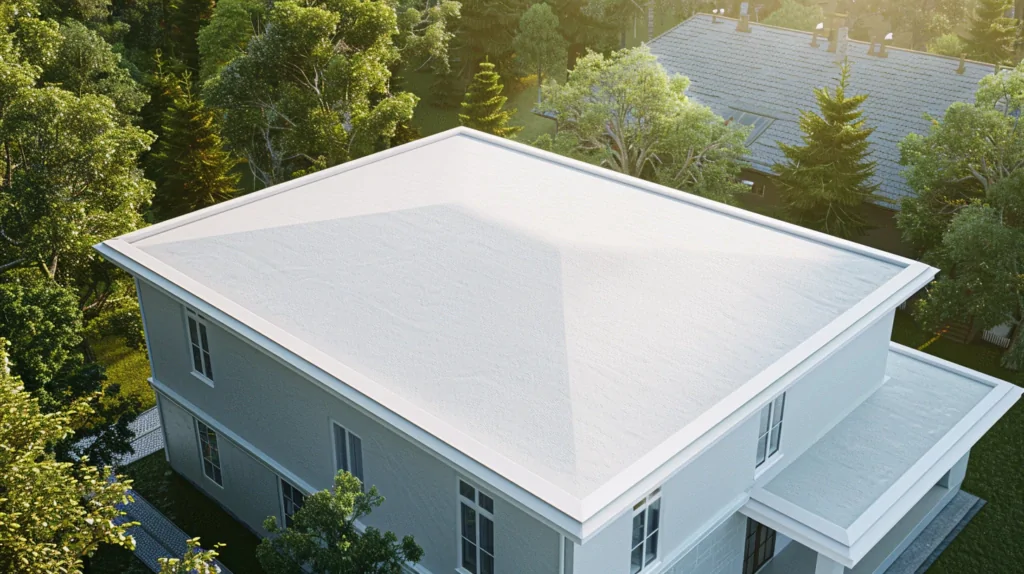
The right materials for low-slope applications are vital to ensure long-term performance and weather resistance. These four options emerge as the best for low-pitch roof installations in 2025.
- Modified Bitumen: Think of this as “asphalt roofing 2.0.” Developed in the 60s to fix old problems, it mixes asphalt with rubber or plastic polymers and fiberglass for serious toughness.
- Types SBS( flexible, great for temp swings) or APP( tougher against UV shafts).
- Lifespan Up to 20 times with care.
- Cost $5-$12 per sq. ft.
- Install Peel-and-stick or arsonist-down (arsonist-down is better for water-miserliness).
- TPO Membrane: This single-bias white roofing has exploded in fashionability. Is it a big palm? It reflects heat like a tile, keeping your house cooler and energy bills lower.
- Key Perk: Super high Solar Reflectance Index( SRI) = energy savings.
- Installing wide wastes means smaller seams. Attached mechanically or completely fused down.
- Lifespan: About 25 years if installed correctly.
- PVC Membrane: The proven stager, guarding structures since the 60s in all climates. One subcaste does the waterproofing job.
- Lifespan: Tested to last over 35 years.
- Key Perk: Excellent heat reflection, reducing cooling costs significantly.
- Install Fused down(stylish for complex shapes, low pitches) or mechanically attached( briskly).
- Standing Seam Metal: Combines serious continuity with sharp aesthetics indeed on low pitches( down to 0.5/12 with sealant).
- Why it works: Mechanically scribed panels lock water out. Double-cinch seams are the gold standard.
- Key Perk Handles snap-thaw cycles way more than snap-together panels. Paired with a top-notch ice & water guard underlayment, it’s incredibly leak-resistant on low pitches.
Key Factors to Consider When Choosing A Low-Slope Roofing System
Choosing the stylish system for low-pitch roof installation goes beyond introductory pitch conditions. You need to consider several vital factors. Continuity and lifetime
Durability and lifespan
Your roofing material’s life affects its long-term value. Since low-pitch roofs bear water-slipping and rainfall-resistant accouterments, modified or specialized options perform stylishly. That’s how common low-pitch roofing materials compare:
- Modified Bitumen (Torch-Down or APP/SBS Membranes): 15–25 years
- EPDM (Rubber Roofing): 20–30 years
- TPO (Thermoplastic Polyolefin): 15–25 years
- PVC (Single-Ply Membrane): 20–30+ years
- Metal Roofing (Standing Seam or Corrugated): 30–50+ years (with proper sealing for low slopes)
Materials like asphalt shingles, slate, or wood shakes rely on gravity for drainage and aren’t watertight on flatter roofs. Instead, membranes (EPDM, TPO, PVC) or modified bitumen provide superior waterproofing for low slopes.
Energy efficiency and heat reflection
Energy efficiency is a vital aspect of modern roofing. Cool roofing shingles use special solar-reflecting granules to reduce heat transfer into your home. These shingles are rated on three key values:
- Solar reflectance (0.0-1.0, with higher values reflecting more sunlight)
- Thermal emittance (0.0-1.0, with higher values releasing more absorbed heat)
- Solar Reflectance Index (SRI) – a calculation using both measurements
Cool roofs help homeowners save 10-30% on energy bills. They also reduce the workload on cooling systems.
Aesthetic appeal and color options
Today’s manufacturing techniques allow for beautiful designs even with specialized low-slope materials. Cool roof options now include darker shades with special reflective pigments, not just light colors.
Installation complexity and cost
Labor makes up 60–70% of total roofing costs in the U.S., and low-slope systems require specialized installation to prevent leaks and meet building codes. Unlike steep-slope roofs (which use shingles), low-pitch roofs rely on waterproof membranes, modified bitumen, or built-up systems. Below are the 2024 average U.S. costs for materials and installation:
Material Costs per Square Foot (Installed)
| Material | Cost Range (USD/sq. ft.) | Best For |
| EPDM (Rubber) | $4.50 – $8.50 | Residential & commercial, durable |
| TPO | $5.00 – $9.50 | Energy-efficient, UV-resistant |
| PVC | $6.50 – $12.00 | Longevity, chemical resistance |
| Modified Bitumen | $4.00 – $7.50 | High-temp climates, easy repairs |
| Built-Up Roofing (BUR) | $4.50 – $8.00 | Budget-friendly, multi-layer |
| Metal (Standing Seam) | $9.00 – $15.00 | Long-term durability (requires proper slope adaptation) |
Expert Tips for Installing Low Slope Roofing Systems
Low-pitch roofs need proper installation methods that ensure longevity and help prevent leaks in grueling conditions.
Use double underlayment for added protection.
Low-pitch roofs need a double subcaste of roof sundeck protection. This redundant subcaste makes up for slower water drainage on gentle pitches. Here is how to install this vital underlayment(be sure to check against your specific manufacturer’s specs):
- The base subcaste should start at the eaves and extend over the drip edge by about 3/4 inch
- Two layers must cover the entire sundeck, with each course lapping at least elevation
- Nails should only hold the underlayment until shingles are installed
You might want to consider overusing ice and water hedge products like GAF WeatherWatch ® or StormGuard ® as the first subcaste, especially at roof eaves.
Ensure proper ventilation to prevent moisture buildup
Unlike steep roofs, low-pitch roofs can not rely on reflections for tailwinds. Poor ventilation traps heat and moisture, leading to:
- Membrane blistering (EPDM, TPO, PVC)
- Insulation rot (from condensation)
- Structural damage (wood decking warping)
Low-Slope Ventilation Solutions
- Curbs & Vents for HVAC/Exhaust Fans
- Metal curbs with vented caps allow airflow around penetrations (e.g., HVAC units, plumbing stacks).
- Code Note: IRC requires 1 sq ft. of net free area per 300 sq. ft. of roof space (balanced intake/exhaust).
- Static (Box) Vents
- Installed near the roof’s perimeter to promote cross-ventilation under the membrane.
- Use 1 vent per 50 sq. ft. for unvented assemblies (per ASHRAE guidelines).
- Mechanical Ventilation
- Powered exhaust fans (solar or electric) for roofs with no natural airflow.
- Required in humid climates (e.g., Gulf Coast) to prevent condensation under membranes.
- Vented Base Flashings
- Specialized flashing designs (e.g., edge vents) allow air intake at the roof’s perimeter.
Follow the manufacturer’s installation guidelines.
Your warranty coverage and the system’s performance rely on following the manufacturer’s installation instructions. Many manufacturers require special techniques for slopes between 2:12 and 4:12. Disregarding these guidelines may invalidate warranties and cause premature roof failure. The manufacturer’s particular slope demand must be reviewed before installation, as some shingles may call for greater than 2:12 slopes.
Avoid using asphalt shingles below a 2:12 pitch.
Asphalt shingles should never be installed on roofs with pitches less than 2:12. Gravity is the story: water flows very slowly on low slopes, which presents higher chances of water traveling sideways through shingle overlaps.
These conditions improve low-slope roofing materials such as granule-surfaced asphalt membranes as a preferable option for slopes lower than the 2:12 point.
Conclusion
The ideal system for a low-pitch roof installation varies with several crucial factors. Old-fashioned asphalt shingles tend to fail on slopes less than 4:12, and specialized material may be your best option.
Your roof’s precise pitch is important to determine before you select any roofing material. Slopes of less than 2:12 require entirely different solutions than slopes between 2:12 and 4:12, and knowing this can save you thousands of dollars in future fixes.
Modified bitumen, TPO membranes, PVC systems, and standing seam metal top the list of best options for 2025 low-slope installations. Each one has advantages – TPO’s superior energy efficiency and standing seam metal’s unparalleled longevity are examples. Your local climate conditions, budget constraints, and goals will assist in making the best selection.
Notwithstanding that, even top-quality materials can fail without the right installation. You must have a double underlayment application, proper ventilation systems, and follow the manufacturer’s guidelines strictly for low-slope roofing success. Any shortcuts during installation will lead to early failures and void warranties.
For Portland homeowners navigating low-slope roofing decisions, River City Roofing specializes in TPO membrane and standing seam metal installations—proven solutions for our rainy climate. Our certified technicians follow meticulous installation protocols, including double underlayment and precision ventilation, to maximize your roof’s performance. Remember—proper material selection and installation by Pacific Northwest experts prevent costly water intrusion and extend your roof’s lifespan.
FAQs
Q1. How low can a roof pitch be before installing shingles?
The absolute minimum for standard shingles is 2:12 (2 inches up per 12 inches out). Below that, using shingles is a bad idea and will almost certainly void the warranty. Use specialized low-slope materials instead.
Q2. How long do different roofing materials last on low-pitch roofs?
It varies:
Modified Bitumen Up to 20 years( with conservation)
TPO/ PVC Around 25 years( proper install is crucial)
Standing Seam Metal 30- 50 years( in the right conditions)
Good installation and keeping are pivotal for hitting these marks.
Q3. What are the most suitable shingles for low-pitch roofs in 2025?
Forget traditional “shingles” in the asphalt sense. The top performers for low slopes are:
Modified Bitumen
TPO Membrane
PVC Membrane
Standing Seam Metal (specifically designed for low pitch)
Q4. What are the best ventilation options for low-slope roofs?
1. Passive Ventilation (No Mechanical Parts)
Static (Box) Vents – Installed near the roof border to allow natural tailwind.
Vented Base Flashings – Allow air input at roof edges while maintaining waterproofing.
Best for: Dry climates with harmonious wind inflow.
2. Mechanical Ventilation (Powered Systems)
Roof Exhaust Fans – Electric or solar-powered suckers laboriously pull out brisk, wettish air.
HVAC Roof Curbs with Vented Caps – Allows tailwind around rooftop units.
Turbine Vents (Low-Profile) – Wind-driven spinning reflections, but must be duly sealed for low pitches.
Q5. How does roof pitch affect my energy bills?
Low-pitch roofs get hit with further direct sun. Choosing reflective accoutrements ( like white TPO or PVC with high SRI) can significantly reduce heat immersion, potentially lowering your cooling costs by 10- 30. The pitch and material choice directly impact how much heat your roof soaks up.