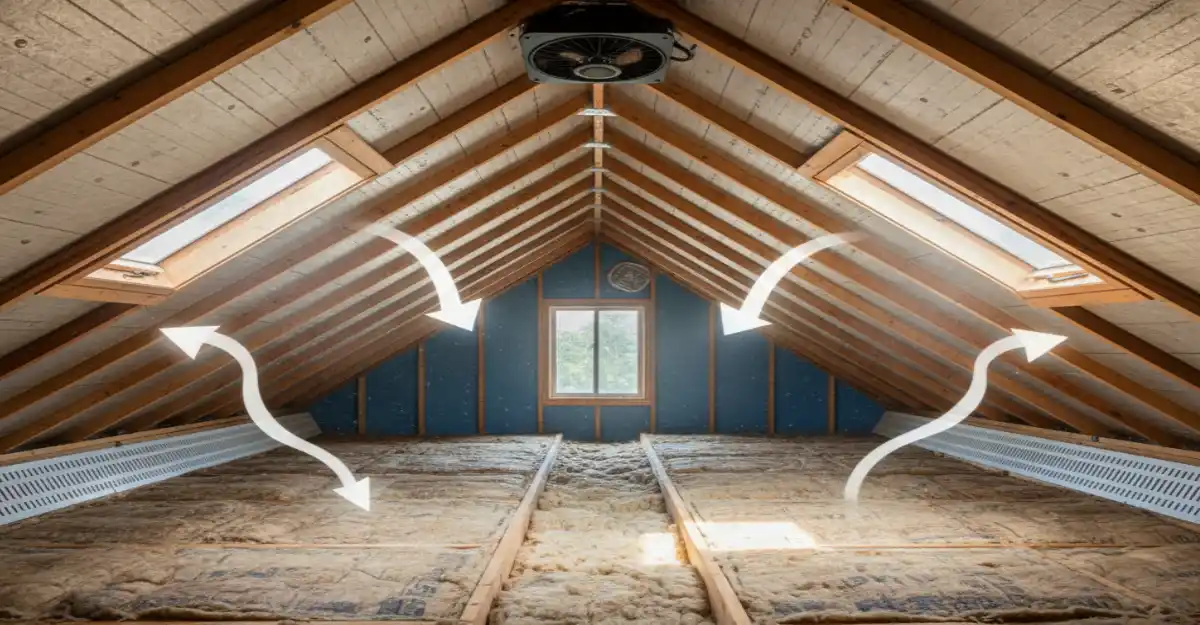
Your attic can reach a scorching 140°F on a 90°F day without proper ventilation.
Heat accumulates and seeps into your living spaces when attic ventilation fails. This forces your air conditioners and appliances to work harder than necessary. The extra strain drives up energy costs and damages your shingles, which leads to roof leaks. Poor ventilation starts a domino effect that creates multiple problems – from bad indoor air quality to early roof damage.
Attic ventilation plays a crucial role by creating escape routes for hot air while letting fresh air flow in. Your attic needs ventilation for roughly every 300 feet of space to stay in good shape. You’ll find two main ventilation options: passive systems like ridge vents and active ones such as turbine vents or “whirly birds.” Active systems prove more efficient, and turbine vents keep working through natural convection even without wind.
This piece covers everything about attic ventilation – from basic operation to designing the right system for your home. Let’s help your attic breathe better!
Why Attic Ventilation Is Important
Your home’s first line of defense against several problems that can get pricey is proper attic ventilation. Attic ventilation does more than move air around – it creates a complete system that shields your home from damage and makes it more comfortable and healthier.
Protects roof from heat and moisture damage
Moisture is your attic’s worst enemy. Your attic can reach a dangerous 140°F on a 90°F day without good ventilation. This extreme heat can warp your roof sheathing and distort shingles, which cuts their lifespan dramatically.
Warm air from your living spaces rises and turns to condensation on cold attic surfaces during winter. This trapped moisture slowly rots wooden structures and reduces the roof deck’s strength and its ability to hold nails. The moisture cycle creates ice dams as snow melts unevenly and refreezes at gutters. These dams force water under your shingles and cause substantial structural damage.
Improves energy efficiency year-round
A well-ventilated attic can substantially cut your cooling costs in summer. Heat escapes through properly designed vent systems instead of radiating down into your living spaces. This natural cooling puts less strain on your air conditioners and other appliances, which reduces your utility bills.
The National Roofing Contractors Association confirms that good attic ventilation helps maintain warranty coverage for many asphalt shingle systems. On top of that, the U.S. Department of Energy recommends attic ventilation because combining insulation and ventilation creates a more energy-efficient home.
Prevents mold, mildew, and poor air quality
Poor ventilation lets moisture build up, which creates perfect conditions for mold growth. The EPA states that better ventilation helps remove or dilute indoor airborne pollutants and improves overall air quality.
Moisture problems show up as:
- Water stains on ceilings and walls
- Peeling paint and deteriorating wood
- Visible mold and mildew growth
- Musty odors throughout the home
Mold spores can spread from your attic through your home’s air supply and cause respiratory issues for your family. Good ventilation systems become crucial health safeguards, especially when you have allergies or respiratory conditions.
The right mix of intake and exhaust vents creates constant airflow that pulls moisture away from vulnerable surfaces and stops condensation that causes these serious issues.
How Attic Ventilation Works
Attic ventilation works on simple physics principles that create optimal airflow to remove heat and moisture. My experience shows how these principles help homeowners build ventilation systems that protect their homes throughout the year.
Understanding the stack effect
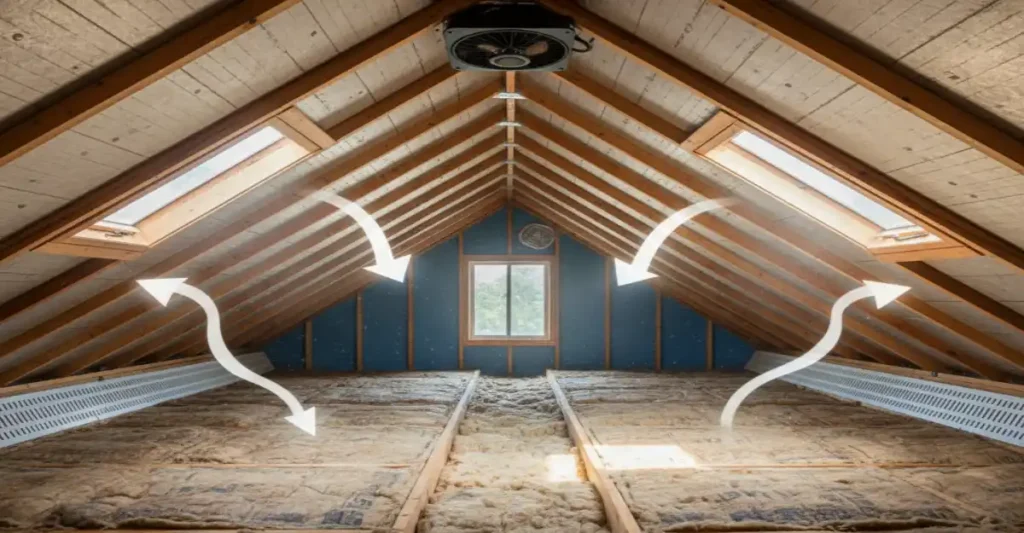
The stack effect (also called chimney effect) naturally moves air through your attic. Warm air weighs less than cold air because its molecules spread apart. This makes it less dense and forces it to rise. Your attic develops higher pressure at the top and lower pressure at the bottom as a result.
Warm household air rises and leaks through ceiling gaps during winter. This creates negative pressure below that pulls cold outside air into your home’s lower areas. The pattern reverses in summer when cool AC air sinks and escapes through lower areas while hot attic air gets pulled down.
How wind effect supports airflow
The stack effect alone won’t give you enough ventilation. Wind force plays a crucial role in creating non-powered ventilation systems that work. Your home’s exterior creates high and low-pressure zones as wind flows against it. Air gets forced into the attic by high-pressure areas, while low-pressure areas pull it out.
A well-laid-out system needs proper vent placement. Exhaust vents work best at or near the ridge, and intake vents belong at the attic’s lowest point, usually in soffits. This high-low setup optimizes airflow throughout the attic space.
Natural vs mechanical ventilation systems
Natural (passive) ventilation systems use stack and wind effects to move attic air. These affordable systems need no electricity and have no moving parts, which makes them maintenance-free. Ridge vents, soffit vents, and gable vents work together to create continuous airflow.
Mechanical (active) ventilation employs powered components like attic fans or turbines to move air. These systems remove heat and moisture better, especially where natural airflow is limited. They use energy and need maintenance, and might pull conditioned air from living spaces without properly balanced intake vents.
Ventilation experts suggest a balanced system where intake and exhaust vents share equal net-free area. Your attic gets continuous airflow in the right direction when these components work together.
Types of Attic Ventilation Systems
A good attic ventilation system depends on where you place its components. My experience with installing many systems has taught me that knowing the different types helps homeowners choose what works best for them.
Intake vents: soffit, gable, and ridge
Fresh air enters the attic through intake vents. Soffit vents sit under roof eaves and provide protected entry points for airflow. Gable vents near the peak of exterior walls can act as intake vents when wind direction allows. These vents push cooler outside air into attic spaces and force warmer air up.
Exhaust vents: ridge, turbine, and power fans
Hot, moist air exits through exhaust vents. Ridge vents run along roof peaks and blend naturally with shingles. Turbine vents (whirlybirds) create suction as wind spins them, which pulls hot air out. Power fans use electric or solar energy to remove large amounts of air.
Balanced systems: matching intake and exhaust
Your ventilation system needs equal areas of intake and exhaust vents. This balance creates steady airflow that turns hot, moist attic air into an even layer of drier, cooler air. Most experts suggest 1 square foot of vent area for every 150 square feet of attic space.
Active vs passive ventilation explained
Passive ventilation works through natural wind and convection without electricity. Power fans and turbines in active ventilation move air mechanically, which improves heat and moisture removal.
Designing a Proper Ventilation System
A well-designed attic ventilation system needs exact calculations and smart placement. Random addition of vents won’t work like engineered systems that follow specific formulas and building codes.
Calculating net-free area for vents
The International Building Code requires a minimum ventilation area of 1 square foot for every 150 square feet of attic space. Cold climate installations can reduce this ratio to 1/300 with a Class I or II vapor retarder. The actual open area that allows air passage within a vent represents its net free area (NFA).
An attic measuring 900 square feet needs 384 square inches of both intake and exhaust NFA. Balanced intake and exhaust vents are vital to work properly.
Placement tips for optimal airflow
Exhaust vents should sit no more than 3 feet below the ridge. A minimum 1-inch space between insulation and roof sheathing works best for intake vents. This gap prevents blockages that could stop proper airflow.
Common mistakes to avoid
Here are the typical errors homeowners make:
- Different exhaust vent types create short-circuits when mixed
- The attic size demands more vents than installed
- Insulation blocks soffit vents
- Exhaust ventilation exceeds intake levels
Ventilation standards and building codes
Modern building codes typically follow the 1/150 ratio, and many areas permit the 1/300 exception. Local requirements might include specific changes to these standards, so verification becomes essential.
Conclusion
Your home’s overall health and efficiency depends heavily on attic ventilation. Good airflow prevents too much heat from building up, reduces moisture damage, and ends up saving money on energy costs. These benefits protect more than just your attic – they safeguard your entire home.
A well-functioning ventilation system needs both intake and exhaust parts that work together. You’ll need to calculate the right net-free area based on your attic’s size and put all vents in the right spots. This balanced setup creates steady airflow that removes heat and moisture all year long.
Homeowners often get pricey mistakes by mixing different types of ventilation or not installing enough. Understanding your specific needs should come before making any changes. Building codes usually follow the 1/150 or 1/300 ratio standards, though requirements can vary by location.
Once you’ve fixed your attic’s ventilation, you should see better comfort throughout your home, lower energy bills, and a longer-lasting roof. Your attic temperatures will stay closer to outdoor levels instead of reaching damaging highs that harm roofing materials.
Learning about stack effect, wind dynamics, and ventilation options gives you the ability to make smart choices about your home. Check your current attic ventilation system for signs of moisture damage or excessive heat. Use these principles to create a ventilation solution that will protect your investment for years ahead.